
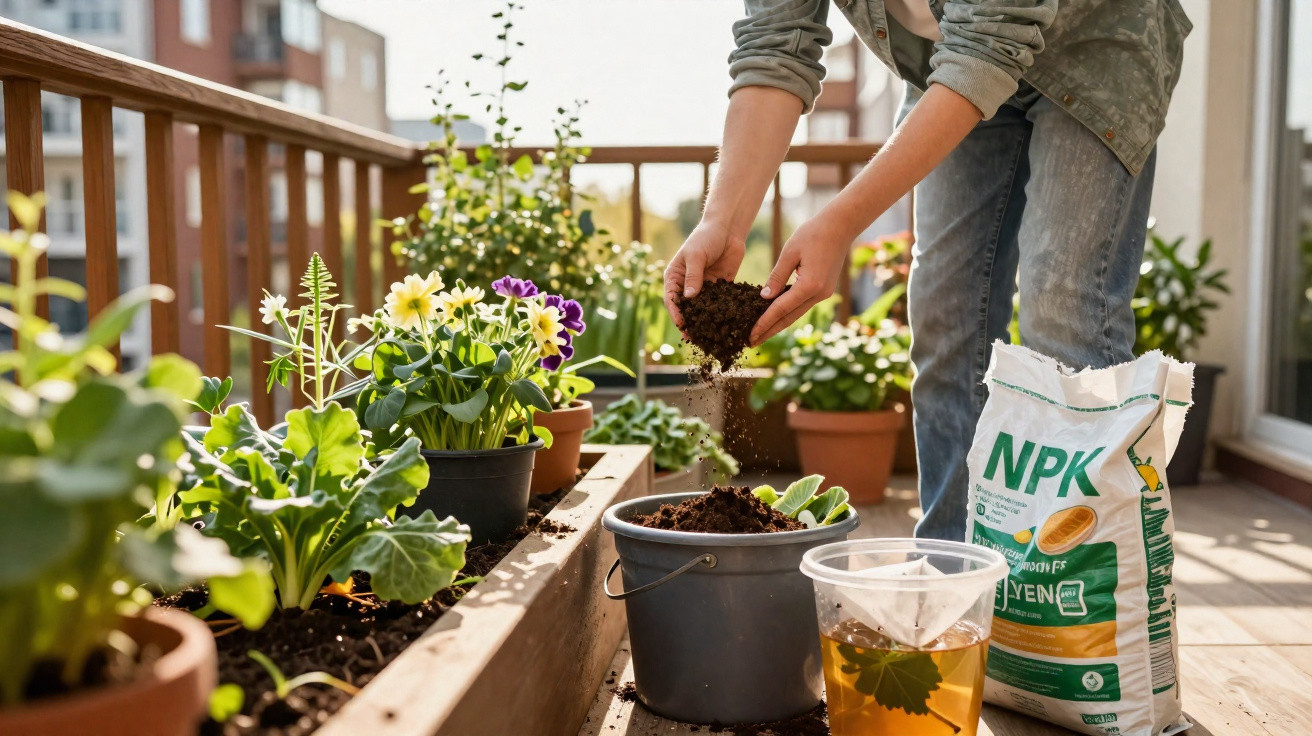
Fortunately, there are effective natural alternatives.
Many amateur gardeners routinely pick up the same bag of fertiliser from the garden centre every year. Yet the era of cheap artificial fertiliser may be drawing to a close. Rising energy costs and political conflicts are placing enormous pressure on the industry. Anyone who wants to keep their beds reliably supplied should now look at natural replacement options – and they are often closer at hand than expected.
Why a key fertiliser could suddenly become scarce
Behind the colourful bags on shop shelves lies a highly complex industrial sector. Fertilisers with a high nitrogen content are particularly affected, including traditional NPK products, urea and ammonium nitrate. They are made using an energy-intensive process that produces ammonia from gas and nitrogen in the air.
This is precisely where the difficulty lies: the industry depends above all on natural gas to manufacture these nitrogen fertilisers. European authorities estimate that gas accounts for between 70 and 90 per cent of production costs. As energy becomes more expensive, fertiliser prices rise sharply too. Factories reduce output or halt production when it is no longer economically viable.
“The energy-market crisis acts like a magnifying glass: it reveals how dependent our food supply and our gardens have become on cheap gas and artificial fertiliser.”
Between 2021 and 2022, nitrogen fertiliser prices in the EU rose by around 150 per cent. Agricultural businesses have reported historic increases in costs. What affects professional growers in the fields is felt by amateur gardeners later at the garden centre: less availability, higher prices and, in some cases, empty shelves.
What gardeners can do when the usual bag of NPK is unavailable
More and more gardening enthusiasts are asking themselves what to do when their familiar artificial fertiliser is either unavailable or simply too expensive. Some are responding by being more economical and measuring doses more carefully. Others are actively seeking alternatives that do not rely on the global energy market.
One trend is becoming increasingly clear: away from purely mineral fertilisers and towards organic, home-produced sources of nutrients. This changes not only how gardens are fertilised, but also the whole approach to managing them.
The main natural alternatives at a glance
- Compost – an all-purpose feed made from garden and kitchen waste
- Well-rotted farmyard manure – especially from horses, cattle or sheep
- Green manure – such as clover, lupins or vetches used as living fertiliser
- Plant feeds – for example, made from nettles or comfrey
- Wood ash – carefully measured as a source of potassium and lime
- Coffee grounds – used sparingly for container and garden plants
Most of these options can be made at home or sourced locally. Used in a skilful combination, they can greatly reduce the use of artificial fertiliser – or eliminate it altogether.
Compost and manure: classic organic fertilisers
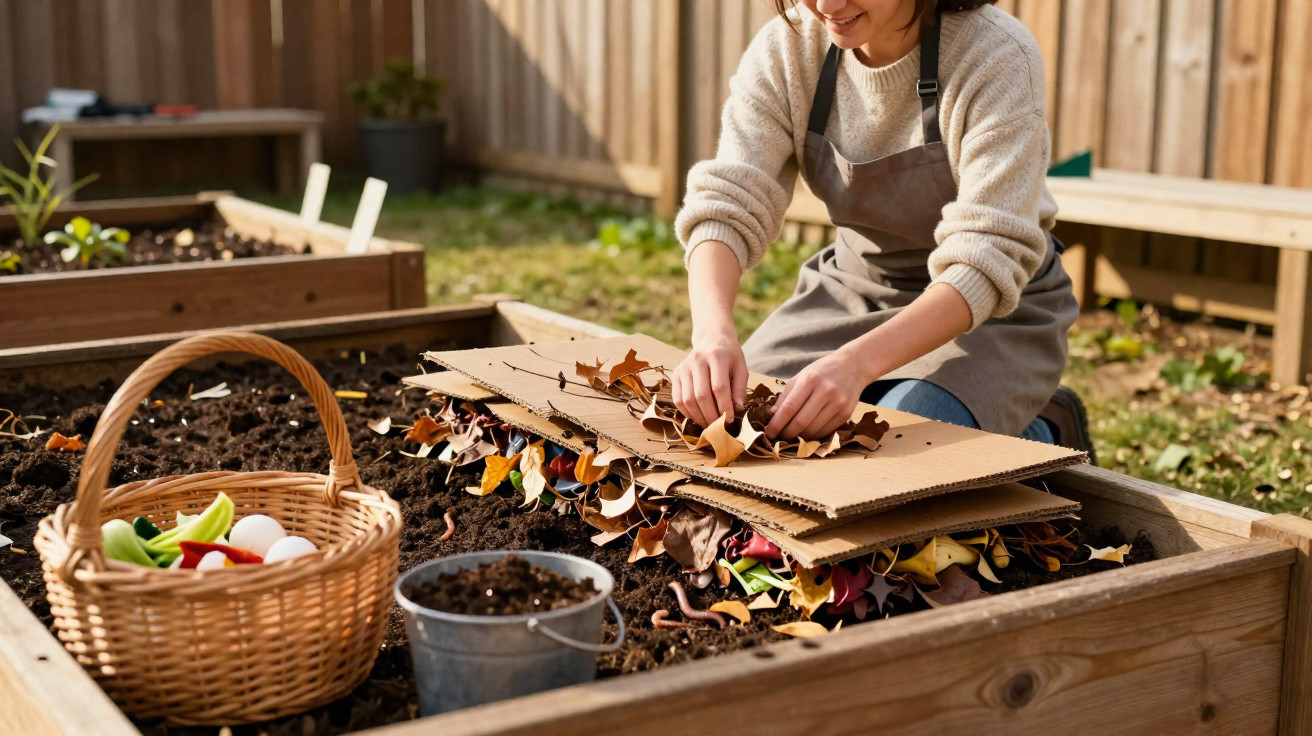
Compost is rightly known as the garden’s “black gold”. Lawn clippings, leaves and vegetable scraps gradually turn into a loose, dark material. It provides nutrients, improves soil structure and supports soil life.
Gardeners who compost regularly need far less fertiliser from external sources. Compost releases its nutrients slowly, helping plants grow more evenly while improving the soil’s ability to retain water. This is especially beneficial for sandy soil, while compost also helps to break up heavy clay soil.
Well-rotted farmyard manure is similarly valuable. Horse and cattle manure in particular provide nutrients as well as substantial amounts of organic matter. One point is essential: manure must never be applied fresh. It should be left to mature for several months until it is dark and crumbly. Only then should it be added to beds.
Green manure: when plants produce fertiliser themselves
An often overlooked option can be found directly in the bed: green manure. Certain plants are sown not for harvesting, but for the benefit of the soil. Clover, lupins and vetches live in partnership with bacteria that fix nitrogen from the air.
These plants store the nitrogen in their roots. After several weeks or months, they are cut down and worked lightly into the soil. As they rot, they release nutrients, increase the humus content and improve soil structure.
| Plant | Main benefit | When to use |
|---|---|---|
| White clover | Nitrogen fixation, ground cover | Spring to late summer |
| Lupin | Deep roots, loosens heavy soil | Spring |
| Phacelia | Bee-friendly flower, builds humus | Spring to autumn |
Anyone who uses green manure regularly needs surprisingly little additional fertiliser. The method is particularly suitable for vegetable beds that would otherwise stand empty during autumn or winter.
Plant feeds and household remedies: effective, but not risk-free
Few gardening topics are debated as passionately in online forums as plant feeds. Nettle feed is a classic example. It is produced by steeping chopped nettles in water and allowing them to ferment for several days or weeks. The result has a strong smell, but it works.
When applied diluted, the feed supplies plants with nitrogen and trace elements. It can also boost resilience in plants such as tomatoes and roses. Comfrey feed additionally contains plenty of potassium and is particularly well suited to fruiting vegetables such as tomatoes, peppers and squash.
Wood ash and coffee grounds also appear frequently in gardening advice. Both can be useful when applied correctly:
- Wood ash should only come from untreated, clean wood, be used very sparingly and never be scattered directly onto sensitive roots.
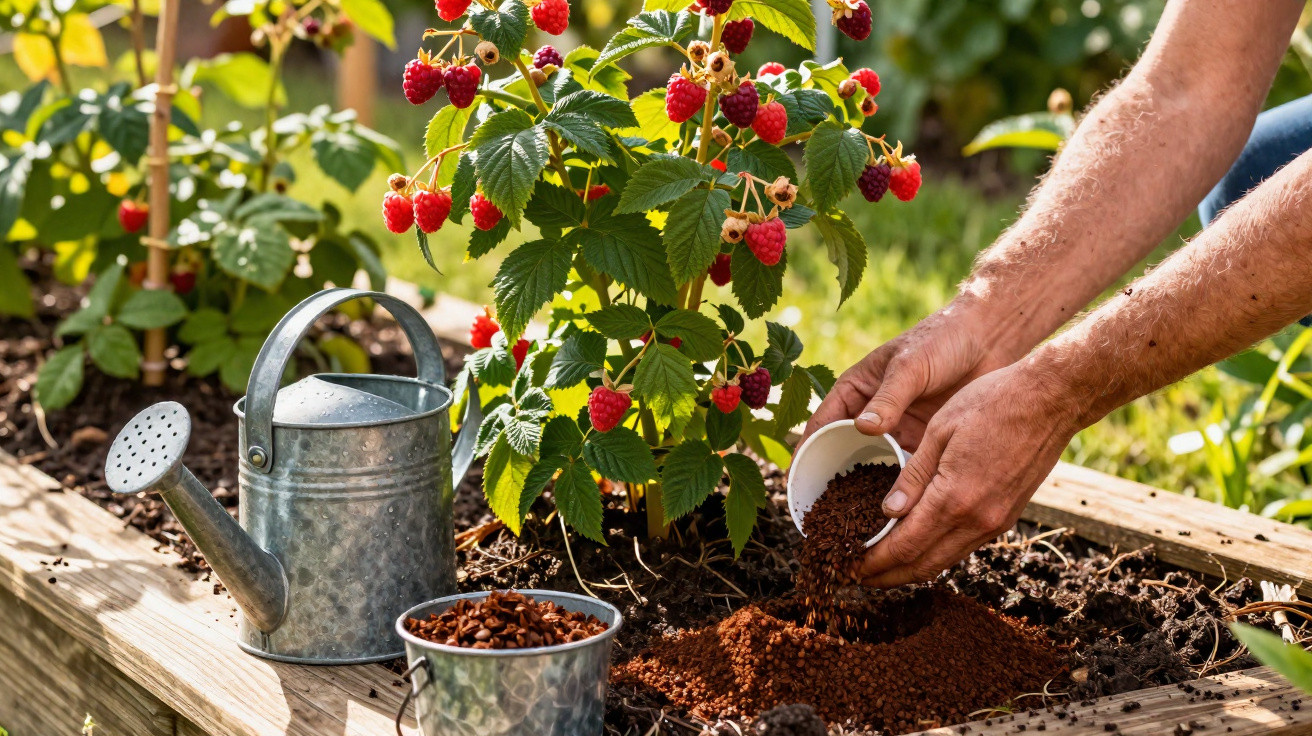
- Coffee grounds should be dried first and mixed thinly into mulch; otherwise, the material may go mouldy or make the soil too acidic.
“Not every ‘natural’ method is harmless. Highly concentrated organic fertilisers in particular can seriously damage plants if they are incorrectly dosed.”
Fresh chicken or pigeon droppings are one example. They contain extremely high levels of nitrogen and can effectively burn roots. Such materials should always go into the compost first or be used only in a heavily diluted form.
How to make your garden less dependent on artificial fertiliser step by step
There is no need to change everything overnight. A gradual plan over two to three years makes more sense. This allows you to observe how the soil responds and make adjustments where needed.
- Get to know your soil: Start with a simple soil analysis or a shop-bought rapid pH test.
- Set up composting: Allocate a permanent spot in the garden and use separate containers for fresh and mature material.
- Try green manure: Begin with one bed that becomes vacant in autumn.
- Use plant feeds in measured amounts: Start with small quantities and watch how plants respond.
- Reduce artificial fertiliser: Lower the dose a little further each year rather than stopping abruptly.
Taking this approach makes a garden more resilient to price spikes and supply shortages. At the same time, biological diversity in the soil usually increases: earthworms, fungi and micro-organisms become more abundant and improve the soil without extra cost.
What urban gardeners and balcony owners should consider
Not everyone has room for a compost heap or green manure. Options are especially limited in towns and cities, on balconies and in rented gardens. Even so, natural alternatives can work in these settings too.
For container plants, ready-made organic liquid fertilisers made from plant-based ingredients are suitable. They smell far less pungent than traditional plant feeds and are easy to measure out. Small amounts of coffee grounds or crushed eggshells can be mixed into the soil. Those with a nearby community garden or neighbourhood initiative can often find locally produced compost or farmyard manure there.
The same principle applies to all organic fertilisers: they act more slowly, but their effects last longer. Anyone who has previously relied heavily on artificial fertiliser should monitor growth, leaf colour and yields particularly closely during the transition period, topping up where necessary.
What the current situation means for the future of gardening
The possible shortage of a familiar fertiliser is more than an inconvenience at the till. It requires both amateur and professional gardeners to reconsider established routines. In the long term, gardens could become more diverse, more resource-efficient and less dependent on the global energy market.
Those who start using compost, green manure and plant feeds deliberately now benefit twice over: their garden becomes more resilient, while rising prices and empty shelves have less impact. At the same time, the risk of overloading soil with unnecessary nutrient quantities falls – a problem that is already polluting groundwater and waterways in many areas.
Artificial fertiliser has not disappeared completely yet. However, the signals coming from the energy sector and agriculture show the direction of travel. Gardeners who adapt in good time will not only remain able to act, but will gain greater control over their own small growing space – regardless of what happens on the world market.


Comments
No comments yet. Be the first to comment!
Leave a Comment