
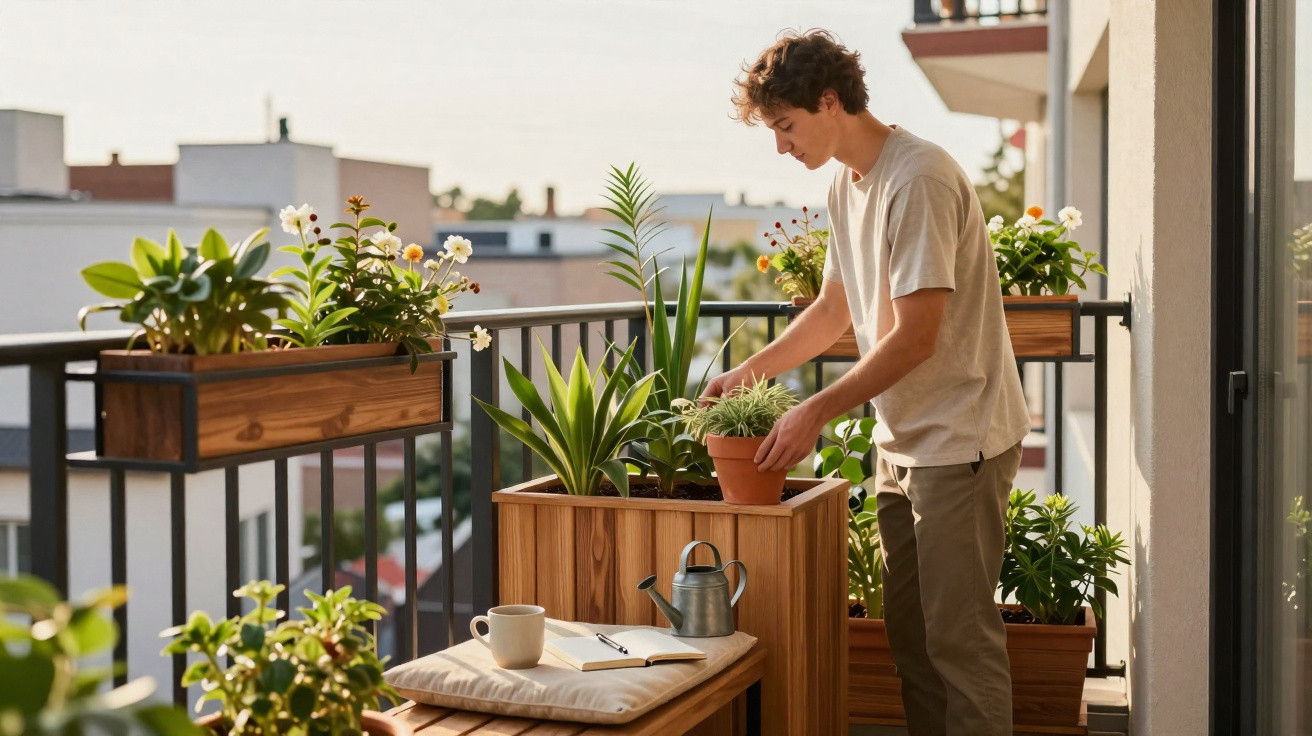
If you still furnish your outdoor area with nothing more than a few pots tucked into a corner, it can now look almost nostalgic. For 2026, designers, garden centres and interior professionals are favouring an entirely different look: structured planting, defined lines and furniture that makes a balcony or terrace feel like an extra room. Rather than a jumble of containers, the aim is a considered composition of plants, shapes and varying heights.
No more pot clutter: what the new balcony will look like in 2026
Why flowerpots on the floor suddenly look dated
For years, the formula was simple: a few pots, some compost, and the balcony was done. The drawback is that the floor becomes crowded, the whole area feels cramped, and there is barely room to move between chairs, the barbecue and the watering can. On compact city balconies in particular, this takes up valuable space unnecessarily.
“The trend is clearly moving away from individual pots on the floor and towards well-designed planting modules that free up space and make the balcony feel like a small studio.”
This shift involves more than appearance. Clearing the floor immediately creates a sense of openness, space and order. The eye can “breathe”, while the balcony looks neater and larger even though its square metreage has not changed.
Raised planters: the new foundation for every city balcony
The focus of this new approach is on rectangular raised planters with legs or frames, usually made of metal or wood. Rather than sitting directly on the floor, they are elevated from a few centimetres up to waist height.
This offers several benefits at once:
- More floor space: Space beneath the planters remains available for storage boxes, lanterns or simply an uncluttered floor.
- Easier care: There is no need to bend down to water or prune, as plants sit at eye level or within easy reach.
- A calmer appearance: Clear lines organise the balcony instead of a random scattering of pots.
- Visual lengthening: Drawing the eye upwards can make even very short balconies appear more elongated.
For small urban flats, slim, elongated designs placed along the balustrade or wall are particularly suitable. Anyone with more room can arrange several units as a modular system.
Minimalist yet warm: the new materials and colours
Visually, the dominant combination is one already well established in many interiors: black or dark-grey metal paired with light or medium-brown wood. Metal frames are intentionally kept slim and almost graphic, while wood adds warmth.
Together with rich green foliage, this creates a clean, contemporary style that works well with Scandinavian, industrial or loft-inspired interiors. By comparison, colourful plastic pots can quickly seem fussy or restless. Those who want colour should instead opt for:
- plain cushions and outdoor rugs;
- textiles in muted shades such as sage green, terracotta or sand;
- brass or copper details on lanterns and lamps.
Playing with height: turning the balcony into a green stage
Why different levels make a balcony appear bigger
Another key trend for 2026 is the deliberate use of varied heights. In the past, every plant tended to sit at roughly the same level. Now the arrangement is layered: low, middle and high.
Possible levels include:
- Low: Herb troughs on the balcony balustrade or small planters attached to the railing.
- Middle: Raised beds on legs, side tables holding plants, or larger containers on stools.
- High: Hanging baskets, trellises, narrow shelving or plant ladders.
“Playing with three levels creates depth – even a tiny balcony can suddenly feel like a small garden room with a foreground, middle ground and background.”
Tall grasses at the back, compact perennials or herbs in the middle, and trailing plants higher up create a lively scene that changes with the viewing angle.
Plants as natural room dividers
The new planting scheme is not solely decorative; it also defines zones. Rather than using solid partitions, green screens subtly separate different areas.
Typical layouts include:
- Dining area: Raised planters around the edge filled with herbs and lower perennials, making them easy to reach while cooking.
- Lounge corner: Slightly taller grasses, bamboo in slim modules or climbing plants on a trellis provide privacy.
- Outdoor work nook: Narrow vertical elements or plant shelves visually frame the laptop and seating area.
This makes it possible to divide even a four-square-metre balcony into distinct functional zones without making it feel overbuilt.
The balcony as a fully fledged room
These ideas significantly change the role of the outdoor area. A balcony is no longer a storage spot; instead, it is planned like a small outdoor living room. Rugs, lighting, cushions and side tables belong there just as much as plants do.
What matters is a coherent overall scheme: the colours used for sofa cushions in the living room reappear outdoors, while materials such as wood or rattan flow from inside to out. Plants become part of this concept rather than simply serving as “decoration around the edges”.
Which plants suit the 2026 trend?
Structure rather than a colourful mix
In demand are plant varieties that bring defined shapes and volume. Instead of using ten different varieties in a range of colours, many designers choose a smaller selection of repeated plants that act as a unifying theme.
Popular choices include:
- delicate grasses that sway in the breeze;
- herbs such as rosemary, thyme and sage, which also have culinary value;
- compact evergreen shrubs in miniature form;
- trailing plants such as ivy, dichondra or trailing strawberries.
Anyone wanting colour can add carefully chosen accents with annual flowering plants or seasonal highlights such as tulips, dahlias or autumn asters, but these should be used in small touches rather than across the whole space.
Low-maintenance and suited to city life
As many balcony owners have limited time or gardening experience, ease of care is particularly important. Raised planters can be combined effectively with irrigation systems, including water reservoirs or narrow hoses that link several modules.
Robust plants that can withstand heat and wind along a building façade are therefore the first choice. These include Mediterranean herbs, lavender, sedums, houseleeks and many types of grass. For a north-facing balcony, ferns, hostas and shade-tolerant ground-cover plants are more appropriate.
Practical tips for adopting the trend now
How to get started on a small budget
There is no need to replace the entire balcony at once. A gradual approach is enough:
- Replace two or three old pots with one long raised planter.
- Add a simple metal shelf or plant ladder to create a second level.
- Paint colourful plastic pots in one uniform colour or replace them.
- Lay an outdoor rug to reinforce the “room-like” feel.
Many DIY stores offer modular systems that can be extended over time. This allows the design to grow alongside your budget and your enthusiasm for gardening.
Risks and mistakes balcony owners should avoid
Despite the trend, there are a few potential pitfalls. Stacking elements too high risks unstable structures, especially in windy conditions. Raised planters need a sturdy frame and should not be overloaded. Weight also matters: wet compost, large planters and water containers can quickly add up. Checking the balcony’s load-bearing information will provide clarity.
Another common mistake is mixing too many different styles. Combining rustic terracotta containers, colourful plastic pots, metal crates and rattan furniture at the same time loses the clean line. A simple colour scheme – for example black, wood, green and one accent colour – creates calm.
Why the trend is likely to endure
The new approach to balcony and terrace design is closely linked to changing living habits. More people work from home, spend their leisure time at home and want a well-designed setting outdoors too. At the same time, living space is shrinking in many cities, so every corner matters.
Structured planting, raised planters and the use of different heights are ideal for this: they transform a few square metres into a flexible, inviting yet low-maintenance outdoor room. Starting now creates the basis for an outdoor area that will still look current in 2026 – without a collection of pots covering the floor.
Comments
No comments yet. Be the first to comment!
Leave a Comment