
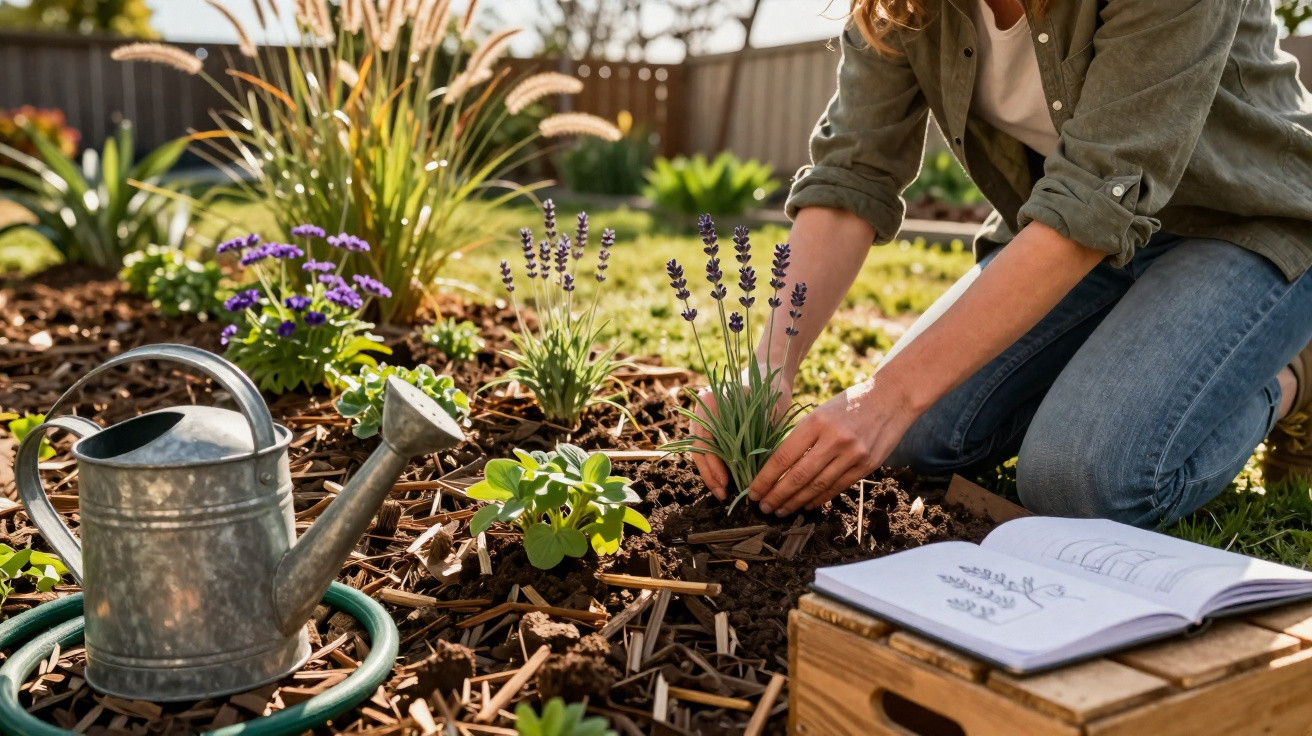
With the right perennials, you can design your garden now so that it bursts into bloom in spring with almost no watering.
Plant wisely in March and you can spare yourself the constant trips with a watering can in June and July. The key is not expensive irrigation systems, but tough perennials, suitable soil and a few straightforward measures. The result is a garden that manages with little water yet still flowers dependably every spring.
Why late winter and early spring are crucial
The foundations for a garden that needs virtually no watering are not laid in high summer, but now, while the soil remains cool and moist. During this period, newly planted perennials can establish their roots undisturbed before heat and drought take hold.
“Planting perennials in late winter or early spring gives their roots a head start of several weeks – making them less dependent on the hose in the long term.”
The aim is to grow plants with strong, deep-reaching roots. These can access moisture reserves that are already beyond the reach of lawns and shallow root balls in summer. As a result, they need support only while becoming established, then can largely look after themselves.
Four favourites for a low-maintenance spring garden
Perennials that naturally cope with dry conditions are especially suitable. Specialists particularly favour resilient species from relatively barren regions, where heat and water shortages are familiar conditions.
Gaura: floating “butterflies” in the perennial border
Gaura, also often known as bee blossom, adds an airy quality to a border. Its slender stems carry countless small flowers that resemble delicate butterflies in the breeze. It has a long flowering period, tolerates poor soil and requires very little attention once established.
- Position: full sun
- Soil: relatively poor and free-draining
- Watering: needed only during extreme drought after the establishment period
Yarrow: a native long-flowering plant with a bee benefit
Yarrow (Achillea millefolium) is one of the more overlooked classics. Its flat flower heads provide plentiful food for bees and butterflies, while its colours range from white and yellow to orange and pink shades.
It originated as a wildflower and thrives in poor, dry meadows. That is precisely why it is so well suited to gardens where saving water matters.
Butterfly lavender: fragrance, structure and drought resistance
Lavender has long been a star of front gardens, but butterfly lavender offers even more: it flowers early, releases an intense scent and adds structure to the border with its striking blooms. Its Mediterranean origins make it naturally undemanding.
Place it in a hot, sunny spot with exceptionally free-draining soil and watering schedules will barely be a concern. It copes far less well with waterlogged ground than with brief dry spells.
Stipa: ornamental grass that catches wind and light
Stipa, often called angel hair or fairy grass, resembles a living curtain of fine stems. Every light breeze brings movement to the border, while the blades shimmer in backlight. As a classic steppe and prairie grass, it is particularly at home in dry, sunny areas.
“These four perennial types are a reliable choice: little thirst, plenty of impact, and they return year after year.”
The right soil: poorer is better than overindulged
Many amateur gardeners make a well-intentioned mistake: they fill perennial borders with compost and fertiliser in the hope of producing extra-large flowers. Drought-tolerant perennials often respond poorly to this.
To become genuinely self-sufficient, they need to be encouraged to build resilience:
- Well-drained soil: Water must be able to run away quickly after rain, with no puddles or waterlogged earth.
- Little or no fertiliser: Nutrient-poor conditions encourage roots to grow deeper.
- An open structure: Work in sand, fine grit or gravel if the soil is heavy and clay-rich.
Enriching the soil too heavily encourages soft, fast-growing foliage that wilts sooner in heat and needs watering more often. Strong, compact perennials are more resilient and less prone to disease.
Mulch and spacing: two simple ways to avoid dry spells
Once the perennials are in the ground, two measures will determine how well they cope during dry periods.
A thick mulch layer to reduce evaporation
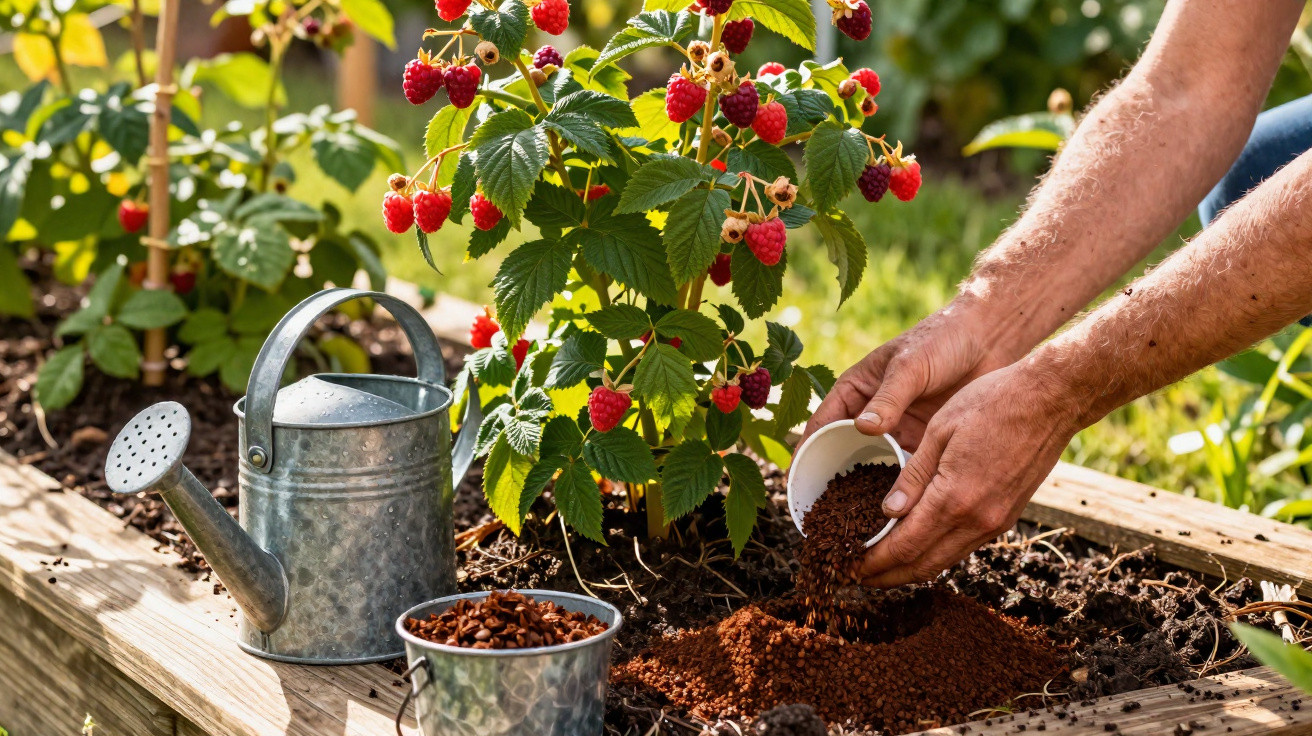
A generous mulch covering of shredded prunings, leaves or bark pieces acts like a natural insulating blanket. A layer of around seven centimetres is enough to keep the soil moist for noticeably longer.
“Mulch acts like sunscreen for the soil: less evaporation, fewer weeds and more stable temperatures.”
The result is that the topsoil does not dry out as quickly, water remains available for longer, and unwanted weeds have less opportunity to establish themselves.
Leave enough room between perennials
In an effort to create a border that looks full quickly, many people plant too densely. This becomes a problem as heat and drought increase. Closely spaced perennials compete for water and nutrients, roots become tangled, and diseases spread more quickly.
A minimum gap of around 30 centimetres for each plant has proved effective. Drought-tolerant species in particular will gradually fill the gaps by themselves. The spacing may look bare initially, but after two years the border is usually filled out perfectly.
The spring reward
Those who plant the right perennials in late winter, choose nutrient-poor, well-drained soil and use mulch will see the benefits in spring. Gauras float above the ground like tiny butterflies, yarrows attract insects, lavender provides scent and structure, and Stipa moves in the wind.
The watering workload drops noticeably: rather than checking the weather forecast every day, it is enough to inspect the borders occasionally. You will usually need to intervene only during long heatwaves or when newly planted specimens need additional water in their first few weeks.
A practical planting plan for beginners
Anyone wanting to get started straight away can use this simple combination as a guide:
- At the front of the border: low-growing yarrows and small Gaura varieties
- In the middle: butterfly lavender as a fragrant structural plant
- At the back or as specimen plants: larger Gaura varieties and clump-forming Stipa
This creates a layered effect that works both close up and from a distance. Colours, forms and movement alternate without requiring you to reach for the watering can every other day.
What a “garden without watering” really means
Even the toughest perennials cannot manage completely without water. During the establishment phase, meaning the first few weeks after planting, they require regular moisture. Only once they are visibly established can you lengthen the intervals between watering substantially.
Rather than watering a little every day, it is better to water infrequently but thoroughly. The water penetrates further down, roots follow it, and the plants become more self-sufficient over time.
Benefits for the climate, your wallet and your peace of mind
A garden that thrives on little water is not a project of sacrifice, but a package of benefits: less work, lower water costs and plants that cope better with increasingly frequent droughts. At the same time, they provide food and habitat for insects.
Anyone choosing Gaura, yarrow, lavender and Stipa now, at the end of winter or right at the start of spring, can gradually move their garden towards a new system: away from constant irrigation and towards a stable, self-sufficient planting scheme that reliably emerges again every year.


Comments
No comments yet. Be the first to comment!
Leave a Comment