
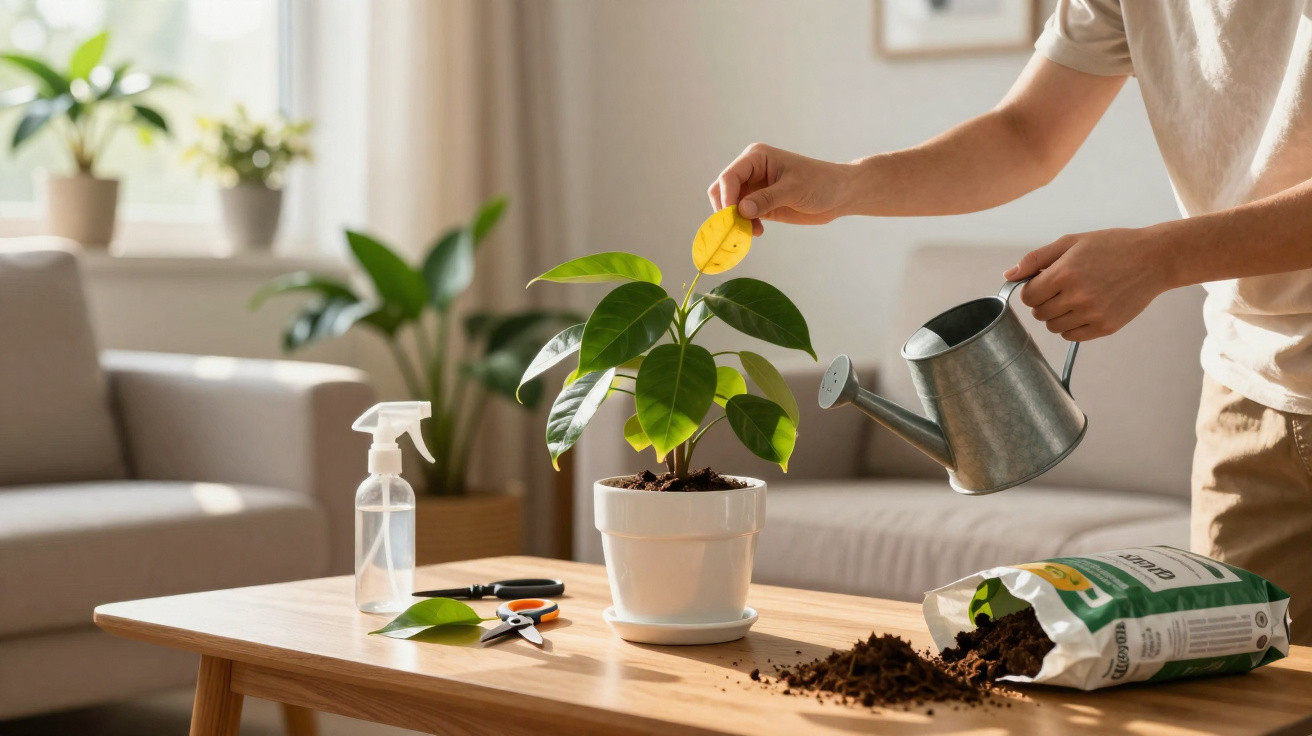
Before you throw the pot away, take a closer look. The money tree, botanically known as Crassula ovata and commonly called the jade plant, is tougher than it may appear. Once you understand what it needs, take a few focused rescue steps and improve your watering habits, it can usually return to healthy, vigorous growth.
How to tell when your money tree is struggling
Money trees give very clear warnings through their leaves and the smell of their compost. If you know how to interpret these signs, you can often identify the cause of the problem within minutes.
- Soft, mushy leaves and spongy stems: a classic sign of overwatering and early root rot.
- Shrivelled, wrinkled or falling leaves: usually indicates a lack of water.
- A stale, musty smell coming from the pot: the compost has remained wet for too long and the roots may be rotting.
- A very dry root ball that has pulled away from the sides of the pot: the root ball is completely dried out, so water merely runs around the outside.
- White, cotton-like deposits on leaves and stems: a sign of mealybugs, pests that suck the plant's sap.
Yellowish, soft leaves nearly always point to excessive watering, while shrivelled leaves generally mean too little water – telling the difference determines the right rescue method.
Immediate help: what to do first
As soon as you notice your money tree losing strength, it needs a clear course of action. Impulsive responses – such as giving it even more water out of sympathy – often make matters worse.
When there is waterlogging and rotting roots
If the compost is permanently damp, the leaves are mushy and the pot feels heavy, too much water is almost certainly the problem. In this case, prompt action matters.
- Carefully lift the plant out of its pot.
- Shake off as much of the old, wet compost as possible, or loosen it gently with your fingers.
- Inspect the roots closely: remove anything black, slimy or soft generously with a clean, disinfected knife or pair of scissors.
- Leave the plant with its exposed roots to air-dry for 12–24 hours in a bright but shaded place.
This “drying shock” may sound harsh, but it often saves the remaining root system. Unless the rotten sections are removed, the rot will otherwise spread again.
When the plant has dried out severely
When the root ball is dusty dry and has shrunk away from the pot edges, rapidly flooding it from above will not help. At this stage, the compost absorbs hardly any water.
A gentler method is known as soaking or bottom watering:
- Fill a bucket or bowl with water.
- Place the entire pot in it, with the water level just below the rim of the pot.
- Depending on the pot size, wait 30–60 minutes, until air bubbles stop rising.
- Remove the pot, allow it to drain thoroughly, and only then return it to its usual position.
The leaves will not become firm again immediately, but within a few days you should see whether the plant has taken up the water successfully.
Controlling pests such as mealybugs
The fine, woolly coating produced by mealybugs is often found in leaf joints and on young shoots. If allowed to spread, these pests can weaken a money tree severely.
- Move the plant away from other houseplants to prevent infestation spreading.
- Wipe affected areas using a cotton pad or cotton bud with a little alcohol, such as 70% isopropyl alcohol.
- Repeat the treatment every 7–10 days until no new insects appear.
- For a severe infestation, use a suitable pest spray or a soft soap solution.
A money tree kept separately and checked regularly is the best protection against hidden pest outbreaks throughout the living room.
Repotting a money tree properly: a fresh start for damaged roots
Following overwatering, or when the compost looks old and compacted, a new pot with free-draining growing medium can be the turning point.
The ideal setup for a resilient money tree
| Component | Purpose |
|---|---|
| Pot with a drainage hole | Prevents water from sitting around the roots |
| Terracotta pot | Breathable material that allows moisture to escape more easily |
| Drainage layer (2–3 cm) | Protects against waterlogging; use expanded clay pellets or gravel, for example |
| Free-draining compost | Keeps air around the roots and allows water to drain faster |
A tried-and-tested compost mix consists of:
- 50% succulent compost or ordinary potting compost,
- 25% coarse sand,
- 25% perlite, pumice or lava granules.
After planting, press the compost down only lightly and wait at least four to five days before watering carefully for the first time. Newly cut roots need this break so the cut surfaces can dry out rather than rot again.
Watering without guilt: finding the right rhythm
A money tree stores water in its thick leaves. That makes it easy to care for, but it also leaves it vulnerable to overenthusiastic watering.
- During spring and summer, water roughly every 10–15 days, once the top layer of compost has clearly dried out.
- In winter, watering is generally needed only once a month – and often even less at cooler locations.
- Rather than following a calendar, test with your finger: if the compost feels dry 2–3 cm below the surface, it is time to water.
A quick finger test in the compost is more dependable than any watering app – and can save many money trees.
If you tend to keep topping up the water, set a fixed watering day in your calendar and leave the plant alone in between. It is better to water thoroughly once and then let the compost dry out than to give frequent small sips.
The right position: light, temperature and fertiliser
Brightness and choosing a location
Money trees originate from sun-drenched regions. They need plenty of light, although not every type of sunlight is suitable indoors.
- A bright south- or west-facing window is ideal.
- In summer, avoid direct midday sun through glass to prevent scorched leaves.
- If the room is very dark in winter, a plant LED can provide extra light.
- Avoid positions directly above radiators or in front of permanently tilted windows – dry central-heating air and draughts put the plant under stress.
Fertilising in moderation
A weakened money tree should regain stability before receiving additional fertiliser. Nutrients are like concentrated feed: they work only when the “digestion”, meaning the root system, is intact.
- From March to September, feed every three to four weeks with a heavily diluted succulent or cactus fertiliser.
- Do not fertilise in winter, as the plant enters a dormant phase.
- Never apply a strong fertiliser immediately after repotting, as this can burn the fresh roots.
Staying consistent: how to prevent setbacks
Money trees forgive mistakes, but they need time to recover afterwards. New, small leaves that feel firm are a positive sign, even if the rest of the plant still looks battered.
Regular quick checks can help prevent further problems:
- Once a month, check the compost and bottom of the pot for excessive moisture or dryness.
- Examine both sides of the leaves for marks, deposits or insects.
- Turn the pot slightly from time to time so the plant receives even light and does not lean to one side.
If needed, gently support older, woody stems with a stick until the plant is strong enough to hold itself up again. Many money trees recover slowly at first after a rescue attempt, then begin to grow much more noticeably.
A closer look at money tree care
The money tree is a succulent. This group of plants has adapted to dry periods by storing water in its leaves and stems. That is precisely what often causes confusion: the plant looks plump and “juicy”, so it is watered again too soon out of concern. Once you remember that a money tree can go for weeks without rain in its natural environment, your watering habits will usually change automatically.
Propagation is useful too: if a healthy shoot or intact leaf comes away during the rescue process, it can grow into a new plant. Simply allow it to dry for one or two days, then place it in a small container filled with free-draining compost. This creates a backup money tree if the original does not recover after all – and, if it does, you will eventually have two strong plants in the living room.

Comments
No comments yet. Be the first to comment!
Leave a Comment