
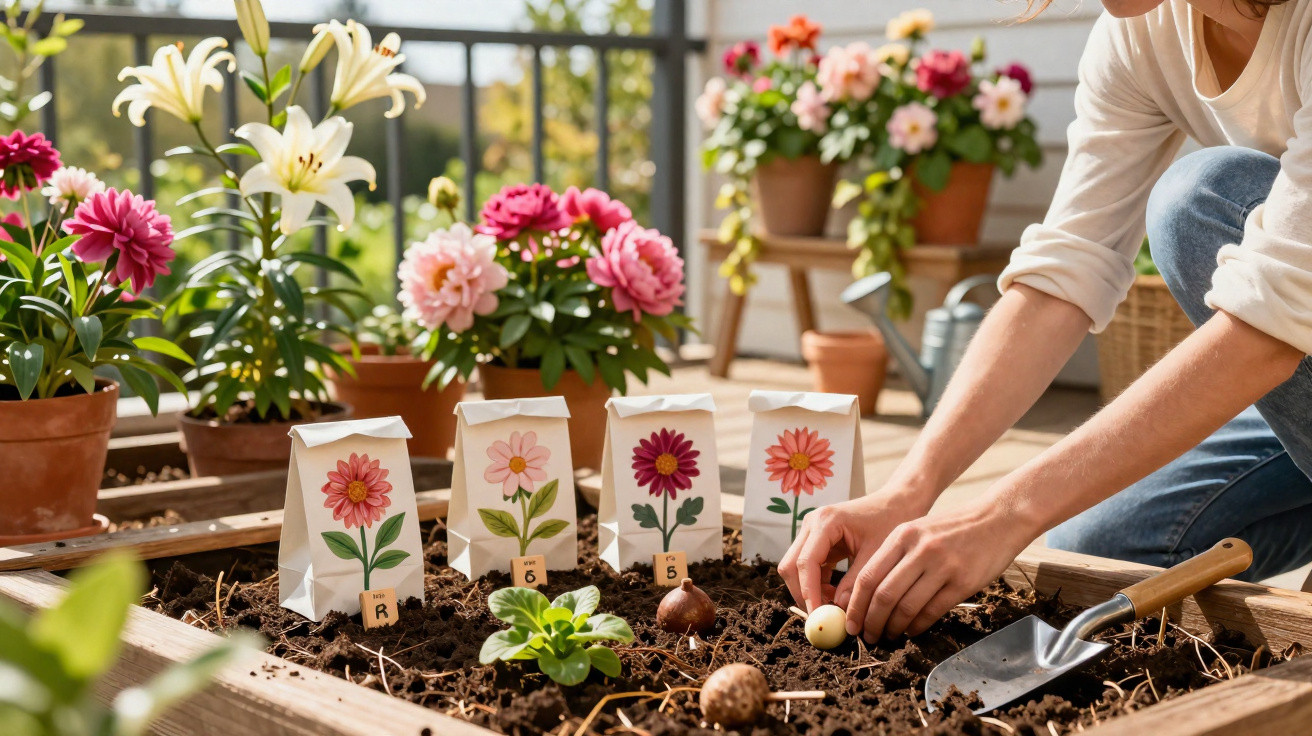
With the right planting plan in March, this gap can be filled elegantly.
Once the first spring bulbs have faded, flowerbeds and balcony planters can often look completely bare. Yet this is precisely the time to set the course for a garden that flowers continuously throughout the year. Choosing four specific flower bulbs and tubers in March bridges the colourless spell and brings a burst of blooms to your outdoor space from June well into autumn.
Why March is a game-changer for summer-flowering plants
For many summer-flowering plants, March marks the most important stage: the soil begins to thaw, the sun grows stronger and daylight hours increase. Planting now means flowering will not be delayed until late summer, but colour will arrive at the beginning of the warmer season.
“Without planting in March, many amateur gardeners face a colourless dry spell lasting several weeks – exactly when the patio is used most.”
Most summer-flowering tubers and bulbs should go into the ground between early March and around mid-May. If planting is delayed until late April or May, the first flowers often do not appear before July. By then, daffodils and tulips have long disappeared, leaving beds and containers looking unexpectedly sparse.
A simple approach can prevent this: four groups of bulbous plants work together as a flowering relay, carrying colour from the early weeks of summer into autumn.
The four most important choices for planting in March
Dahlias: bursts of colour for sunny beds
Dahlias are among the most dependable stars of summer. They grow from tuberous roots that benefit from being started in March. Ideally, begin the tubers in pots under cover or in a bright, frost-free cellar.
- Start in pots in March, using lightly moist compost and keeping them frost-free
- Move them into beds or large containers from mid-May
- Depending on the variety, they flower from June to October
- They need plenty of light and nutrient-rich soil
Their enormous range of varieties offers something for every preference: from small pompon types and star-shaped blooms to huge flower balls suitable for cutting. Starting in March guarantees a long season and makes it easy to disguise gaps between perennials and roses.
Begonias: unsung heroes for shade and north-facing balconies
Begonias generally thrive where other plants struggle. They are particularly useful in shady courtyards, on north-facing balconies and along dimly lit sides of the house. In March, place their tubers in shallow trays or pots filled with loose, lightly moist compost, with the rounded side facing upwards.
Keep the containers in a bright but frost-free place, such as a windowsill, hallway or unheated conservatory. Move the plants outdoors after the last frosts. There, regular watering will reward you with an almost uninterrupted display of flowers until autumn.
“Begonias are ideal gap-fillers for places where there seems to be no suitable flowering plant.”
Lilies: elegant structural plants with the added benefit of fragrance
Lilies add height and elegance to beds. Plant their bulbs in March at a depth two to three times their height. Choose a well-drained spot, as they cope poorly with waterlogged soil. Depending on the variety, they suit either sun or partial shade.
A particular advantage is that many lilies flower when the garden can otherwise be slightly quiet. Some varieties open their buds in late spring, while others focus on high summer and early autumn. This makes it possible to bridge weeks when few other flowers are in bloom.
- March: plant the bulbs, loosen the soil and mix in some sand if the clay is heavy
- Early summer: the first flowers appear on early varieties
- High summer: the main flowering period for many Asiatic and Oriental varieties
Peonies: an investment in many future springs
Peonies are less an immediate solution than a long-term investment. Planting them in March provides abundant spring and early-summer flowers in the years ahead. They require patience: it often takes two to three years before the plants reach their full potential.
These perennials need a position where they can remain for a long time, as they dislike being moved. Once established, they form larger clumps year after year and produce impressive, often fragrant flowers. They are essential for gardeners who are looking beyond the current summer to the seasons that follow.
How the four plant groups close the flowering gap
With a little planning, these four groups create an almost seamless flowering calendar. As spring bulbs gradually fade away, pre-started dahlias and begonias take over. Lilies extend the season vertically, while peonies ensure a lavish start to early summer in subsequent years.
| Plant | Planting time | First flowers | Typical position |
|---|---|---|---|
| Dahlia | March (in a pot), outdoors from May | June | Sun to partial shade, nutrient-rich |
| Begonia | March (indoors), balcony/bed from May | June |
More articles
- Only one milk roll brand receives genuinely positive feedback from the nutrition doctor
- 10 clever phrases for setting boundaries – without an argument
- Crop top despite a tummy? How to wear the trend without discomfort
- Brilliant trick: scrub your driveway like new with kitchen cleaner and a broom
- When a blue tit flies into your home in March: what it means
- This trick turns your garden into a paradise for blue tits
- How to plant potatoes correctly: professional tips for an XXL harvest in summer
- Lidl launches a 3-in-1 floor wonder: vacuum, mop and dry in one go
Copyright © 2026 Koester-kuechen
Back to top




Comments
No comments yet. Be the first to comment!
Leave a Comment