
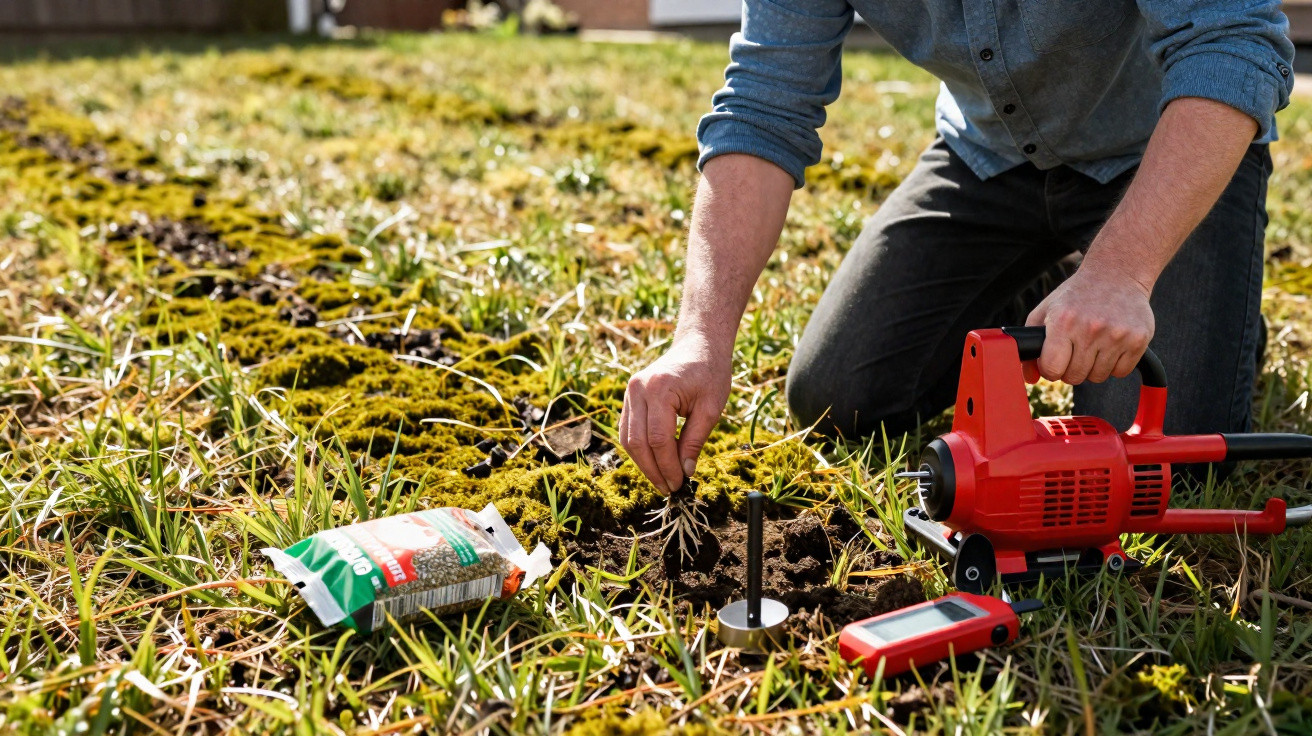
After a wet winter, a garden lawn can quickly look like a patchy swamp. Moss, brown patches and yellowing blades make it tempting to reach for the scarifier. However, using it at the wrong time or with unsuitable settings can turn the dream of a perfect lawn into a bare, straw-like surface. This common spring mistake is easy to avoid by following a few straightforward rules.
The often-overlooked main cause: scarifying too early and too aggressively
The key springtime error is that many people scarify as soon as the first mild days arrive, even though the lawn is still severely weakened. The turf has only just made it through winter, its roots remain shallow, and the ground is cold and often saturated. Scarifying deeply in these conditions removes not only moss and thatch, but also large sections of turf.
Anyone who scarifies too early and too deeply “scalps” their lawn – so bare, brown patches should come as no surprise.
There is another issue: after an exceptionally wet winter, soil is often compacted while also being heavily waterlogged. The scarifier blades can then cut especially deeply, damaging the already weakened roots. Within days, the lawn can change from looking cared for to resembling a furrowed building site.
How to tell whether the lawn is genuinely ready
Before considering scarifying at all, assess the lawn honestly. A few pockets of moss do not automatically call for drastic treatment. Look for these clear signs:
- The ground feels like a spongy carpet when walked on.
- Puddles remain on the lawn for more than a few minutes after rain.
- Moss is visibly dominant, with grass blades appearing only sporadically.
- The first pass with a metal rake collects plenty of brown debris and clumps of moss.
If only one of these signs is present to a minor extent, thorough lawn care without a scarifier will usually be enough: mow a little higher, collect clippings and overseed selected areas. Scarifying only becomes worthwhile when thatch is clearly visible.
The right time to scarify in spring
For gardens in Central Europe, the best period is generally between March and May. The lawn’s condition matters more than the date on the calendar. Three requirements should be met:
| Criterion | How to recognise it |
|---|---|
| Soil temperature | Consistently above around 8–10 degrees, with noticeable grass growth. |
| Growth | The lawn has already been mown two or three times. |
| Soil moisture | It is neither frozen nor muddy, but only slightly damp. |
If you are unsure, carry out a simple test: lift a spadeful of soil and check whether the roots look white and healthy, and whether the soil can be lifted without falling apart. If everything appears grey and crumbly, or the soil is soaking wet, it is still too early.
Newly laid lawns are particularly vulnerable. During the first twelve months after establishing a lawn, scarifying should be avoided or done with great care. Lawn roots generally do not become fully resilient until after two to three years.
Setting the scarifier to help rather than shred the lawn
Once the timing is right, proper preparation determines how well the lawn recovers. A reliable approach is as follows:
- Apply a light feed at the start of the season so the lawn can regrow strongly.
- Mow it short, to around 3 to 4 centimetres, one or two days before scarifying.
- Collect the clippings carefully so the blades can work freely.
- Scarify only when the ground is slightly damp, with no standing water and no dry cracks.
- Set the blades to a depth of 2 to a maximum of 3 millimetres.
The machine should merely score the surface rather than plough up the lawn. Fine grooves with very few uprooted clumps of grass and roots indicate the correct depth.
When using an electric machine, walk slowly and allow it to do the work instead of pushing down on it. In heavily thatched areas, a second pass at right angles to the first can be useful. Afterwards, thoroughly remove moss and thatch using a rake or collection box. If the debris is left behind, another layer of thatch will soon form.
Lawn recovery begins after scarifying
Immediately after scarifying, a lawn often looks alarmingly battered. Bare soil may be visible in many places, while the blades lie flat. At this stage, aftercare determines whether the treatment becomes a disaster or a fresh start.
Without good follow-up care, moss grows back faster than the lawn can recover.
One crucial factor is the soil pH level. Moss thrives in acidic soil, whereas lawn grasses prefer neutral to slightly acidic conditions. In many gardens, years of clippings and rainfall have made the soil overly acidic. A lime-based soil improver, such as dolomitic lime, can help by gently raising the pH level.
What is best avoided: many people still use iron-based products that temporarily turn moss black and kill it. These products burn the moss but also make the soil more acidic. As a result, the lawn continues to struggle with unfavourable conditions, while moss spreads again after a short time.
Closing gaps so new moss cannot move in
After improving the soil, targeted overseeding is worthwhile. The open areas left after scarifying provide an ideal entry point, either for new lawn grass or for unwanted weeds and moss. A renovation seed mix containing robust varieties helps the lawn close over quickly.
A sensible post-treatment routine works like this:
- Loosen the surface lightly with a rake.
- Scatter lawn seed thinly across bare spots, rather than applying it in layers.
- Roll it lightly or carefully firm it down with your feet.
- A spring starter fertiliser provides a quick boost.
- Keep the area evenly moist, but not wet, in the following weeks.
During this period, keep foot traffic on the lawn to a minimum. Young grass blades break easily where children play or garden furniture is placed.
How to stop moss becoming a problem in the first place
Anyone fighting the same battle every year should tackle its causes. Moss does not appear by chance; it takes advantage of weaknesses in the lawn system. Typical reasons include permanently shaded positions, compacted soil, waterlogging, or mowing too frequently and too low.
Three adjustments often bring major improvements:
- Mowing height: Mow a little higher instead; 4 to 5 centimetres is ideal for many home gardens.
- Air in the soil: Aerate compacted areas with a garden fork or dedicated aerators.
- Nutrient supply: Two to three moderately dosed fertiliser applications each year strengthen the grass.
In very shady areas, it can be worth reconsidering the approach. Rather than continually fighting moss, choose shade-tolerant ground cover plants or a wildflower meadow there. In such places, an unbroken carpet of lawn is often more of a wish than a realistic goal.
Why less is often more when scarifying
Many gardeners see scarifying as an annual obligation. In some cases, however, targeted action every few years is sufficient. A lawn that is mown regularly, fed moderately and well aerated produces far less thatch.
A simple rule of thumb usually works well: inspect first, then act. If the ground does not give underfoot, the lawn looks dense and rich green, and a rake passes through without collecting much debris, the scarifier can stay in the garage during spring. This not only protects the lawn but also saves your nerves – and the lawn will often look better in the end.






Comments
No comments yet. Be the first to comment!
Leave a Comment