
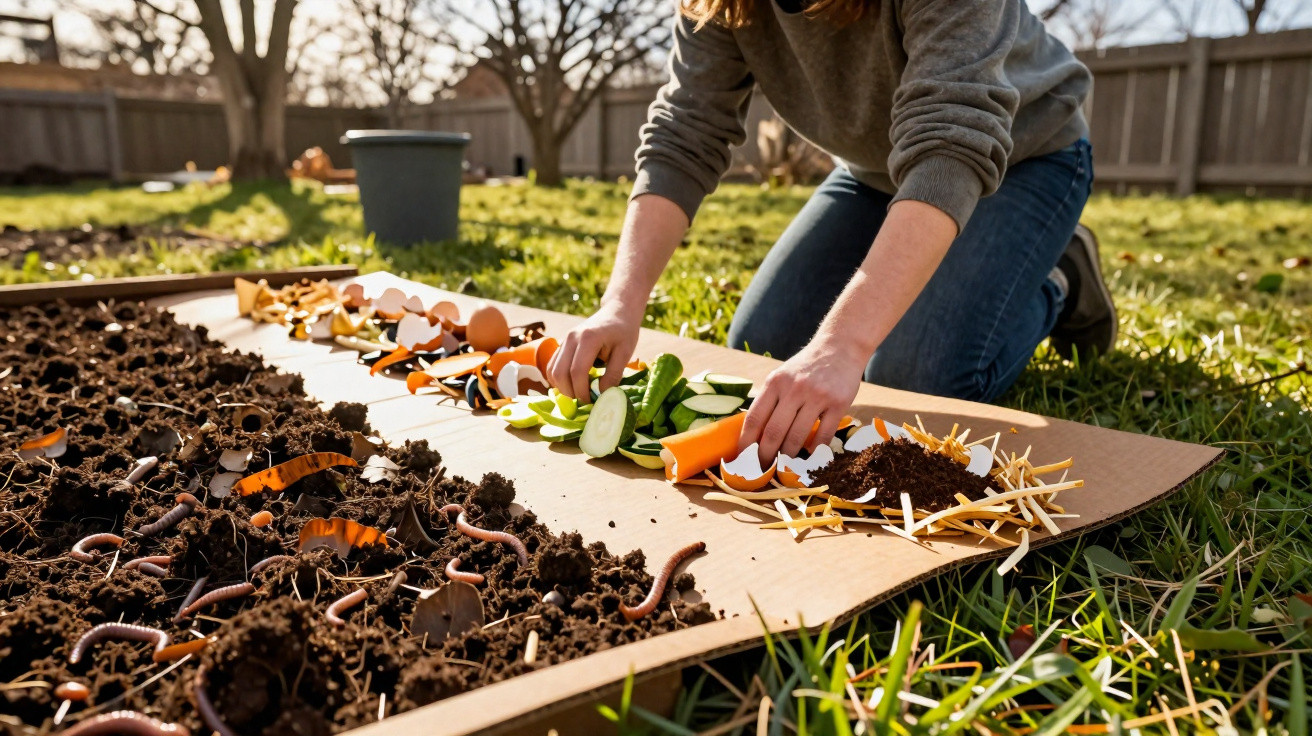
While many amateur gardeners prefer to stay indoors during winter, an ideal opportunity is passing unnoticed: the chance to create loose, nutrient-rich soil with very little effort. A little-known permaculture technique needs no digging at all, makes use of kitchen and garden waste, and can turn even hard-to-manage patches into fertile beds by spring.
What “lasagne gardening” is really about
The name may sound like a recipe, yet it describes the method remarkably well: as with the baked dish, the garden bed is built in layers, except these are made from organic matter rather than pasta sheets. Placed directly over the existing ground, the layers form a shallow composting system that gradually becomes living, humus-rich soil.
“Lasagne gardening means feeding the soil before the plants – and the plants benefit twice over later on.”
This approach takes its lead from nature. Nobody cultivates the forest floor or clears away its fallen leaves. Leaves, twigs, dead herbs and animal manure collect there, decompose slowly and create a deep layer of humus. Lasagne beds bring the same process into your vegetable garden, but speed it up and concentrate it exactly where you intend to harvest.
Starting in January or February gives rain, frost, thawing weather and soil organisms several months to process the materials. By spring, you will have a loose, deeply dark bed ready for planting directly into, without a spade or powered cultivator.
The foundation of every lasagne bed: cardboard stops weeds
The first step may feel unfamiliar, but it is essential: rather than digging first, cover the ground with a layer of plain, uncoated brown cardboard. This can be laid over lawn, a weedy strip or even compacted bare soil.
The cardboard performs two functions:
- Blocking light: Complete darkness beneath the layer kills existing grass and weeds, allowing them to rot where they are.
- Feeding soil life: Cardboard is rich in carbon; once damp, it softens and becomes food for earthworms and bacteria.
It is important to remove every plastic component, including tape, labels and plastic windows. Lay the cardboard pieces with generous overlaps of at least 10 to 15 centimetres, so no gaps are left.
“Water thoroughly after laying it: only soaked cardboard moulds itself to the ground and begins breaking down quickly.”
This marks out the precise area of the bed, creating a clearly defined space on which you can then build layer upon layer.
The carbon-and-nitrogen trick: layering materials in the right order
The real “lasagne” construction begins on top of the cardboard. At the heart of the technique is the alternation between two material groups, known as “browns” and “greens”. This provides the chemical balance between carbon (C) and nitrogen (N).
Brown layers: structure and water storage
“Brown” refers to dry, relatively firm materials with a high carbon content. Common winter examples include:
- Straw or hay
- Collected dry autumn leaves
- Woodchips or shredded branches
- A small amount of sawdust or wood wool
- Non-glossy newspaper torn into strips
These layers can be fairly thick. They keep the bed structure airy and act like sponges, holding water and releasing it evenly to the roots later on.
Green layers: the engine of decomposition
“Green” describes materials high in nitrogen, usually moist and soft. During winter, suitable options are mainly:
- Vegetable and fruit scraps from the kitchen
- Coffee grounds and tea bags without plastic components
- Leftover grass cuttings, if available
- Fresh or partially rotted farmyard manure
- Wilted culinary herbs, potted herbs and faded plant material from indoors
These materials activate the micro-organisms that break everything down. Too much can quickly cause unpleasant smells and rotting, while too little slows the process.
“A simple basic recipe is to layer roughly two parts brown material to one part green material.”
Start with a coarse, loose layer of twigs or straw over the wet cardboard. Add a thinner “green” layer, such as kitchen scraps or manure. Cover this with another much thicker “brown” layer, for instance leaves. Repeat this pattern until you have formed a mound 30 to 50 centimetres high.
It may initially look enormous, but it will sink significantly during the months ahead, usually reducing to around half its original height.
Winter becomes your own small recycling centre
Beginning lasagne beds in January also quietly solves a waste problem. Instead of putting organic waste into general rubbish or making regular trips to the local collection site, it goes straight to the place where it will later do its job: the bed.
Typical winter waste that works particularly well includes:
- Peelings from root vegetables, squash and beetroot
- Citrus peel in small quantities, roughly chopped
- Stalks from cabbage, broccoli and cauliflower
- Remaining perennial material from autumn pruning
- Old, exhausted compost from pots or window boxes
Old potting compost or flower compost in particular gets a useful second life this way. It still contains minerals and micro-organisms that can colonise the new layers. Tasks such as cleaning the kitchen or clearing beds are gradually transformed into a construction project for future harvests.
Invisible helpers: earthworms as free soil workers
Once the lasagne bed is built and well watered, the most important work begins beneath the surface. Cold and wet weather do not stop soil life entirely; on the contrary, the organic mass attracts earthworms, woodlice, springtails and countless bacteria.
“Earthworms create vertical tunnels, blend cardboard, soil and compost, and leave behind castings that plants can use immediately.”
Earthworms in particular continually move between the original soil and the layers above it. They pull fine particles downwards, loosen the earth, create air channels and improve water movement. They quietly and continuously carry out the work that once required laborious digging with a garden fork.
Slow decomposition also generates warmth. On frosty nights, the temperature within the lasagne bed remains slightly higher than in untreated ground. This keeps biological activity going for longer and allows the bed to warm up more quickly in spring.
The spring test: planting without digging
By April or May, the effect of the winter months becomes clear. The tall mound will have settled, and the individual layers will barely be recognisable. In their place is a dark brown, crumbly material that resembles woodland soil and has a pleasant earthy smell.
There is no longer any need for heavy garden work before planting. Usually, making a planting hole with your hand or a small trowel is enough. For young plants, add a little fine planting or seed compost to the hole, place in the root ball and cover it again with the lasagne mixture.
Even if remnants of the original materials are still visible in the top few centimetres, they will hardly trouble the plants. On the contrary, their continued breakdown provides slow-release nutrition while also acting as a mulch layer that protects against drying out.
There is another benefit: considerably fewer weeds germinate beneath the cardboard and many layers. The familiar surface crust that can form after heavy rain is avoided; the soil stays open, water can penetrate and roots can find their way easily.
“Fewer weeds, less watering and less carrying – the real hard work happens months earlier, while everyone else is still taking a winter break.”
What to watch for – and where it is especially worthwhile
A few basic rules will help lasagne beds remain successful over the long term:
- Avoid coated cardboard, glossy brochures and coloured card.
- Do not add meat, cheese or cooked food scraps, as they attract unwanted animals.
- Roughly chop large pieces, such as cabbage stalks, so they decompose more quickly.
- Water the lasagne bed occasionally after dry spells, especially on light soils.
- At first, plant sensitive vegetables as young plants rather than sowing them directly into the lasagne bed.
This method is particularly worthwhile in difficult locations: heavy clay soils that otherwise form clods, or compacted lawn areas. The thick organic layer draws life upwards, loosens and improves the ground beneath without the need to break it open first through hard work.
How to use the system year after year
A lasagne bed is not a one-off project. After the first season, you can add fresh layers in autumn and winter, this time more thinly, rather like a combination of mulch and a light compost dressing. Kitchen scraps, leaves and a little straw placed on top keep the soil covered throughout the year.
Over the years, this creates an increasingly deep, humus-rich layer. Water requirements fall, plant roots reach further down and yields become more reliable. If you wish, the method can be combined with mixed cropping or permaculture elements, such as supports for beans or small fruit shrubs around the edge.
Many amateur gardeners who begin with one lasagne bed gradually create more growing areas: a strip for squash and courgettes, a sunny space for tomatoes, or a small edible garden for children. Initial scepticism often soon gives way to the realisation that “no-dig” gardening is not laziness at all, but the intelligent use of natural processes.


Comments
No comments yet. Be the first to comment!
Leave a Comment