
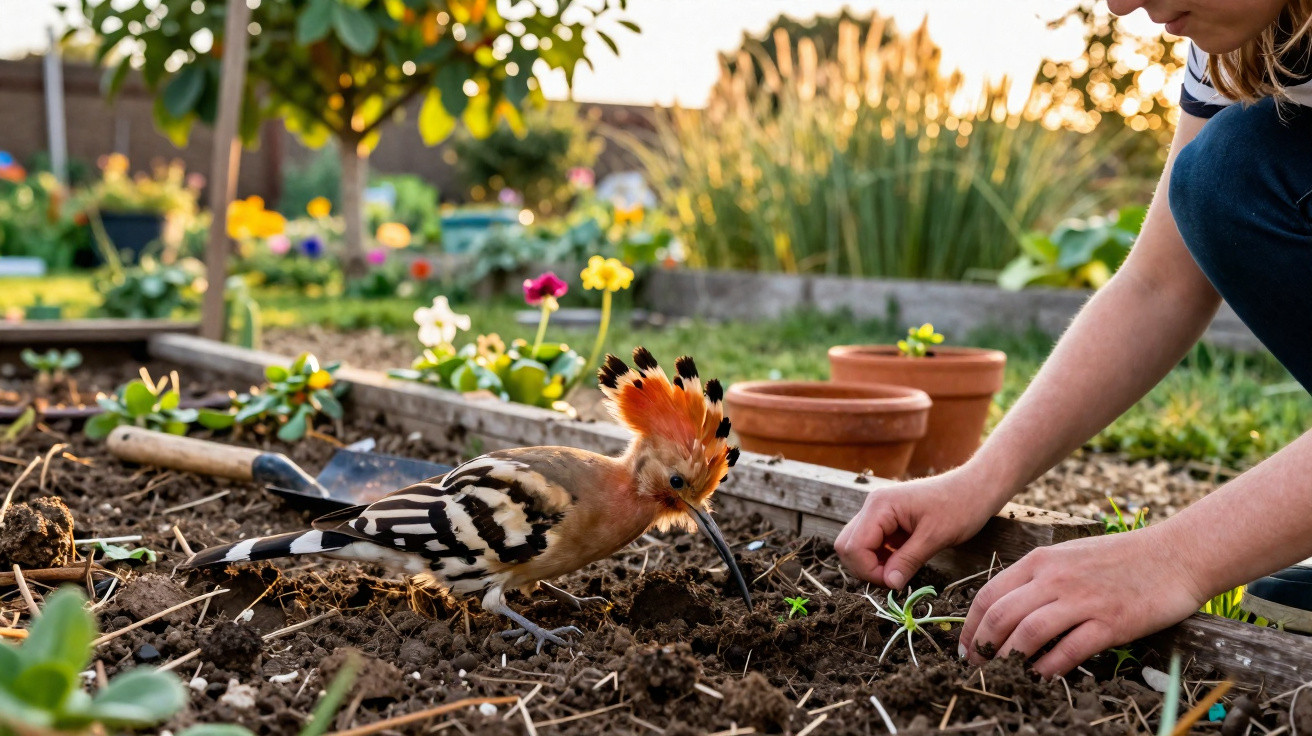
Spotting a hoopoe in the garden can make you blink in surprise. Its orange-beige plumage, black-and-white barred wings and, above all, its striking feather crest give it an almost tropical appearance. Yet this unexpected visitor is more than an attractive photographic subject: it can reveal something about your soil quality, how your plot is managed, and the bird itself carries a long symbolic history.
How the hoopoe ‘reads’ your soil
From a biological perspective, the hoopoe is a genuine specialist. Its diet consists almost entirely of insects living in, or directly on, the ground. Using its long, gently curved bill, it probes the soil and pulls out prey that many gardeners regard as pests:
- chafer grubs and other beetle larvae
- mole crickets
- caterpillars, including processionary moth caterpillars
- beetles and crickets
- a range of other ground-dwelling creatures
For a hoopoe to remain in a garden for any length of time, there must be plenty of these soil inhabitants available. This indicates loose, living soil that is rich in micro-organisms and larger organisms. A heavily chemically treated, ‘dead’ garden with a dense, closely clipped lawn offers it very little.
“If a hoopoe stays in the same garden for several days or weeks, this points to healthy, lightly polluted soil with high biodiversity.”
The bird therefore acts as a natural bio-indicator: where it feeds regularly, widespread insecticide use and large-scale weedkiller application are unlikely. Soil with plenty of structure, compost and mulch, and little compaction from heavy machinery, supports insects and makes a garden appealing to the hoopoe.
The type of garden a hoopoe really prefers
Hoopoes avoid thick, unbroken vegetation. They require sunny, open ground where they can easily push their bills into the soil. Their typical habitats include:
- sunlit meadows and pasture
- vineyards and traditional orchards
- old fruit gardens with areas of short grass
- parks and natural-style domestic gardens with sparse planting
A combination of closely mown lawn or meadow patches, along with small sections of bare earth or very low vegetation, is ideal. This allows the bird to walk comfortably across the ground while probing for food. Noise and constant activity, on the other hand, discourage it.
“A garden that feels like a small refuge – sunny, peaceful and with little hard surfacing – gives the hoopoe the best chance.”
Anyone able to leave their garden slightly more ‘untidy’ will be doing this bird a favour. A corner with dead wood, an old fruit tree with cavities, or a loosely built stone wall can provide valuable nesting sites or insect refuges. A pristine, sterile green space maintained by a robotic mower is far less inviting.
A rare visitor travelling from Africa
The European hoopoe spends the winter mainly south of the Sahara. It uses savannahs and other open landscapes there before returning to Europe in spring. In central Europe, it is chiefly seen from April to September, although the first sightings can occur as early as late February in particularly mild areas.
Across much of southern Europe, it remains one of the characteristic bird species of the farmed landscape. Further north, including Germany, Austria and Switzerland, it is much rarer and tied to warmer, drier areas. When it appears in a garden there, it suggests an especially favourable setting: warm, structurally diverse and located within an otherwise rather cleared-out landscape.
Hoopoe populations declined in many countries during the 1980s and 1990s. More intensive farming, fewer insects and the extensive use of pesticides were responsible. Numbers are now slowly stabilising in some regions, partly aided by climate change, which is bringing warmer and drier conditions.
“Anyone who sees a hoopoe in a central European residential area today is still witnessing a special moment – especially in densely populated or intensively used places.”
What a hoopoe visit reveals about your garden’s future
For many people, the arrival of a hoopoe represents more than zoological facts. There is a long tradition behind this: ancient cultures viewed it as a mediator, a guide and a sign of new beginnings.
In a famous Persian tale, the hoopoe leads other birds in their search for truth. In Ancient Egypt, it appeared in hieroglyphs as a symbol of gratitude and family ties. Its crest, which rises like a crown, earned it the reputation of the ‘king of birds’ in popular belief.
Applied to the modern home garden, this can be interpreted as follows: where a hoopoe appears, someone has often already done many things right without realising it. Reducing chemical use, allowing ‘wild corners’ to develop and showing consideration for insects all give the bird an opportunity and signal a more sustainable way of gardening.
“A hoopoe in the garden feels like a compliment from nature: you are heading in the right direction, so carry on.”
Those who develop this approach further benefit in several ways over time. More insects do not merely provide food for birds; they also strengthen the entire garden ecosystem, from life in the soil to the pollination of fruit trees and berry bushes.
Practical tips: making your garden hoopoe-friendly
No one can ‘order’ a wild bird. All you can do is provide suitable conditions. The following measures improve the chances that a hoopoe will use your garden, even if only as a stopover:
Avoid chemical products
The fewer insecticides, fungicides and weedkillers used, the richer the soil life becomes. Organic plant protection, mechanical methods and mixed planting can help you manage without toxins.Allow areas of open soil
Not every surface needs dense planting or grass cover. Small, sunny places with loose soil make hunting easier for the bird.Do not keep every part of the lawn clipped like a carpet
A mix of short grass, slightly taller meadow and islands of flowers encourages insects, and therefore increases the food supply.Create places of refuge
Old trees with cavities, gaps in walls or a purpose-built nest box with a side entrance can provide a breeding site, provided the location is otherwise suitable.Respect peace and quiet
Constant loud sound, ongoing engine noise and heavy garden activity deter shy animals. Planning quiet zones makes a garden more wildlife-friendly overall.
When the ‘stinking bird’ moves in
One feature can surprise people encountering a hoopoe near its nest for the first time: it can smell very strongly. Young birds and incubating females release a type of secretion that deters predators. Around the nest, the scent is more reminiscent of a farmyard than an ornamental garden.
It may seem unpleasant at first, but it is an effective defensive mechanism. Anyone willing to tolerate a nest in their garden will need a little patience, but in return will be rewarded with fascinating observations and a highly efficient pest controller.
What the hoopoe says about our relationship with nature
The fact that such a conspicuous, distinctive bird has become rare in many places shows how profoundly our landscapes have changed. Sealed surfaces, monotonous agricultural expanses and insect decline are gradually taking away its habitat.
One individual garden cannot fully make up for this, but it can become one part of a larger network. When several neighbours avoid harsh chemicals, retain hedges or plant new trees, they create movement corridors for birds, insects and small mammals.
Anyone watching a hoopoe is entitled to be delighted, while also asking: what small everyday actions can further support this fragile balance? There are many levers to pull, from buying locally produced goods and using insect-friendly lighting to avoiding gravel gardens.
This bird’s brief visit then becomes more than a pleasant anecdote. It suggests that a different, more vibrant form of gardening and landscape is already beginning to emerge. Those who recognise this sign can consciously help it progress – for the benefit of the soil, their own harvest and biodiversity on their doorstep.
Comments
No comments yet. Be the first to comment!
Leave a Comment