
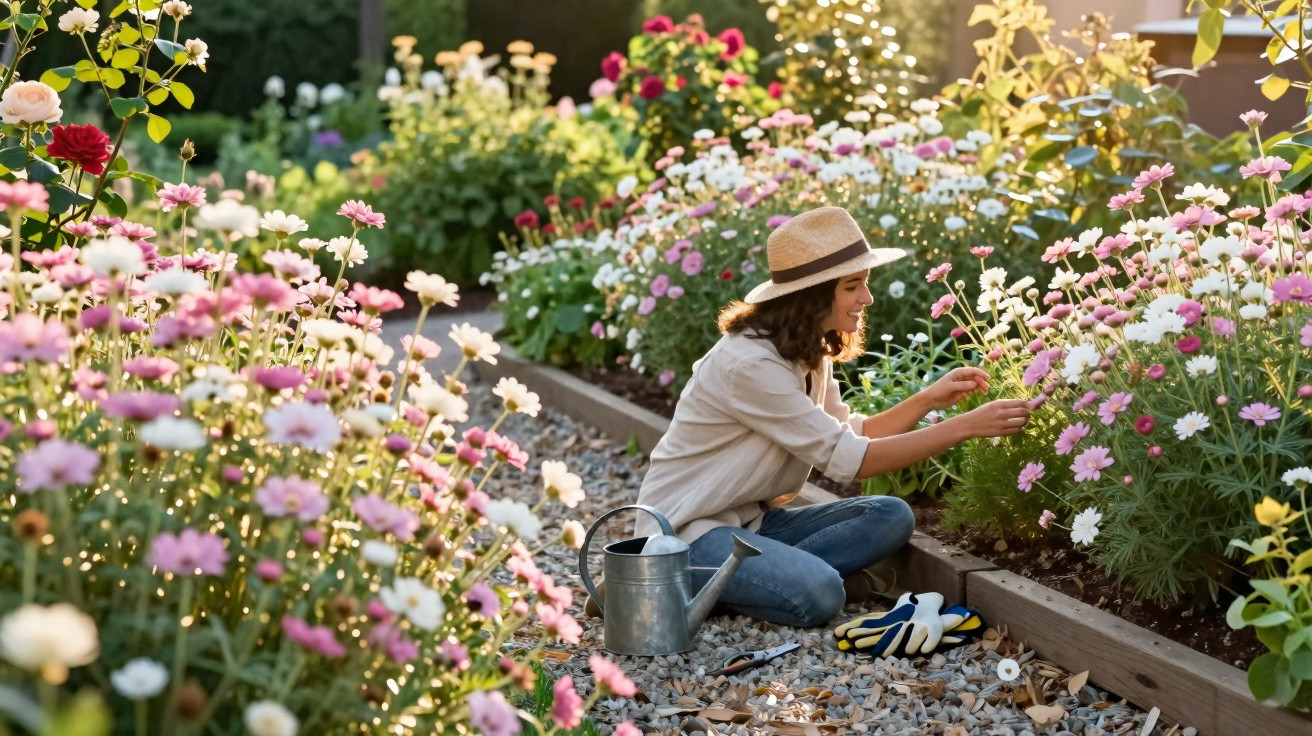
While roses demand pruning, feeding and protection from disease year after year, an alternative is quietly taking over the ornamental garden. A delicate-looking perennial that copes with drought, withstands cold and flowers from spring well into winter: Gaura, also known as the bee blossom or butterfly flower.
Why more gardeners are replacing roses with Gaura
Roses represent romance, fragrance and traditional garden style. Yet anyone who grows them also knows their drawbacks: regular pruning, powdery mildew, black spot, aphids, high water requirements and often disappointing flowering after a wet or exceptionally hot summer. At some point, many garden owners realise that the effort no longer matches the result.
This is precisely where Gaura lindheimeri shows its strengths. The perennial grows, flowers and keeps going without constant attention. It forms loose clumps with long, slender stems carrying countless delicate flowers. Depending on the region and weather conditions, these appear from May until well into December.
“Gaura can flower for up to eight months of the year – without excessive pruning, feeding schedules or constantly checking the weather forecast.”
For anyone wanting a lively, flower-filled border without giving up half of Saturday to gardening, bee blossom becomes a serious alternative to traditional rose beds.
The art of lazy gardening: Gaura as a low-maintenance long-flowering perennial
Gaura originally comes from the southern United States and Mexico. There, it has adapted to heat, poor soils and irregular rainfall. Its origins are clearly reflected in the plant's character.
- exceptionally drought-tolerant
- no special soil quality required
- rarely affected by common garden diseases
- highly frost-hardy, depending on the variety down to around -15 °C
- no annual shaping prune needed
In the garden, it is almost self-sufficient. Once established, it needs far less watering than many other flowering perennials. Anyone with a sunny, relatively dry spot where roses regularly struggle or one rose bush after another dies should try Gaura.
“In a free-draining, sunny border, you can almost forget about Gaura – it simply keeps flowering as though nothing has happened.”
Another advantage is that the plant remains attractive even when it is not in full bloom. Its fine stems and open habit give borders an almost “wild” elegance, perfectly suited to modern, nature-inspired gardens.
Light as butterflies: how Gaura looks in the border
Gaura's visual appeal lies less in one spectacular flower than in its abundance and movement. The white or pink flowers float on long, flexible stems, bobbing with every breath of wind.
This creates a light, airy structure that softens even the strictest planting schemes. In gardens with formal hedges, clean lines and structural shrubs, Gaura can be used to create deliberate contrast.
Popular flower colours include:
- pure white for a crisp, elegant appearance
- soft pink for romantic planting schemes
- mixed white and blush pink for a lively, playful effect
At the same time, the plant quietly supports wildlife. Its nectar-rich flowers attract bees, bumblebees and butterflies. At a time when many insects are affected by sealed surfaces and pesticides, a strip of Gaura in the garden acts like a small organic filling station for pollinators.
“Where Gaura is flowering, it is never completely quiet: the buzz of bees and flutter of butterflies are almost always part of the scene.”
Planting ideas: where Gaura makes the garden stand out
Gaura is one of those perennials that can be used almost anywhere in a sunny area. It is particularly effective in places that might otherwise look too sterile or severe.
In perennial borders and mixed beds
In a mixed perennial border, Gaura is ideal towards the middle or back. Its long flower stems rise above lower perennials to form a light veil. Placed beside bolder plants with large leaves, it visually reduces their weight.
Suitable companions include:
- fine grasses such as fountain grass or blue fescue
- salvias, including ornamental sage and perennial sage
- lavender for a classic southern-garden look
- euphorbias and other drought-loving perennials
As an informal edging and beside paths
Along a driveway or garden path, Gaura creates a relaxed, almost “cottage-garden” feel. The plants spill gently over the edge without overwhelming their neighbours. In front of a patio, they can form a kind of flowering curtain that provides both screening and decoration.
In dry gardens and rockeries
For anyone with a rock garden, wall top or sunny bank, Gaura is an ideal gap-filler. It tolerates heat as well as poor, stony soil. Growing between stones or on dry-stone walls, it softens hard edges and creates a gentle transition.
On balconies and patios
Gaura also performs well in containers, provided the pot is sufficiently large and allows water to drain away. A heavy planter stops the plant from toppling in windy conditions: although its swaying flower stems handle gusts well, the container itself must stand securely.
- a large, deep container with drainage holes
- loose, relatively low-nutrient compost
- a position in full sun or very bright light
Combined with lower-growing companions such as thyme, cranesbill or compact grasses, it creates a moveable mini prairie garden for the balcony.
How to plant Gaura correctly – and then do very little
Getting started is straightforward: Gaura is available as a container-grown plant in many garden centres. Spring and autumn are the best planting seasons, when the soil is still, or once again, adequately moist.
- Choose a site: full sun, open to the wind and with free-draining soil.
- Dig a planting hole slightly wider than the rootball.
- Prevent waterlogging; if necessary, mix in gravel or grit.
- Plant about 40 centimetres apart.
- Water thoroughly, then water only during prolonged dry periods.
Unlike many roses, the soil does not need elaborate preparation with compost or specialist fertiliser. Bee blossom actually prefers soil that is not overly rich. This keeps it more compact and makes it less likely to flop.
Hard pruning is unnecessary. Many gardeners cut the stems back close to ground level once in late winter to make room for new growth. If desired, faded shoots can be lightly shortened in summer to keep the plant looking fresher. This is not essential, however – the perennial does its job without these extras.
Popular Gaura varieties for different garden styles
A range of varieties is now available, differing in flower colour, height and growth habit. Three are considered particularly reliable:
| Variety name | Flower colour | Special features |
|---|---|---|
| Whirling Butterflies | pure white | very light, floating effect, ideal for naturalistic borders |
| Siskiyou Pink | rich pink | striking colour, well suited to romantic planting schemes |
| Belleza White | white | compact, free-flowering, good for smaller beds and containers |
Anyone unsure where to begin can start with a white variety and add pink forms later. Particularly in smaller gardens, this keeps the overall effect calm rather than overly colourful.
When Gaura reaches its limits – and how to avoid mistakes
Despite being so undemanding, a few factors determine whether it succeeds or fails. The plant strongly dislikes permanently wet soil. Standing water in winter can damage the roots and cause the perennial simply to “disappear”.
In particularly exposed areas with prolonged severe frost, light winter protection is worthwhile: place a layer of leaves or twiggy branches over the root zone. For container-grown plants, stand the pot on small wooden battens so excess water can drain away, and position it in a sheltered spot close to a house wall.
There is one further point to consider: in very nutrient-rich soil, Gaura can become too tall and soft. Its stems then tend to fall over. If the plants start to “collapse”, stop feeding them and choose leaner sites instead – even if that seems counterintuitive at first.
Why it is worth looking beyond roses
Roses will retain their place in many gardens. However, an increasing number of amateur gardeners are mixing species such as Gaura into traditional planting schemes to create areas that require less work. The result is borders that remain attractive for much longer, even when a weekend away means nobody is available to water.
Anyone planning a new garden or redesigning a tired rose bed can turn the usual approach around: make Gaura the leading plant, with just a few rose bushes as accents rather than the other way round. This significantly reduces the maintenance burden, while spreading the flowering period across almost the whole gardening year.

Comments
No comments yet. Be the first to comment!
Leave a Comment