
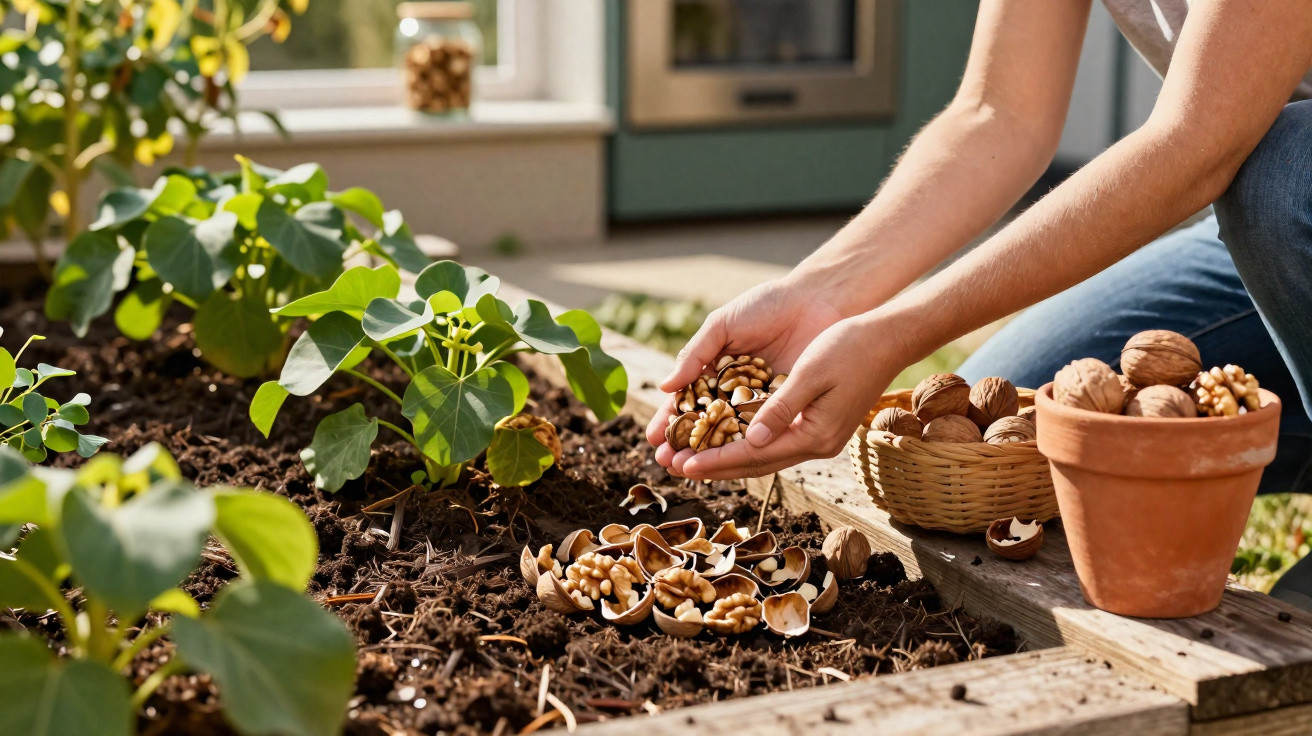
They are packed with potential – for your garden, your home and your wallet.
Anyone who enjoys walnuts or hazelnuts will know the issue: once the snacking is over, the table is covered in piles of empty shells. Most are simply thrown into the household waste. Garden experts and zero-waste enthusiasts say that is a mistake. These unassuming shells can protect flowerbeds, improve drainage in pots, make rooms feel more inviting and even stand in for cleaning products. With a few straightforward steps, waste can become a useful everyday resource.
Why nutshells are far too useful for the bin
Nutshells may look ordinary, yet they have several valuable qualities. They are tough, fibrous, biodegradable and slow to go mouldy. These features make them particularly useful both outdoors and around the home.
Nutshells cut waste, save money and can replace several shop-bought products – from decorations to cleaning products.
Saving shells rather than discarding them reduces the amount of waste you produce while making use of a material you already have. There is no need to buy anything extra, use plastic or rely on chemicals. They are also easy to store throughout the year and use gradually whenever required.
In the garden: a small natural material with a big impact
Nutshells as a natural protective layer for beds
One of the easiest ways to use nutshells is as mulch. Roughly crush the shells, then spread them around your plants.
- They help the soil retain moisture for longer.
- They substantially slow down weed growth.
- They shield the soil from heavy rainfall and erosion.
During especially dry summers, a layer of nutshells can help you leave longer gaps between watering. The key is not to create a thick, compacted mat: scatter the shells loosely so that water can still reach the soil.
A natural barrier against slugs and other pests
Many keen gardeners are frustrated by slugs stripping tender young plants overnight. Coarsely crushed nutshells may offer some help. Their sharp-edged surface is unpleasant for slugs and, to some extent, ants as well.
Create a ring of shells around vulnerable plants, such as:
- lettuce and cabbage
- young courgette or squash plants
- strawberries
- hostas and other foliage plants
This method is not completely effective, but it can noticeably reduce damage – particularly when combined with other measures, such as slug fences or beer traps.
Better drainage in pots and containers
Waterlogged compost is among the most common reasons potted plants fail. Clay pebbles or gravel are normally placed in the base of a container to help, but nutshells can partly take the place of these materials.
Before adding compost, put a layer of larger shell pieces at the bottom of the pot. The spaces between the pieces allow excess water to drain away, helping to prevent rotting roots and musty smells.
Anyone with lots of containers on the balcony can save money with nutshells – there is no longer any need to buy drainage material separately.
Make sure the shells are clean and dry. Hard walnut shells work especially well because they are very sturdy and retain their structure for a long time.
In the home: decoration, fragrance and a cleaning trick in one
Rustic decoration with minimal effort
Nutshells naturally bring warmth and a subtly rustic appearance. They can be turned into surprisingly elegant small decorations, without much skill or specialist equipment.
Small floating candles are a popular option: empty nut halves, leftover melted wax and a wick are all that is needed. Place the finished mini candles in a bowl of water or on a decorative tray to create an instantly cosy atmosphere.
Other ideas for the home include:
- a wreath for a door or table, combined with pine cones, twigs and dried orange slices
- natural scatter decorations for autumn or the Advent season
- small holders for place cards, for example at Christmas dinner
If there are children at home, shells can also be used for crafts. Painted, decorated or combined with felt, they can become little boats, animals or miniature bowls for doll’s houses.
Homemade scouring powder from nutshells
Their hard texture is useful for more than gardening: nutshells can also serve as a mild abrasive. Crushed shells can be made into a cleaning aid for removing burnt-on residue from pots and baked-on grime from trays.
Here is how to make it:
- Break clean, dry nutshells into rough pieces.
- Grind them further in a blender or using a pestle and mortar.
- Keep the crushed shells dry in a screw-top jar.
- When cleaning, combine one tablespoon with a little water or washing-up liquid.
The particles lift away dirt without scratching surfaces as severely as many harsh scouring products. Try it first on an inconspicuous area, and take particular care with very delicate finishes.
Waste becomes cleaning product: using nutshells saves chemical cleaners and plastic packaging.
Natural fragrance blends for wardrobes and living rooms
Nutshells absorb odours effectively and can gradually release essential oils or spicy aromas. This makes them a suitable base for simple homemade room fragrance mixtures.
A basic blend can be made with:
- nutshells, either walnut or hazelnut
- cinnamon sticks or ground cinnamon
- cloves
- dried citrus peel
Put everything into a bowl or small fabric bags, then place them in a wardrobe, bathroom or living room. For a stronger scent, add a few drops of essential oil. The fragrance is subtle, more natural than many sprays and easy to refresh.
How to crush and store nutshells properly
A little preparation will keep the shells usable for a long time. First, remove every remaining piece of nut so that nothing becomes rancid or attracts pests. Then allow the shells to dry thoroughly, for instance on a baking tray or in an open bowl.
Several methods can be used for crushing them:
| Method | Best suited to | Tip |
|---|---|---|
| Pestle and mortar | Small quantities, decorations, fragrance blends | Gives good control over the particle size |
| Blender / food processor | Cleaning product, mulch for small areas | Pulse briefly to avoid creating dust |
| Hammer wrapped in a cloth | Large pieces for beds and drainage | Best done outdoors |
Large pieces are sufficient for mulch and drainage. For cleaning products or detailed decorative projects, a finer texture is preferable. Store the shells somewhere dry and airtight, such as in old screw-top jars or metal tins.
What to consider when using nutshells
Useful as they are, there are a few considerations to keep in mind. In gardens with dogs or young children, sharp shell pieces should not be left out in the open, as they could cause injuries. Choose a finer grade instead, or use raised containers.
If your soil is very light, such as in raised beds, combine nutshell mulch with other organic matter – for example leaves, grass cuttings or shredded twigs. This supports a more balanced soil ecosystem and stops the soil becoming too dry.
Around the home, sensitive surfaces such as high-gloss units, Teflon-coated pans and acrylic only need a soft cloth. Even a mild abrasive should not be used on them. The nutshell mixture, however, delivers very good results on stainless steel, cast iron and baking trays.
Once you begin collecting shells, you soon realise that a single winter’s supply of walnuts and hazelnuts provides enough material for the balcony, garden and cleaning cupboard. Many people deliberately build up a small stock in autumn. What seems like a leftover material can then become a versatile helper, making the home a little more sustainable and creative.
Comments
No comments yet. Be the first to comment!
Leave a Comment