
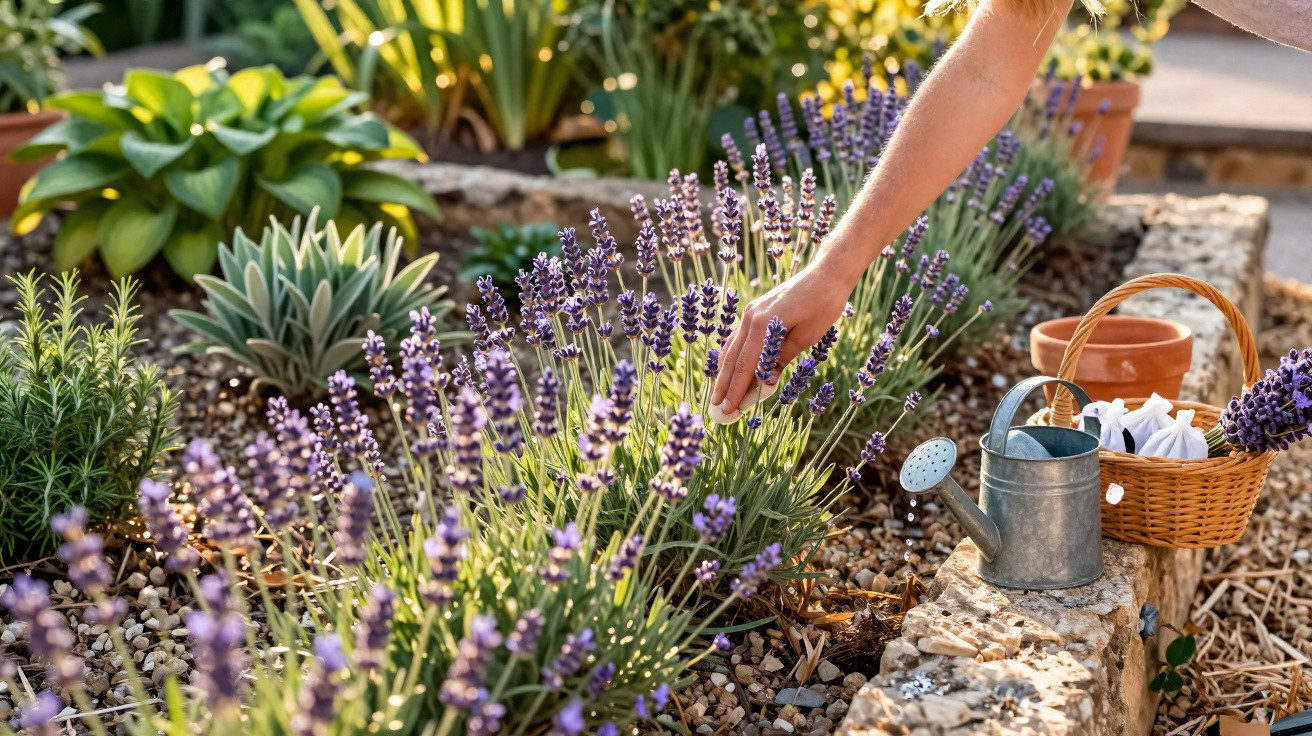
Lavender is valued for its hardiness and distinctive fragrance, yet it does not always thrive beside every plant in the garden. Certain species may compete with it for water, sunlight or nutrients, while others need an entirely different soil type. Knowing which plants lavender does not suit can therefore prevent poor growth, early wilting and even a loss of scent.
Why does lavender not suit plants that need plenty of water?
Lavender comes from dry, sunny conditions and is poorly suited to species that favour waterlogged ground or frequent watering, including many tropical ornamental plants and shade-loving foliage plants. Lavender requires well-aerated roots, whereas these moisture-loving neighbours grow best in continually damp growing medium.
When lavender is planted alongside plants with high water needs, the soil is likely to stay wet for longer than lavender can tolerate. This encourages root rot and fungal problems. In severe cases, the plant dries out from the top down despite the soil appearing well tended, while also losing vigour, leaves and fragrance intensity.
Where should lavender be planted in the garden to keep it strong and fragrant?
To help lavender grow strongly, choose a garden position with direct sunshine for at least 4 to 6 hours each day, good air movement and light soil. In areas with a very hot climate, a spot that receives morning sun and some shelter during the hottest part of the afternoon is usually enough.
The soil needs to drain freely, ideally with a sandy texture or combined with materials that allow water to run away more easily, such as coarse sand or fine gravel. For container-grown plants, large holes in the base and a drainage layer of stones or expanded clay help prevent waterlogging and extend the plant's life.
Which plants grow well with lavender in the same bed?
To avoid harming either lavender or its neighbouring plants, it is best to group it with species that have similar requirements and also enjoy full sun and limited water. This prevents lavender from being mixed with plants that need daily hose watering or intensive automatic irrigation, lowering the risk of disease.
Some plant types generally perform particularly well beside lavender, creating harmonious, fragrant beds that are easy to look after day to day:
- Mediterranean herbs such as rosemary, sage and thyme, which cope with drier soil;
- Succulents and small cacti, ideal for low-maintenance gardens;
- Hardy flowers from dry climates, able to withstand heat and moderate watering;
- Full-sun ornamental grasses, which help improve ventilation and drainage in the bed.
How can you make use of lavender's fragrance and flowers every day?
When lavender is grown in a suitable spot with sun and good drainage, it produces more flowers and fragrance, making it possible to use the stems regularly indoors. Harvesting is generally carried out when most of the flowers on the stem have opened, when the scent is at its most noticeable and concentrated.
One easy way to use lavender is to make small dried bunches, hanging them upside down in an airy place away from direct light until they have lost their moisture. They can then be placed in drawers and wardrobes, used in decorative arrangements or scented sachets for clothes, or included in handmade items such as candles and soaps, retaining the plant's gentle, distinctive scent for a long time.
Comments
No comments yet. Be the first to comment!
Leave a Comment