
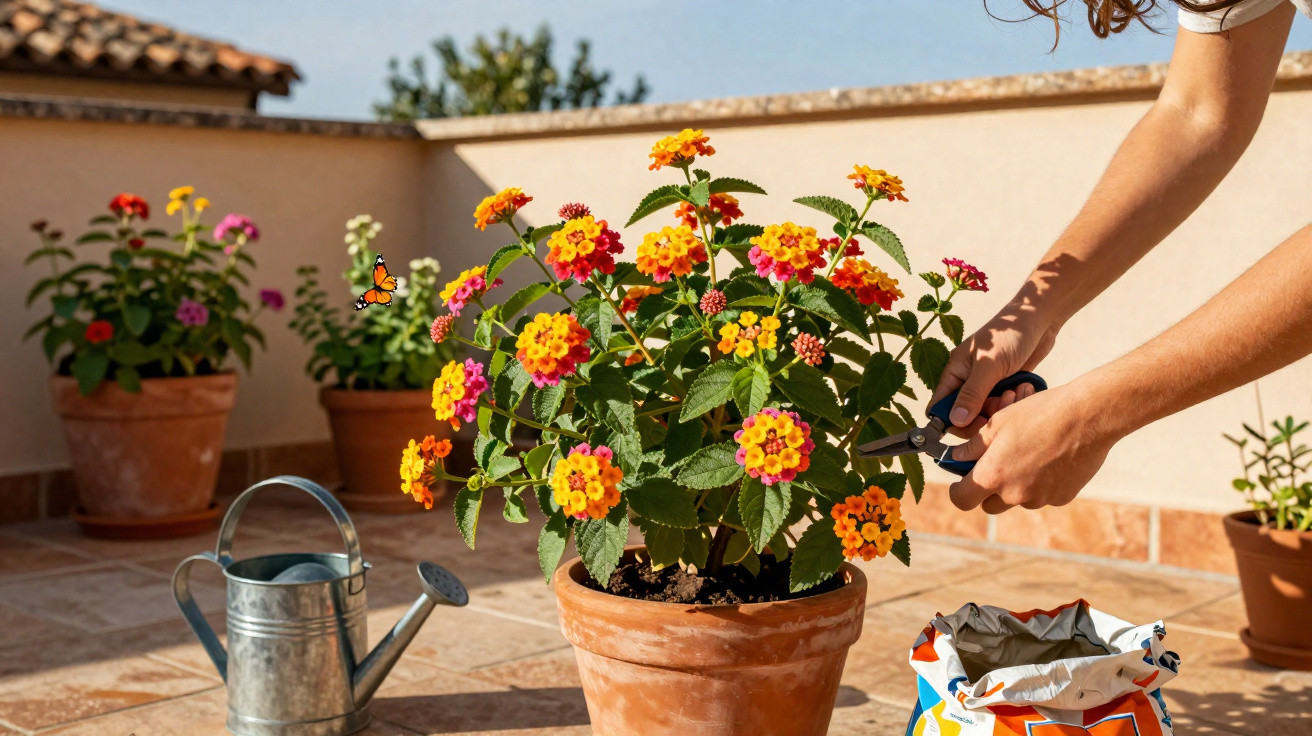
Many amateur gardeners spend months looking for it without realising it has been sitting in the garden centre all along: an easy-care flowering perennial that barely seems to stop blooming.
While roses struggle and summer flowers lose vigour in autumn, this tropical beauty simply keeps going. It adds colour to dull borders, attracts butterflies and even tolerates neglectful watering – yet plenty of people have only heard of it, if they know it at all.
A compact shrub with major impact: what Lantana is all about
Lantana, often sold as the common lantana, originally comes from tropical parts of the Americas and Africa. Botanically, it is a subshrub: its stems become woody at the base while the plant itself remains compact and easy to shape.
Its rounded flower heads are especially distinctive. Growing in dense clusters at the tips of shoots, they resemble tiny bursts of colour. Even more interestingly, many varieties change shade as they flower. A single cluster may begin lemon yellow, turn orange and eventually become vivid pink. The result is a multicoloured cushion that is constantly, subtly changing.
Lantana is considered one of the rare ornamental plants capable of producing flowers for almost the entire year in mild regions.
The flowers provide an exceptionally generous supply of nectar. Bees, bumblebees and, in particular, butterflies are strongly drawn to them. Once flowering has finished, small berry-like fruits develop, which many bird species will eat – including blackbirds and other garden birds, depending on the location.
Why this plant can be a real gamechanger for many gardens
In warm areas with little frost, Lantana can flower almost continuously. While many perennials take a winter break, common lantana in these conditions may keep producing buds with hardly any interruption. In harsher climates, it flowers from late spring well into autumn – considerably longer than many traditional balcony plants.
It also has a quality that is becoming increasingly valuable: drought tolerance. Once properly established, the plant manages with very little water. It appears far less troubled by brief spells of heat than petunias, fuchsias or hydrangeas.
For gardeners with limited time or irregular watering habits, Lantana can feel like a lifeline. Where other plants quickly show their displeasure, it stays remarkably tough and continues to provide colour.
Position and soil: helping Lantana thrive from the start
The best spot in the garden or on a balcony
Lantana loves sunshine. A fully sunny balcony, a hot courtyard or an exposed border beside a house wall all suit it perfectly. The more direct light it receives, the more profusely it will flower.
- Aim for at least 5–6 hours of sunshine each day
- Choose a sheltered position: wind is not a major issue, but draughts slow growth
- Ideal for a south-facing balcony, south-facing terrace or rock garden
The key soil requirement is avoiding waterlogging. A loose, free-draining growing medium prevents the roots from sitting in water and rotting.
The soil Lantana genuinely prefers
In a border, ordinary garden soil is usually sufficient if it is loosened with a little sand or fine gravel. Heavy, clay-rich soil should definitely be improved before planting, otherwise root damage may occur.
For container growing, use good-quality multipurpose compost mixed with some sand or expanded clay. The pot must have drainage holes so that excess water can escape.
| Aspect | Recommendation |
|---|---|
| Light | Full sun; the brighter it is, the more freely it flowers |
| Soil | Loose, well drained and preferably lean rather than overly nutrient-rich |
| Pot size | Around 7–10 litres for balconies and terraces |
| Spacing in borders | Approximately 50–100 cm, depending on the variety and its mature size |
Watering, feeding and pruning: simple care steps
Water needs: support it first, then let it get on with it
Immediately after planting, Lantana needs a little help. For the first three to four weeks, keep the root area regularly moist without allowing puddles to form. This encourages the plant to develop strong roots that can later reach water deeper in the soil.
Once it is well established, allow the top layer of compost or soil to dry between waterings. Many gardeners manage with watering once or twice a week in summer – more frequently during hot spells, naturally, but still much less often than thirsty balcony favourites require.
Container growing and nutrients
For a container, it is worth choosing a slightly larger pot. A capacity of seven to ten litres provides enough room for the roots and stops the compost drying out too quickly. A thin drainage layer of expanded clay or gravel at the base of the container offers further protection against waterlogging.
Do not overdo the nutrients. A liquid flowering-plant feed every two to three weeks during the main growing season is generally more than enough. Too much fertiliser mainly encourages leafy growth, while the number of flowers remains unchanged.
Pruning for more flowers
Lantana grows quickly. Left unchecked, it can lose its shape and crowd neighbouring plants. Pruning it back firmly each spring keeps the shrub compact while also encouraging fresh flowering shoots.
A light trim after periods of particularly strong growth can also make a big difference. Regularly removing faded flower clusters keeps the plant tidy and prompts it to set new buds.
Propagation: turning one plant into several
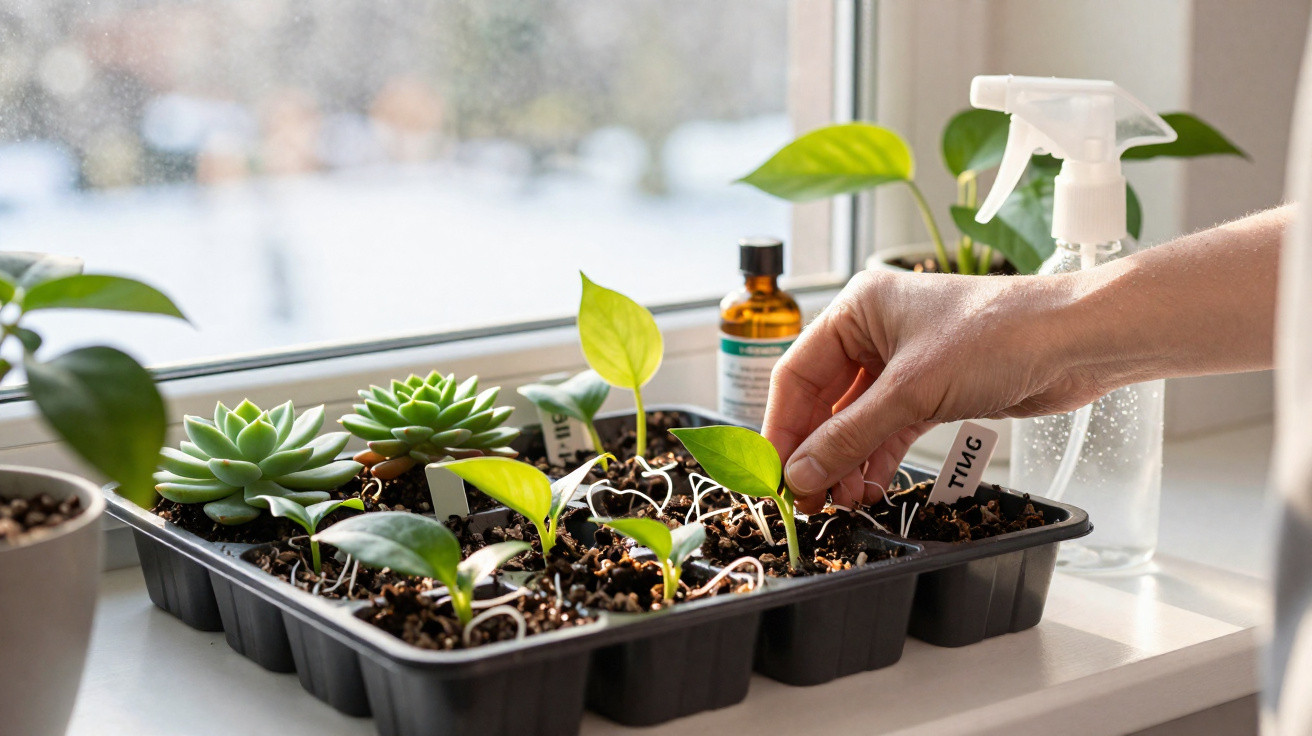
Anyone who has taken a liking to Lantana does not need to buy new plants every year. It can be propagated easily from cuttings. Spring is the best time, when the shrub starts producing vigorous new growth again.
- Select partly woody shoots that have not yet flowered
- Cut sections measuring around 8–12 cm long
- Remove the lower leaves so that nothing rots in the compost
- Insert them into a loose, sandy growing medium and water lightly
- Keep them somewhere bright and warm, but away from intense midday sun
Roots should form after a few weeks. When the cuttings have established well, they can be moved into larger pots or planted in a border later on.
Risks to understand: toxicity and a tendency to spread
Attractive as Lantana may be, this shrub also has drawbacks. Many species and varieties contain toxic substances, particularly in their leaves and unripe berries. Pets that like chewing plants, along with young children, should not have direct access to it.
Anyone wishing to plant Lantana within reach of children or animals should specifically ask about less toxic cultivated varieties and choose the position with care.
In areas with very mild winters, Lantana can become problematic. There, the plants turn woody, survive the colder season without difficulty and can spread extensively. In some warmer countries, it is already regarded as an invasive species that displaces native vegetation.
In the Central European climate, Lantana often dies back, or dies completely, outdoors in many places. Those living in especially warm areas, or overwintering their plants frost-free, should remove unwanted seedlings and runners regularly and keep an eye on its spread.
Decorative ways to use Lantana
Colourful accents on balconies and terraces
Even one well-developed shrub can look impressive in a small space. In a 7- to 10-litre pot, it forms a dense, colourful ball that creates accents from spring until autumn. Pairing it with grasses or structural foliage plants produces a modern, low-maintenance display.
A bright hedge or colourful border edging
In borders, several specimens can be planted in a staggered arrangement to create a low flowering “hedge”. Spacing them roughly 60 to 80 centimetres apart allows the plants to join up without becoming an overgrown thicket. This works particularly well as border edging along paths or in front of taller shrubs.
Part of a Mediterranean garden feel
Anyone wanting to give their garden a southern feel can place Lantana alongside lavender, sage, rosemary or scented pelargoniums. The combination of intense colours, aromatic scents and buzzing insects creates an atmosphere strongly reminiscent of a holiday in southern Europe.
Practical tips for beginners and the curious
If you have never grown Lantana before, it is best to begin with one plant in a pot. This makes it easy to see how it responds to the conditions in your chosen spot. If it thrives there, expanding your collection is worthwhile – either by buying more varieties or raising your own cuttings.
It is important to manage any possible risks clearly: in households with children, a position at eye level can be suitable, such as on a raised bed or wall. Pet owners should consider whether their dog or cat shows any interest in plants at all – many do not, although some certainly do.
Lantana is also appealing for anyone aiming to make their garden more wildlife-friendly. At times when flowers are scarce – such as late summer or during unusually mild winters – its nectar-rich blooms are a valuable food source. In this way, the plant combines visual impact with a tangible contribution to biodiversity in your own garden.
Comments
No comments yet. Be the first to comment!
Leave a Comment