
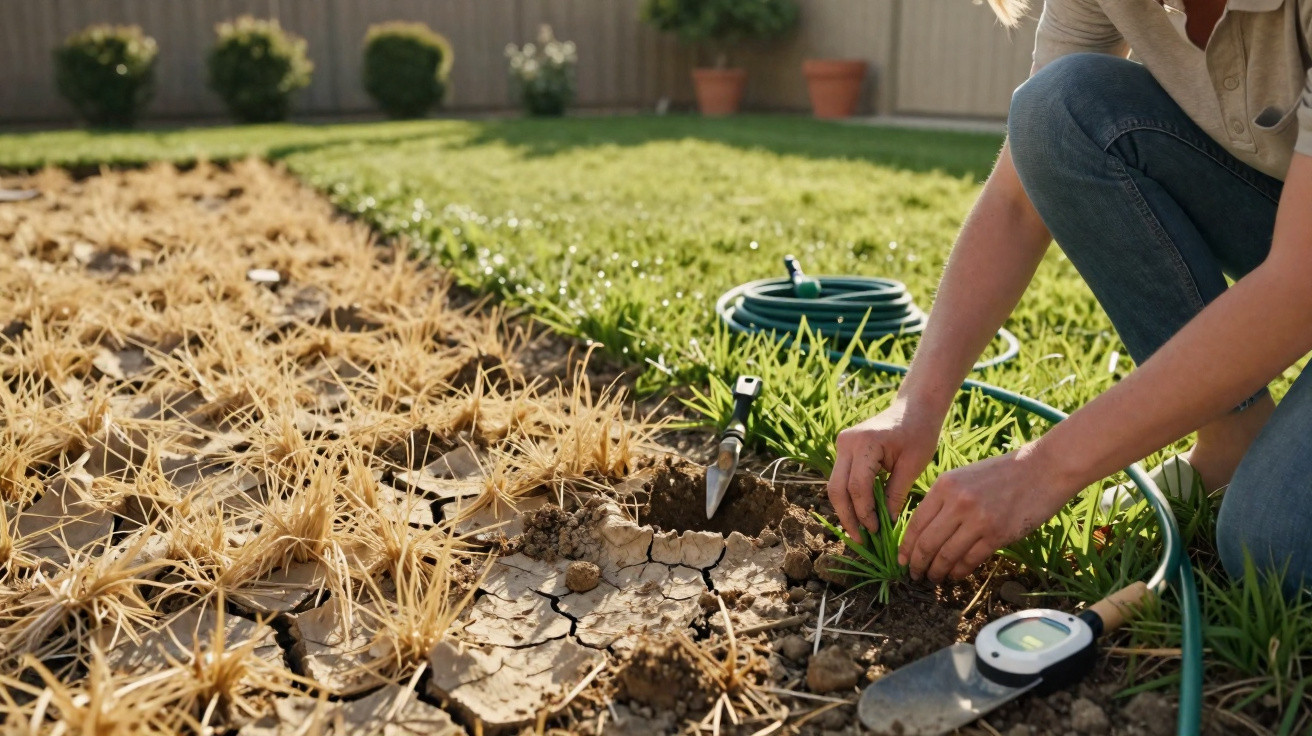
By late August, the garden often looks more worn out than we do. Between yellow patches, seedlings emerging unevenly and the hose that needs to be brought out yet again, many homeowners look at their lawn with a touch of weariness. On gardening groups, one name is appearing more and more often: zoysia, the dense Asian ground cover that copes with summers that conventional turf cannot forgive. It does not promise a flawless golf-course carpet all year round, and that is probably what makes it believable. Instead, it offers something different: a less thirsty, calmer garden that is almost self-sufficient once established. It is an idea that is steadily gaining ground.
Zoysia, the lawn alternative winning over gardens worn down by drought
From a distance, zoysia looks like a fine, soft and even lawn, yet its growing habits make all the difference. Its roots establish themselves deeply, while its stolons gradually spread across the ground to create a compact cover that reduces evaporation. When familiar grasses scorch during the first spell of hot weather, it slows its growth without necessarily losing its appearance. Zoysia tolerates heat with remarkable restraint, which explains its growing popularity in areas with dry summers.
In the Var, Claire replaced a strip of lawn that burned every summer with Zoysia tenuifolia three years ago, sometimes known as Mascarene grass. She says she watered it regularly during the first season, then hardly at all once the plants had rooted. Across her 35 m² plot, the thin areas disappeared over the following months. The change was not dramatic overnight: it was gradual, subtle and long-lasting. Today, her neighbours come over to touch this slightly moss-like green carpet.
One point must nevertheless be kept in perspective: no plant remains unchanged without water in every type of soil and climate. During a prolonged drought, zoysia may turn slightly yellow or become dormant, particularly in very poor, baking soil. It will often start growing again with the first rainfall, whereas a traditional lawn would need reseeding. It is a patient plant, not a magical one. That distinction matters before getting started.
Replacing a conventional lawn without turning the garden into a building site
Late summer is still a useful time to prepare the ground, provided the soil retains a little warmth. Start by removing competing weeds, lightly loosening the soil and correcting major unevenness. Zoysia turf plugs or small pots should be planted with gaps between them, then gradually join up through their stolons. Consistent watering over the first few weeks genuinely helps young plants establish themselves. Once this stage has passed, their needs drop markedly.
The most common mistake is expecting an instant result, as you might with ready-laid turf. Zoysia grows at its own pace, especially as nights turn cooler or where the ground remains shaded. We all know that moment of looking at a new planting every morning, hoping it has doubled in size overnight. Let us be honest: nobody really does that every day. Still, you need to allow one or two seasons for a properly closed cover to form.
Before selecting a variety, watch the garden at different times of day: direct sunshine, children playing, clay or sandy soil, and exposure to frost. Zoysia japonica is more hardwearing under foot traffic, whereas Zoysia tenuifolia gives a finer, almost velvety finish but favours milder conditions.
“The right ground cover is not the one requiring the least attention at the outset, but the one that genuinely suits the garden you have,” notes a landscape gardener specialising in dry gardens.
- Keep it for areas in full sun or light shade.
- Water when planting, then steadily space out watering.
- Avoid cutting it very short, as this weakens young shoots.
- Leave a few stepping stones in the busiest areas.
A green garden that calls for fewer compromises
Choosing a low-water ground cover is not simply about saving water. It is often a way of stepping away from the pursuit of the immaculate lawn, one that demands regular mowing, overseeding and constant attention whenever temperatures rise. Zoysia grows slowly: some people mow it only a few times a year, while others allow it to grow with a more natural look. That freedom appeals to many people, especially when weekends are already busy.
The garden also changes visually. Rather than a uniform, sometimes artificial green, the carpet develops different tones depending on the season, light and soil quality. Borders can accommodate lavender, yarrow or thyme, extending the dry-garden approach without making the space look neglected. Watering less does not mean giving up on beauty. Instead, it encourages us to see differently what grows outside our windows.
One very personal question remains: what do we really expect from a lawn? A football pitch, a decorative surface, somewhere to walk barefoot, or a living patch able to withstand harsh summers? Zoysia will not meet every need, especially in areas with severe winters or on waterlogged ground. Yet for many sun-exposed gardens, it offers a straightforward option: greenery that is less dependent on the tap.
| Key point | Detail | Added value for the reader |
|---|---|---|
| The right candidate | Zoysia creates a dense cover that withstands heat. | A credible alternative to conventional lawn in dry gardens. |
| Gradual establishment | Plants need initial watering and time to grow together. | Avoid disappointment caused by results that are too slow or uneven. |
| Reduced maintenance | Once rooted, this ground cover needs little water and less mowing. | Save time while reducing watering needs. |


Comments
No comments yet. Be the first to comment!
Leave a Comment