
When ice seals the ground and snow buries every food source, an unremarkable item in the shed can help determine life or death in the garden.
In January, the garden often seems deserted: grey, frozen and silent. Yet among bare shrubs and snow-covered beds, tits, blackbirds and sparrows are struggling to survive. Food is scarce and shelter is limited. At precisely this time, an old, long-forgotten broom can become a lifeline – with no costly specialist equipment required, just a few simple steps and a little creativity.
When an old broom becomes a winter bird rescuer
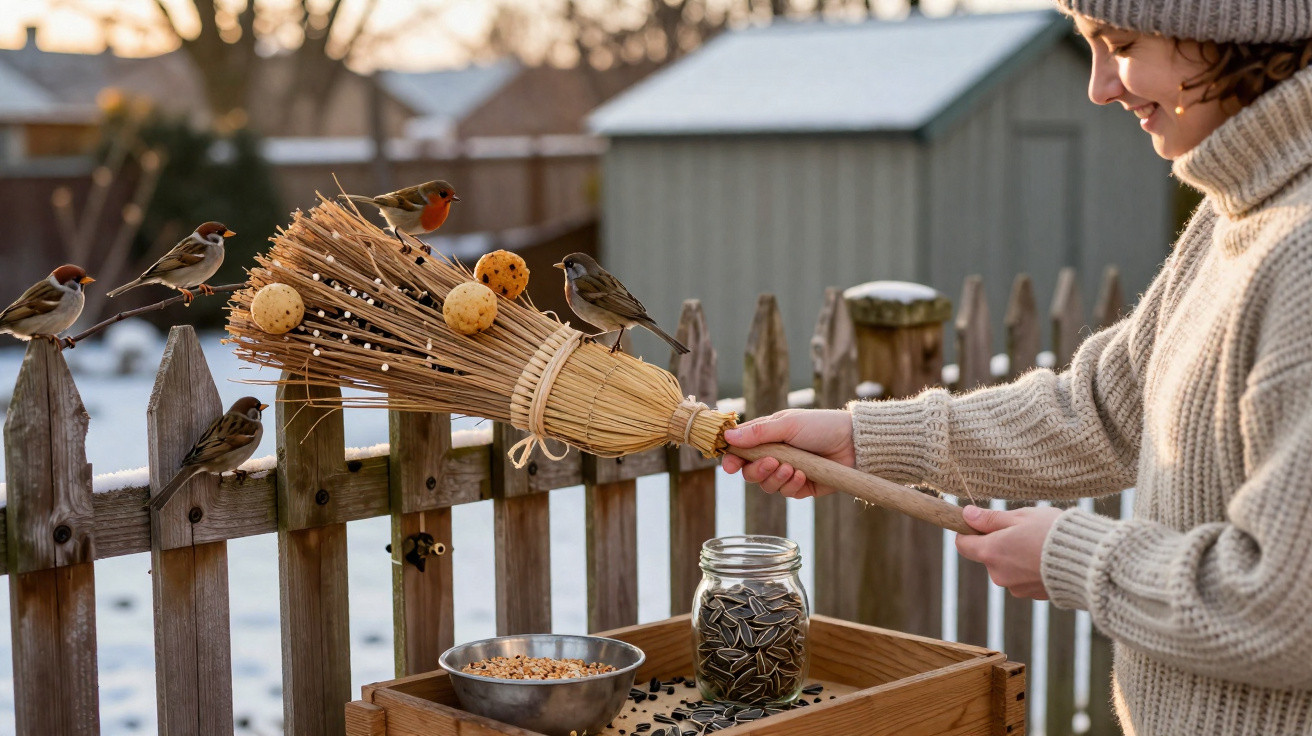
Many amateur gardeners will recognise the situation: a broom from last autumn is still leaning behind the shed, partly dusty and partly rotting, apparently destined for the tip. For birds in winter, however, it can be worth its weight in gold. Its bristles and stems create a small thicket that offers cover while also making an ideal feeding spot.
During the cold season, birds primarily need three things: energy, a secure place to land and protection from wind and predators. Conventional bird feeders may provide food, but depending on their design they can be exposed to the wind, poorly sheltered or quickly raided by mice and rats. Hung vertically or at an angle, a broom combines several functions at once.
“In winter, an old broom becomes a combination of feeding station, visual screen and emergency shelter for small birds – without costing an extra penny.”
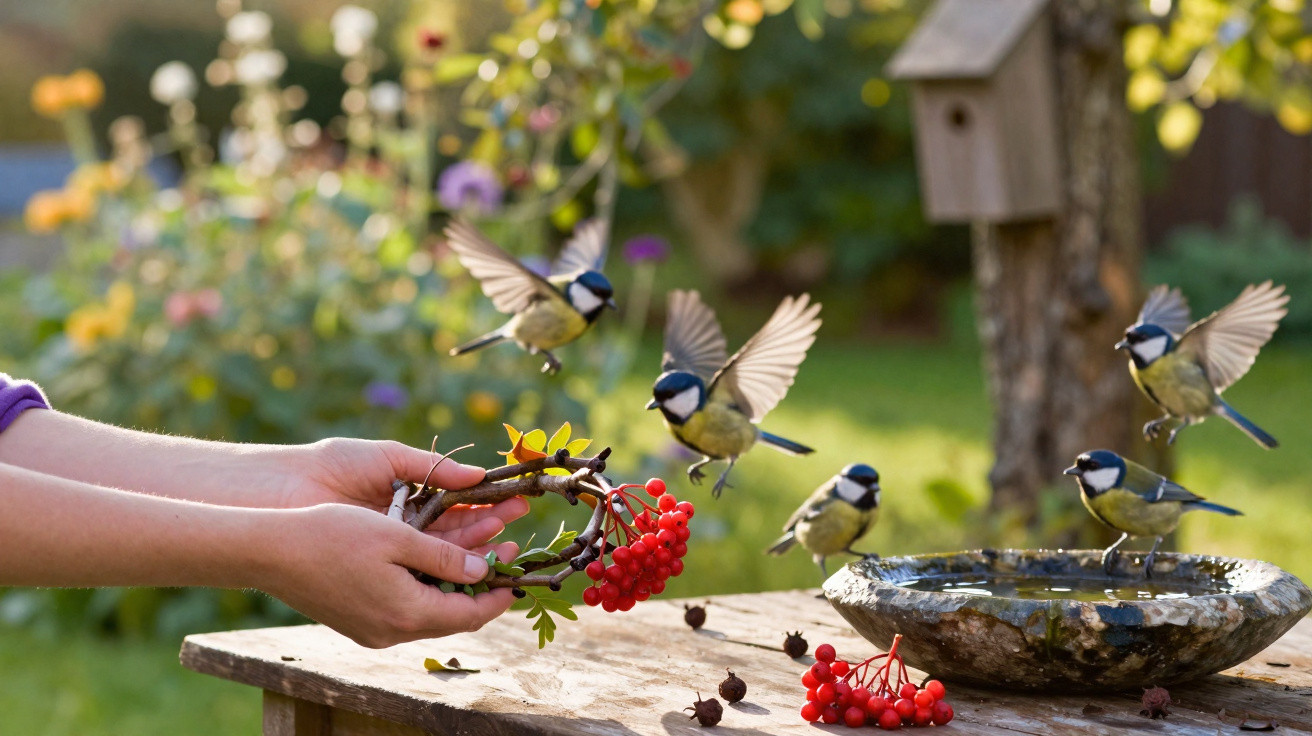
Anyone who places a broom visibly in the garden will often notice within a few days that the supposed piece of clutter has become a stage. Great tits clamber over the bristles, robins peck among them, and sparrows squabble over the best positions. A throwaway item turns into a small winter habitat.
How to turn a broom into a safe bird feeding station
The conversion is remarkably straightforward. No professional tools or building plans are needed: a few lengths of sturdy string or leftover wire will do the job.
Choosing the right position in the garden
Location is crucial. The broom should:
- hang or stand at least 1.5 metres above the ground;
- not be placed directly beside dense shrubs from which cats could pounce;
- be in a partly sheltered position, such as against a house wall or close to a tree;
- be visible from a window if you would like to watch the birds.
If you have a covered patio, the broom can be put up there too. This keeps the food drier and means the birds have less wet cold to contend with.
What can be attached to the broom
This is the clever part: the bristles or twig bundles provide countless small fixing points. Food can be secured to them without plastic nets or elaborate constructions.
Suitable options include:
- fat balls and suet balls (ideally without plastic netting, tied on directly with string);
- apple halves or slices of apple;
- small bundles of raisins or other unsulphured dried fruit;
- sunflower seeds and seed mixes, wedged into gaps between the bristles;
- plain porridge oats, shaped into balls with a little vegetable fat.
Many kitchen staples, however, do not belong on the broom. Seasoned leftovers, salty foods, mouldy bread and heavily sweetened products are more harmful than helpful to birds.
Why a broom can outperform some expensive feeding stations
Although it may look improvised at first glance, the broom offers clear advantages from a bird’s perspective. It hangs or stands above ground level, protecting food from dampness, mould and hungry rodents. At the same time, its dense structure works like a small protective cover.
“Among the bristles, birds can fluff up their feathers, rest briefly and remain less exposed to the wind than they would on an open perch.”
When danger threatens, birds can retreat a little way into the broom’s structure. From there, they can keep watch and take off quickly if necessary. This can provide valuable seconds, especially when cats are nearby.
Compared with a traditional bird feeder, it creates several layers: food on the outside, shelter further in, and small spaces between them where insect remains or seeds can collect. That makes the arrangement appealing to many species, from inquisitive sparrows to cautious dunnocks.
Which bird species benefit from the broom station
In a typical town or village garden, the following species are particularly likely to visit these improvised feeding places:
| Species | Typical behaviour at the broom |
|---|---|
| Blue tit, great tit | Clamber acrobatically over the bristles, pecking at fat-based food and seeds |
| House sparrow, tree sparrow | Often sit slightly lower down and retrieve seeds from crevices |
| Robin | Prefers sheltered corners and picks up fallen scraps |
| Blackbird | Mainly takes pieces of fruit such as apple or pear |
With a little patience, a well-designed broom feeding spot can attract noticeably more species over the winter than a single, sterile seed feeder.
More than food: the broom as a symbol of smart reuse
The old broom represents something else as well: a thoughtful approach to items that might otherwise be thrown away. Many garden tools can be given a second purpose for wildlife. A broken rake can serve as a climbing support and perch, while an old wooden handle can hold an insect hotel.
These solutions avoid creating piles of plastic and save you from buying new decorative items. Children in particular can easily be inspired when they attach food themselves, decorate the broom and later observe the feathered visitors with binoculars or simply with the naked eye.
“Anyone who upgrades their broom is not merely building a feeding place – they are creating a small nature project for the whole family.”
What to remember when feeding birds in winter
To ensure good intentions do not backfire, a few basic rules are needed. During severe frost, many birds may arrive at once, and feeding places can quickly become dirty.
- Remove food leftovers regularly, especially mouldy or waterlogged pieces.
- Shake out the broom from time to time so droppings do not build up in the bristles.
- Offer only as much food as will be eaten within a day.
- Reduce the amount again when temperatures are mild.
- Do not use cooking fats such as frying oil; use only solid vegetable fat, coconut fat or suitable fat-ball mix.
If you already have a conventional feeding area, the broom makes an excellent addition. Several small feeding spots spread out the crowds and reduce the risk of conflict and disease transmission.
Practical ideas for a “broom corner” in a wildlife-friendly garden
Over time, a single broom can develop into a proper mini-area for wildlife. Possible additions include:
- a second, smaller hand broom hung horizontally as an extra perch;
- a few loosely positioned branches beside the broom as landing perches;
- a shallow dish of water during frost-free periods, raised slightly on a brick;
- leaving some fallen leaves beneath it, where birds can search for insects and seeds.
In this way, a corner gradually takes shape that costs very little but brings lasting life to the garden throughout the cold season.
Why small winter gestures can have a big effect
The cold season is particularly harsh on small songbirds. In severe winters, many species lose a large proportion of their population. Every additional sheltered feeding place can help reduce these losses. The old broom therefore becomes one part of a larger network of hedges, shrubs, wild corners and wildlife-friendly gardens.
Anyone who has watched a chilled tit sitting cautiously in a broom, fluffing up its feathers and flying on strengthened after a few minutes will view this household item differently. A throwaway product becomes a tool for greater biodiversity – right between the patio, compost heap and garden gate.
Comments
No comments yet. Be the first to comment!
Leave a Comment