
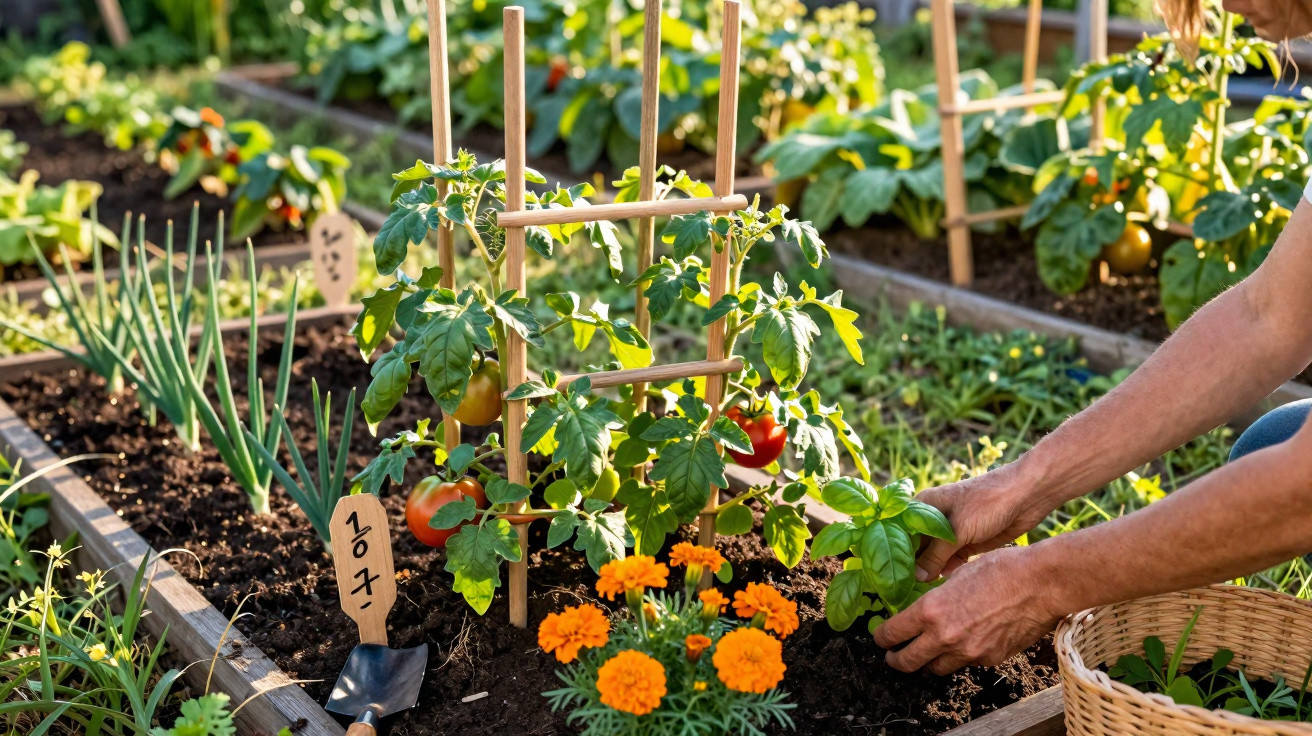
Many amateur gardeners still grow tomatoes in sterile, neatly separated rows, almost as if on a production line. It may look tidy, but it often results in more disease, stressed plants and a rather modest harvest. Growing tomatoes among other vegetables, herbs and flowers that actively support them is far more interesting.
Why good companions make tomatoes stronger and healthier
Plants communicate with one another, not through words but via scents and compounds released into the soil. Combining tomatoes thoughtfully makes use of precisely this “secret language”.
Tomatoes benefit from neighbours that confuse pests, loosen the soil, retain moisture or slow the spread of disease.
A classic example is the French marigold, commonly known in gardens as Tagetes. Its roots release compounds that greatly reduce nematodes – tiny root-feeding roundworms. These pests weaken tomato roots, leaving them more vulnerable to everything else lurking in the soil.
Herbs such as basil and garlic work mainly through their scent. They mask the characteristic smell of tomatoes, making it harder for aphids, whiteflies and similar pests to locate the plants. This is not a miracle defence, but it can noticeably reduce pest pressure.
Other companions improve soil structure out of sight. Carrots use their long taproots to break up compacted ground. This lets tomato roots reach further down and access water even during dry spells. Shallow-rooted lettuces or spinach create living “mulch” around the stem, shading and cooling the soil while limiting evaporation.
The best vegetable companions beside tomatoes
A small vegetable community can be created around every tomato plant. The most suitable choices are plants that do not spread aggressively, mature quickly and will not overwhelm the tomatoes.
Undemanding companions around the roots
- Carrots: loosen deeper soil layers and provide an early harvest.
- Celery: grows well in the shade cast by tomato foliage and has similar soil requirements.
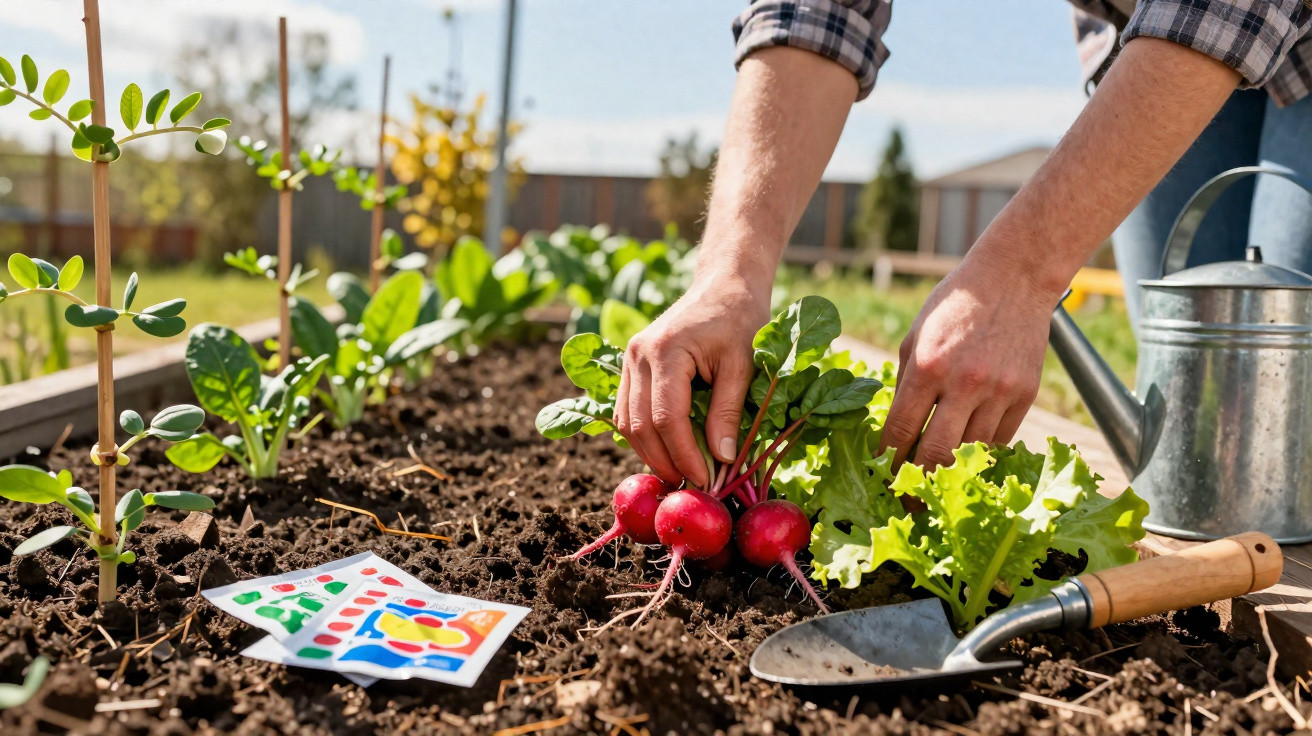
- Radish and radishes: make use of the period before tomatoes develop full leaf cover and can be harvested quickly.
- Swedes or small turnips: fill gaps between tomato rows without crowding the plants.
- Peas: their roots help open up the soil and also fix a little nitrogen.
This type of interplanting is especially worthwhile in raised beds and conventional rows. Tomatoes are usually positioned well apart so air can circulate around their leaves. Rather than leaving bare soil, this creates a covered, living bed with fewer weeds, a larger harvest and better soil moisture.
Alliums as a natural protective barrier
In a tomato bed, there are few substitutes for plants from the garlic, onion and leek family. They do not provide a direct yield boost, but they act as a gentle layer of protection against disease.
Many organic gardeners place a single garlic clove directly at the base of every tomato plant – a small effort with a noticeable effect.
Sulphur-containing compounds released by these plants slow fungal diseases, including the dreaded late blight pathogen. It can turn tomato leaves and fruit black in a short time. It cannot be prevented entirely, but its arrival can at least be delayed.
Growing carrots and leeks near tomatoes is also particularly useful. The two form a type of protective partnership: leek scents confuse carrot fly, while carrot aromas disrupt the leek moth. The tomatoes then sit within a “haze” of scents that many specialist pests find unappealing.
Herbs and flowers that genuinely help tomatoes thrive
One herb stands out clearly: basil. The familiar kitchen pairing of tomatoes and basil works just as well in the bed.
Basil: more than a salad garnish
- enjoys the same warmth and sunshine as tomatoes
- needs a similar amount of water
- confuses aphids and whiteflies
- signals water stress with its first drooping leaves before tomato plants begin to wilt
Anyone who does not want to keep testing the soil with a finger can watch the basil leaves instead: when they briefly droop, it is time to fetch the watering can.
Flowers as beneficial-insect magnets and shields
Flowering plants also play an important part in a tomato bed. They attract pollinators and natural enemies of pests.
Particularly useful choices include:
- Nasturtiums: act as a “trap crop”, drawing aphids onto themselves rather than the tomatoes.
- Tagetes: reduce soil nematodes while bringing colour to the bed.
- Borage, cosmos, zinnias and phacelia: provide abundant nectar and pollen for wild bees, hoverflies and other beneficial insects.
A study by the University of Göttingen showed that flower-rich beds can increase tomato fruit yields by more than half.
The financial outlay remains modest: several packets of Tagetes, basil and nasturtium seeds usually cost less than a few additional tomato plants from a garden centre.
These neighbours harm tomatoes – keep them apart
While some combinations are highly helpful, certain bedfellows are a genuine risk. Some plants compete heavily for nutrients, while others raise disease pressure or directly inhibit growth.
The problem of the same plant family
Tomatoes belong to the nightshade family, which also includes potatoes – and that is exactly where the difficulty lies. Both crops are extremely susceptible to late blight. If they grow close together, a single infected leaf in the potato patch can be enough to bring down the tomatoes within days.
Cucumbers can cause problems too. Although they are not from the same family, they are also very prone to fungal diseases, particularly powdery and downy mildew. Gardeners with little experience are better off growing cucumbers separately from tomatoes.
Heavy feeders and growth inhibitors
Cabbages, from white cabbage and broccoli to Brussels sprouts, are considered nutrient-hungry plants. They draw very large amounts of nitrogen and water from the soil. When they are planted directly beside tomatoes, nutrients soon become scarce, and tomato plants can quickly look pale and stressed in high summer.
Experienced gardeners regard fennel as a difficult companion. It releases substances into the soil that slow the growth of many vegetables. Tomatoes are especially sensitive to this effect. Fennel is therefore better placed at the edge of the garden, rather than in the middle of a tomato bed.
Practical examples: what a successful tomato bed could look like
Anyone starting with companion planting does not need to draw up a perfect plan. A few rules of thumb are enough to produce noticeable improvements.
| Area of the bed | Suitable companions | Benefit for tomatoes |
|---|---|---|
| Directly at the stem | Basil, lettuce, spinach, a garlic clove | Visible drought indicator, fewer fungal problems, cooler soil |
| Between the rows | Carrots, radishes, celery | Looser soil, an early extra harvest, covered soil surface |
| Bed edge | Tagetes, nasturtiums, borage | Fewer nematodes, aphids diverted, more pollinators |
Even if, in the first year, only every second tomato is paired with basil and Tagetes, there are usually clear differences in plant health and flavour. More companions can then be introduced gradually in the second year.
Background: what companion planting brings in everyday gardening
The term may sound theoretical, but the results are very practical. Tomatoes need spraying less often, the watering can is required less frequently, and leaves remain a deeper green for longer even in dry summers. Root systems from several different crops make the soil more crumbly and resilient, including during heavy rain.
There is another advantage: mixing many different plants makes it harder for pests to colonise large areas. A tomato monoculture is like an all-you-can-eat buffet for aphids. A varied mix of scents and growth habits confuses them and keeps pest pressure lower.
Tips for beginners: creating a tomato community step by step
Those new to gardening do not need to redesign the entire bed at once. A straightforward start makes sense:
- plant 1–2 basil plants for each tomato plant
- place one garlic clove at the base of every tomato
- sow Tagetes and a little nasturtium around the edge of the bed
- initially fill empty areas with radishes or loose-leaf lettuce
These few measures already create a small network of scents, roots and flowers that noticeably eases the strain on tomatoes. The system can be refined over the years: repeat combinations that work particularly well in your own soil, and remove those that do not deliver results.
In this way, a simple tomato row gradually becomes a lively, resilient vegetable bed where red fruit not only looks attractive but also crops reliably and vigorously.
Comments
No comments yet. Be the first to comment!
Leave a Comment