
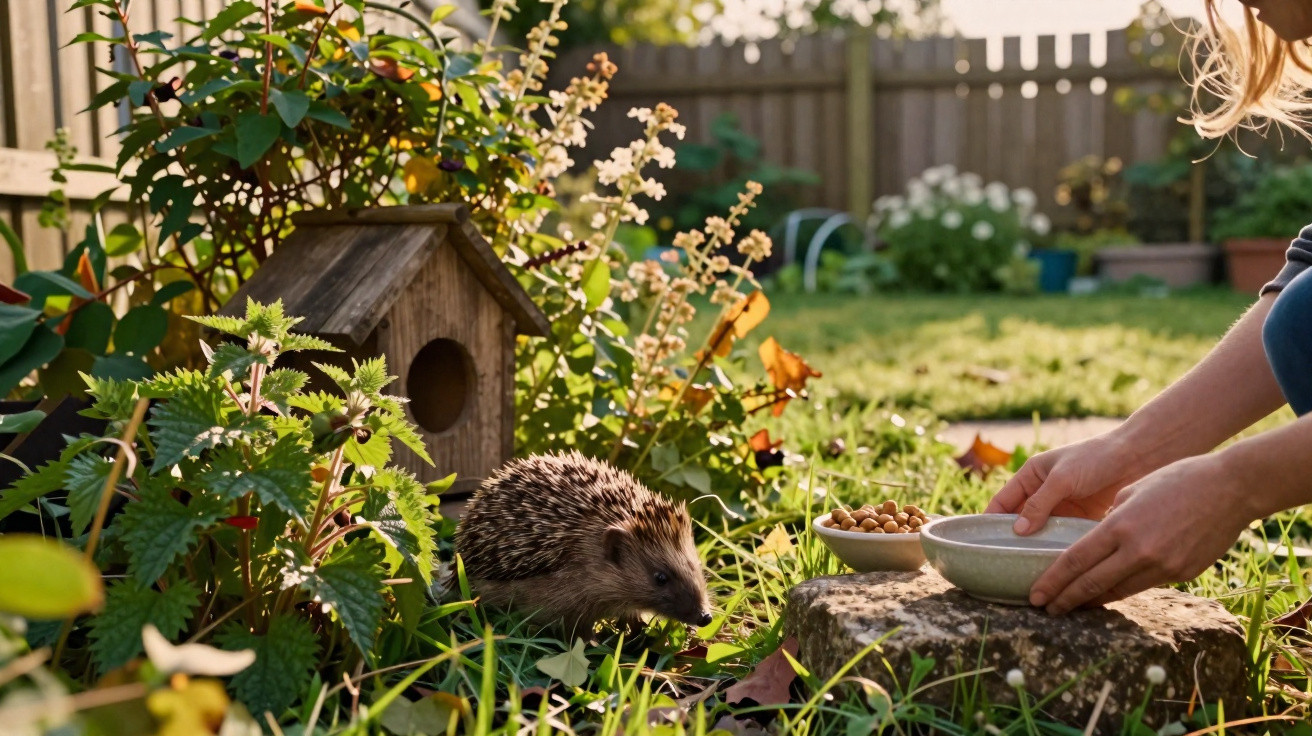
Anyone who takes pride in a tidy lawn has probably battled them repeatedly: stinging nettles. Yet this supposedly troublesome weed is actually a small marvel of nature. It provides shelter and food, and can turn a garden into a hedgehog haven that helps to keep slugs and other pests under control.
Why a ‘weed corner’ is irresistible to hedgehogs
Stinging nettles grow into dense, well-defended clumps. Although unpleasant for people, they make an ideal hiding place for hedgehogs. Their stinging stems deter many predators, including dogs and foxes. Beneath the thick foliage, these small prickly visitors can find places to rest and nest, as well as refuge from the heat.
“A single patch of nettles can become a safe mini-territory for hedgehogs – complete with a hiding place and a food source.”
An entire insect community lives among the stems: aphids, larvae, caterpillars and beetles. To a hedgehog, this is much like a generously stocked buffet. It does not eat the nettles themselves, but rather the creatures gathered on them. This creates a small ecosystem that makes the garden more ecologically resilient.
Nature observers have also repeatedly noticed an intriguing behaviour: some hedgehogs deliberately rub themselves against nettles. There is not yet any conclusive research on this, but much suggests that they may be trying to remove parasites or stimulate their skin – similarly to birds that sit among ants to help clean themselves.
The hedgehog: a natural garden pest hunter
Anyone who has found a partly devoured lettuce bed in the morning knows just how persistent slugs can be. This is where the hedgehog comes in. It particularly eats:
- slugs
- slugs without shells and small snails
- caterpillars and larvae
- beetles and other insects
- worms
It therefore acts like a quiet, nocturnal inspector in the vegetable patch. Where hedgehogs forage, pest pressure decreases noticeably. Many gardeners who deliberately make their gardens hedgehog-friendly say they rarely need to resort to slug pellets or other products.
“A hedgehog does not replace a perfect fence – but it takes the edge off the slug army.”
At the same time, this small insect-eater is now suffering greatly from traffic, robotic lawnmowers and sealed surfaces. Every garden that offers it a place to retreat becomes an important piece of the conservation puzzle.
How to turn your garden into a hedgehog hotel
1. Deliberately leave one corner wild
There is no need to let the entire garden become overgrown. A small area is often enough. A strip of nettles in a quieter part of the plot, at the edge of a hedge or behind the shed, is ideal.
- leave at least 1–2 square metres of nettles standing
- avoid mowing or cutting them back constantly
- create the area near dead wood, a pile of leaves or a natural hedge
The combination is particularly important: a cushion of nettles together with a woodpile or leaf pile provides a complete package of protection, nesting material and food.
2. Create gaps in fences
Many gardens are now completely enclosed. For a hedgehog, that means a dead end. It needs access to several territories to find enough food, travelling several hundred metres every night to do so.
Anyone wishing to help should plan openings in fences or walls. A diameter of around 13 centimetres is a useful guide – large enough for hedgehogs, yet small enough to remain uninteresting to most pets.
“Connected gardens are vital for hedgehogs’ survival – an isolated plot does little to help them.”
3. Choose a poison-free area instead of slug pellets
Slug-control granules do not affect only the slimy pests. Many products can also harm hedgehogs, birds and pets. Anyone wanting to support this little garden helper should consistently avoid chemical poisons.
Alternative measures for dealing with slugs:
- avoid beer traps, as they attract even more slugs
- use physical barriers such as copper tape or rough edges
- protect lettuce and young plants with slug collars
- collect slugs in the evening – specifically in places hedgehogs cannot reach
4. Build a simple, safe hedgehog house
A hedgehog needs a dry, peaceful place to sleep and hibernate. This can be created with just a few simple steps:
| Component | Recommendation |
|---|---|
| Material | Untreated wood, an old wooden box or a sturdy fruit crate |
| Entrance | Opening about 10–13 cm wide, positioned away from the wind |
| Interior | Line with dry leaves or hay |
| Location | Partial shade, not in direct sun, close to the ‘wild corner’ |
Important: leave the interior undisturbed wherever possible. If cleaning or checking is necessary, do so only outside the hibernation period and with great care.
Water yes, milk no: how to care for hedgehogs properly
Water can become scarce, especially during dry summers. A shallow dish of fresh water can make an enormous difference. To help prevent disease, the dish should be cleaned every day.
“Water can save lives – milk, on the other hand, makes hedgehogs ill.”
Milk often causes severe diarrhoea in hedgehogs because they cannot tolerate lactose. Bread does not belong in a hedgehog feeding dish either. Anyone who wants to offer supplementary food should instead choose:
- specialist dry or wet hedgehog food
- unseasoned cat food, wet or dry
- a little scrambled egg without salt or seasoning
Only offer food as a supplement, so that the animals continue hunting independently rather than becoming dependent on people.
Stinging nettles: far more than a hedgehog magnet
This overlooked plant has much more to offer. Gardeners have long used nettles as a natural fertiliser. One traditional method is nettle liquid fertiliser: soak the leaves in water, allow them to ferment for several days or weeks, then apply the resulting liquid heavily diluted to plants. It supports the growth and natural defences of vegetables and ornamental plants.
The so-called stinging plant is also worth considering in the kitchen. Young shoots contain plenty of iron, vitamin C and protein. Once blanched or cooked, they lose their stinging hairs and have a mildly nutty flavour similar to spinach. Popular options include:
- nettle soups
- fillings for quiches or strudels
- pesto made from young leaves
When harvesting, wear gloves and use only plants from uncontaminated locations – not directly beside roads or next to intensively farmed fields.
Less perfection, more life in the garden
Many people see nettles as a sign of neglect. In reality, a carefully managed wild corner shows that someone understands how nature works. It offers shelter, food and structure for hedgehogs, insects and birds – and ultimately for people too, if they want a lively, resilient garden.
Those who become comfortable with not keeping every corner ‘tidy’ are soon rewarded: more birdsong, less slug damage and more frequent rustling in the half-light. Often, it is the very animal that benefits especially from a small island of nettles.
In this way, an alleged weed becomes a kind of green key: it links the garden to the surrounding landscape and helps native species retain a chance of survival even in densely built-up areas.


Comments
No comments yet. Be the first to comment!
Leave a Comment