
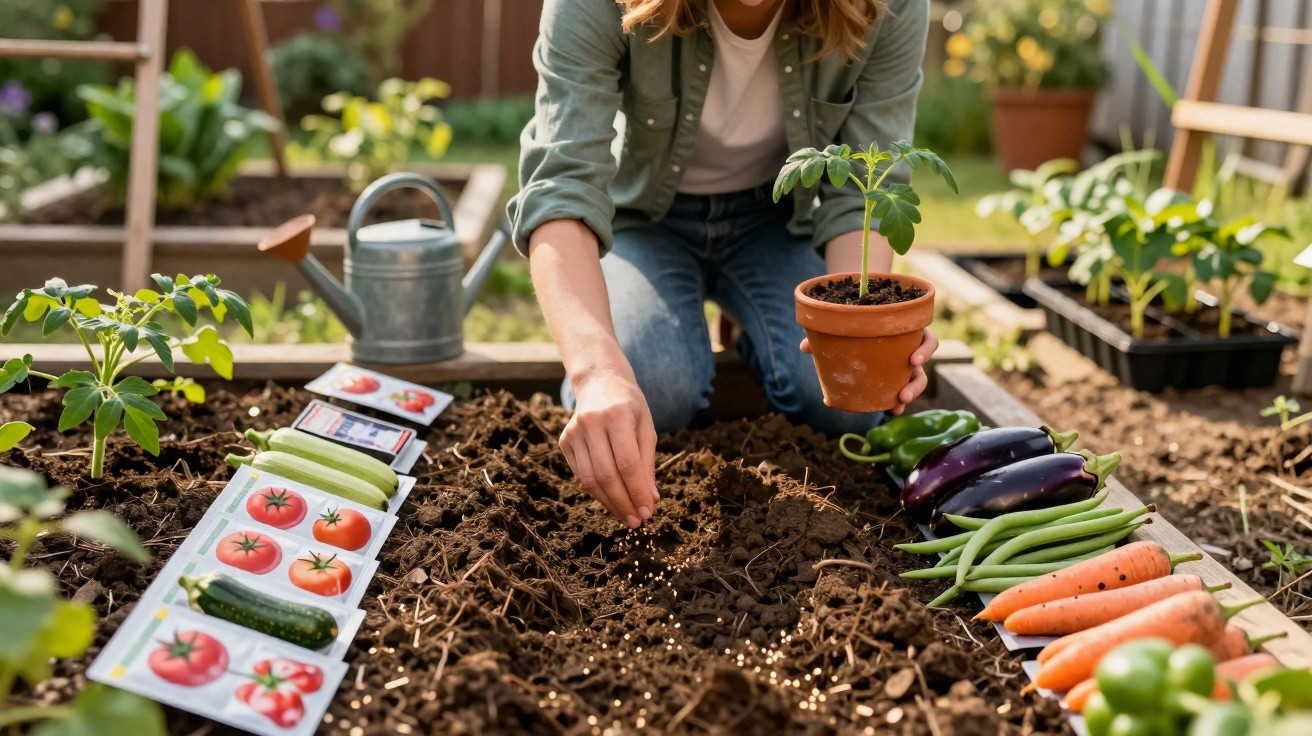
Anyone hoping to harvest should not delay in March – otherwise, their plate may stay empty.
Many amateur gardeners do not realise until July that they got going too late in spring. The result is weak plants, delayed harvests and sometimes no crop at all. March determines whether your vegetable garden provides an abundant summer harvest or leaves you longingly eyeing the supermarket trolley. Some vegetables simply need several months’ head start – and the clock is ticking for them now.
Why March determines your summer harvest
March is effectively the starting signal for the summer vegetable garden. The soil begins to warm up, daylight hours increase and growth accelerates. Taking action now gives your plants a clear advantage.
“Those who sow and plant in March often harvest from June onwards – those who wait must be patient well into autumn.”
Starting early brings several benefits:
- The first mild temperatures stimulate the growth of young plants.
- Roots can establish themselves deeply and firmly before the main summer heat arrives.
- Harvesting starts sooner – often as early as June or July.
- Crops are spread more evenly across the summer rather than ripening all at once.
Heat-loving crops such as tomatoes, peppers, aubergines and courgettes in particular need three to four months from sowing to harvest. Start too late and you can easily end up in September, when cool nights begin to trouble the plants.
Vegetables to plan for now
As a general rule, some crops should be raised indoors or in a greenhouse, while others can be sown straight into the bed. Combining both approaches well makes the best use of the available space.
Tomatoes: the heart of every summer garden
Tomatoes are a classic crop, but they are also the most common mistake in amateur gardens because many people sow them too late. To enjoy ripe fruit in June or July, they need a strong start now.
- When to sow? Sow indoors, in a heated greenhouse or in a warm conservatory during March, at around 18–20°C.
Do not plant outdoors until mid-May, once there is no longer a risk of frost.
How to raise them successfully:
Place tomato seeds in small pots filled with fine, loose seed compost.
Keep the compost slightly moist, but never waterlogged.
Position them somewhere warm with plenty of light, otherwise the plants will become leggy.
Plant them into the bed once they have four to five strong leaves.
Quicker-maturing varieties are particularly suitable for impatient gardeners. Beefsteak tomatoes, traditional round varieties and small plum tomatoes are among the early choices that produce fruit relatively promptly.
Courgettes: rapid growth with little effort
Courgettes are real high-yielding plants – one plant alone can feed a family. Starting in March often means picking the first fruits in June.
- When to sow? From March onwards, sow in pots indoors or in a greenhouse.
Plant into the bed from around mid-April in mild areas, or slightly later elsewhere.
What should you bear in mind?
Plant in nutrient-rich soil containing plenty of compost, as courgettes are heavy feeders.
Water regularly and cover the soil with mulch to prevent it from drying out.
Allow roughly one square metre per plant, as they spread extensively.
Choosing different varieties, such as dark green, yellow or round types, adds visual variety to both the bed and the kitchen.
Aubergines and peppers: for plants that love warmth
Aubergines and peppers are among the more demanding yet rewarding vegetables. They originate from warm regions and need sustained warmth. Above all, they require one thing: time.
- When to sow? Sow in March in a warm indoor space or a properly heated greenhouse at a minimum of 20°C.
Do not move them outdoors or into an unheated greenhouse before mid-May at the earliest.
How to give them the best chance of success:
Do not transplant young plants until they have around six true leaves.
Choose a very sunny, sheltered position.
Mulch and regular watering prevent stress caused by dry conditions.
Early-maturing pepper and aubergine varieties can help deliver a worthwhile crop even in cooler areas. In exposed locations, growing them in a greenhouse or in a large container against a warm house wall is worthwhile.
Beans: start early, harvest for longer
French beans provide tender pods for weeks when started in good time. An early first sowing extends the season considerably.
- When to sow? From March beneath a polytunnel in mild regions.
Sow directly into the bed once the soil has reached at least around 12°C – usually from April or May onwards.
How to grow them:
Sow in small groups of four to five seeds, spaced around 40 centimetres apart.
Earth up the plants slightly later on so that they stand firmly.
Keep the soil evenly moist, while avoiding waterlogging.
Early-cropping varieties are well suited to the first sowing. Sowing again every two to three weeks provides fresh beans continuously until late summer.
Carrots: sown early, harvested early
You can sow carrots directly into the bed in March as soon as the soil can be worked. Light, loose soil is ideal, allowing the roots to develop without restriction.
- When to sow? Sow outdoors directly in rows during March.
Cover with horticultural fleece if late frosts are expected.
Growing tips:
Sow thinly in shallow drills, then thin the seedlings later to give them enough space.
Remove weaker seedlings once plants are around five centimetres tall.
Water regularly so the roots do not become woody or split.
Early varieties can produce crisp bunching carrots in early summer. For storage carrots later in the year, sow a second batch in May.
Where to sow each vegetable in March
| Location | Suitable vegetables for March |
|---|---|
| Indoors / heated greenhouse | Tomatoes, peppers, aubergines, courgettes |
| Outdoor bed | Carrots, early beans (in mild areas), peas |
| Polytunnel / cold frame | Lettuce, radishes, spinach, first beans in sheltered gardens |
Practical March tips for strong young plants
For seeds to become vigorous plants, the right conditions are crucial. Light, water and protection from the cold are the priorities now.
- A small greenhouse or cold frame protects tender young plants from overnight frost.
- Water carefully: keep compost merely moist, as saturated pots encourage fungal diseases.
- Provide as much light as possible – a south-facing window, supplementary lights or a bright conservatory will help.
- Acclimatise young plants gradually before planting out by putting them outside for a few hours at a time.
“Plant hardened-off seedlings in the bed and you spare them stress – as well as yourself from losses.”
How to prepare your vegetable bed wisely now
Before plants move in, the soil needs attention. A well-prepared bed often has a greater effect on yield than the choice of variety.
- Clear away old plant material and remove weeds thoroughly.
- Loosen the soil without digging it deeply, so the soil ecosystem remains intact.
- Work in mature compost, especially where tomatoes, courgettes and peppers will grow.
- Plan the bed: position tall plants such as tomatoes at the edge or towards the back.
If space is limited, use raised beds or large containers. Tomatoes, peppers and aubergines often grow better in these than in heavy garden soil.
What starting too early or too late can cause
When sown too early, young plants suffer from insufficient light and become leggy, growing tall and thin. They often topple over in the bed or produce only a small yield.
When sown too late, the opposite happens: plants may be strong, but the summer is no longer long enough for them to form much fruit. Heat-loving crops in particular respond with sparse or very late harvests.
If you are unsure, use three broad groups as a guide: raise very heat-loving vegetables indoors, sow robust root vegetables early in the bed, and sow lettuces or radishes in several batches. This way, the table almost fills itself from June onwards.

Comments
No comments yet. Be the first to comment!
Leave a Comment