
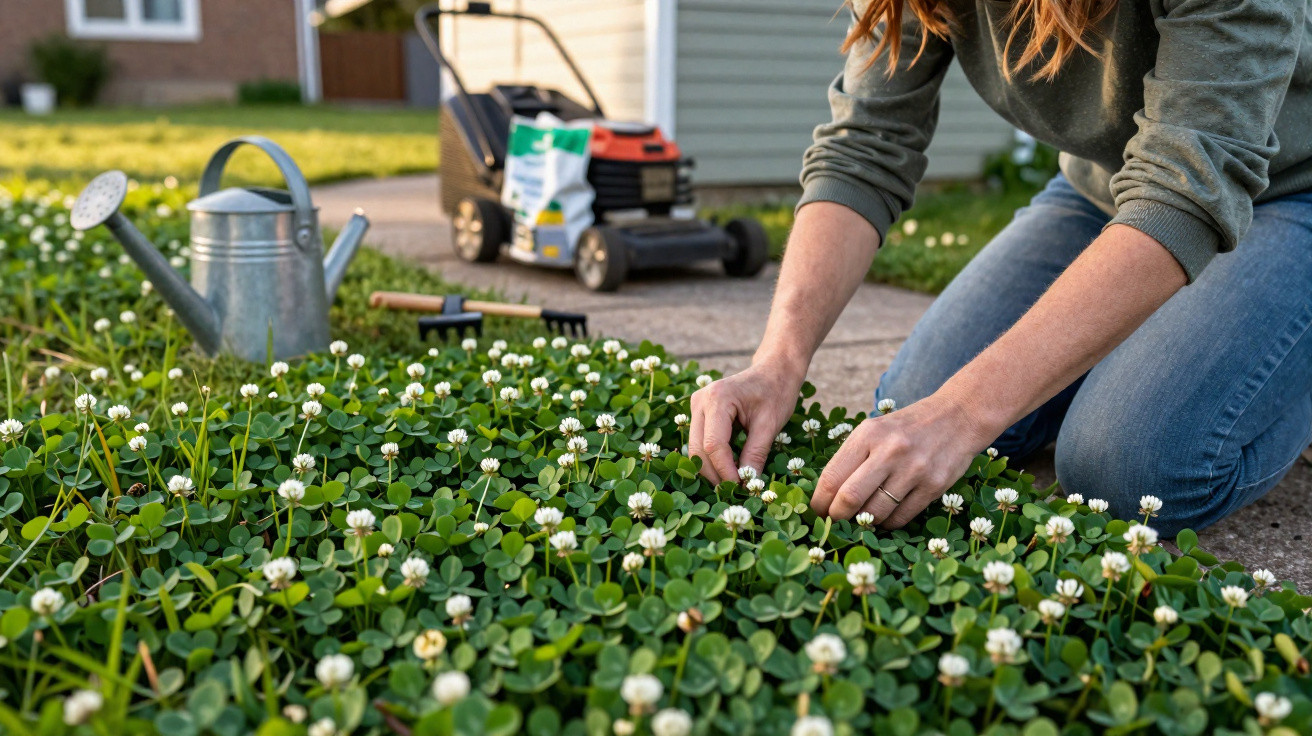
Many keen gardeners know the problem: as soon as temperatures rise, the lawn becomes a constant worksite. Mowing, watering and fertilising – yet the result is still a patchy yellow carpet in the garden. Landscape designers across Europe are therefore increasingly turning to an alternative ground cover that is far more resilient and requires surprisingly little effort.
Why a conventional lawn reaches its limits
A standard lawn mix of grasses may look lush and green in the brochure, but in reality it is quite demanding. To remain dense, it needs:
- regular watering, particularly during summer
- fertiliser several times a year
- frequent mowing, often every week
- scarifying and overseeding as well
There are also tighter rules on water abstraction, increasingly hot summers and rising energy prices. Anyone with a large area quickly notices the burden, both in time and money. Many lawns turn yellow during the first heatwave, develop bare patches and become thatchy.
“Grass lawns use a great deal of water, take time and often still fail to deliver the rich green finish garden owners want.”
To make municipal spaces, businesses and private gardens more climate-resilient, professional bodies have recommended alternative ground covers for several years. Rather than relying on thirsty grasses, they advise using plants that cope better with dry spells while improving the soil at the same time.
Microclover: the unobtrusive ground cover with a major impact
At the centre of this approach is a particular form of familiar white clover: a very low-growing cultivated variety, commonly sold as microclover. Rather than forming tall growth, it creates a dense carpet just around five to fifteen centimetres high.
The effect can surprise people seeing it in a garden for the first time. In place of a relatively rigid grass surface, it produces a soft, grippy carpet that is pleasant to walk on barefoot. Its small leaves create a finely textured pattern, with delicate flowers appearing among them throughout the year.
Less watering and far less mowing
Its greatest advantage is the lower maintenance requirement. Once established, this ground cover needs substantially less water than a conventional lawn. Practical trial data indicates a reduction in watering needs of around 20 to 50 per cent, depending on soil, position and climate.
There is also the matter of mowing. Instead of cutting a neat grass sward every week, this miniature ground cover generally only needs a tidy-up cut once or twice a year. Those who prefer a completely natural look can even leave it alone, trimming only the edges and paths.
“From weekly mowing sessions to just a few minutes per season: anyone who makes the switch quickly gains several hours of free time.”
The soil is fertilised as a bonus
Another feature makes this low-growing perennial carpet particularly interesting: it belongs to the legume family. These plants form a symbiotic relationship with certain soil bacteria, enabling nitrogen from the air to become available in the soil.
In practical terms, this means the area supplies a good proportion of its own nutrients. Many gardeners report that they can almost completely do without mineral compound fertiliser. This saves money, protects groundwater and reduces the risk of scorching on dry summer days.
How to replace a lawn with a low-growing perennial carpet
Anyone planning to switch this spring should establish the area properly from scratch. Simply mixing it into an existing lawn usually results in an untidy patchwork. The key steps are as follows:
Remove the old lawn
Strip away or cultivate the existing turf, including its matted root layer. Otherwise, the grasses will compete with the new planting from the outset.Weed thoroughly
Carefully dig out perennial weeds such as couch grass, ground elder or thistles. Anything left in the ground now will continue to cause problems later.Loosen and level the soil
Use a rake or cultivator to loosen the top layer, remove stones, then rake the surface as level as possible.Sow in April
Spread the seed evenly by hand. Around 10 to 15 grams per square metre is considered a useful guide.Firm down and keep moist
Lightly roll the ground or tread it down using boards, then water with a fine rose. During the first few weeks, the soil should remain evenly moist.
The young plant cover requires some patience. Its root system develops slowly but reaches deeply into the ground. Specialists estimate that the area takes around 18 to 24 months to achieve its full drought resistance. During this period, gardeners can still use the watering can regularly – considerably less than for a lawn, but consistently.
What the new ground cover means for bees and neighbours
The miniature carpet does not merely look attractive; compared with a grass-only lawn, it also offers more for insects. Its small flowers provide nectar and pollen, and are popular with wild bees and bumblebees. Anyone allergic to bee stings, or with young children in the garden, should keep an eye on flowering periods and may wish to keep heavily used seating or play areas slightly shorter.
Visually, the surface is clearly different from a typical golf-lawn aesthetic. It appears more lively and less sterile. Some neighbours may need a short period to get used to it, but after a few weeks many are more likely to be impressed and ask which plant mix is growing there.
“Less perfection, more life: the new trend deliberately breaks with the idea of an immaculate uniform lawn.”
Costs, risks and useful garden combinations
The seed costs slightly more than conventional lawn mixes in shops. However, that additional cost is put into perspective when ongoing expenses are considered. Practical estimates show that, while a conventional lawn can quickly cost about €150 per year for fertiliser, water and fuel, annual running costs for the low-growing perennial area fall to well below €20.
The switch is not entirely risk-free. In areas exposed to very heavy use, such as beneath constantly used football goals or on driveways, the delicate carpet can be damaged. Anyone expecting regular heavy wear should use a combination of:
- durable paving or grass reinforcement grids in parking areas
- conventional lawn for play areas
- the low-growing perennial carpet in ornamental areas, around patios and beneath fruit trees
In shaded corners, the plant grows more slowly and less densely. Other ground covers, such as sweet woodruff, epimedium or ivy, are better suited to these areas. Dividing a garden into functional zones ultimately creates a far more interesting and varied result than one large, uniform lawn.
Practical tips for everyday care of microclover
It quickly becomes clear in daily life how relaxed the maintenance can be. If desired, run a lawnmower over the area once in early summer on a high setting to remove spent flower heads and even out the surface. It is better to collect and remove the cuttings, so that no rotting layer develops.
During extended dry periods, targeted watering is worthwhile: water infrequently but thoroughly rather than giving it a little every day. This encourages the roots to grow down into deeper soil layers. Scarifying is generally unnecessary, as it does not develop the dense thatch associated with grasses.
It becomes especially appealing when the new carpet is deliberately combined with other features. Herb islands of thyme or oregano, small natural-stone stepping-stone paths or low ornamental grasses add structure and make routes easier to follow. Seating areas also feel noticeably more inviting within the green space because the ground is perceptibly softer.
Anyone considering the change can begin by creating a trial area of ten to twenty square metres. This reveals how well the plant copes with sun, shade and use in the conditions of their own garden. If the test succeeds, the area can be extended bit by bit – until the old problem lawn is a thing of the past.


Comments
No comments yet. Be the first to comment!
Leave a Comment