
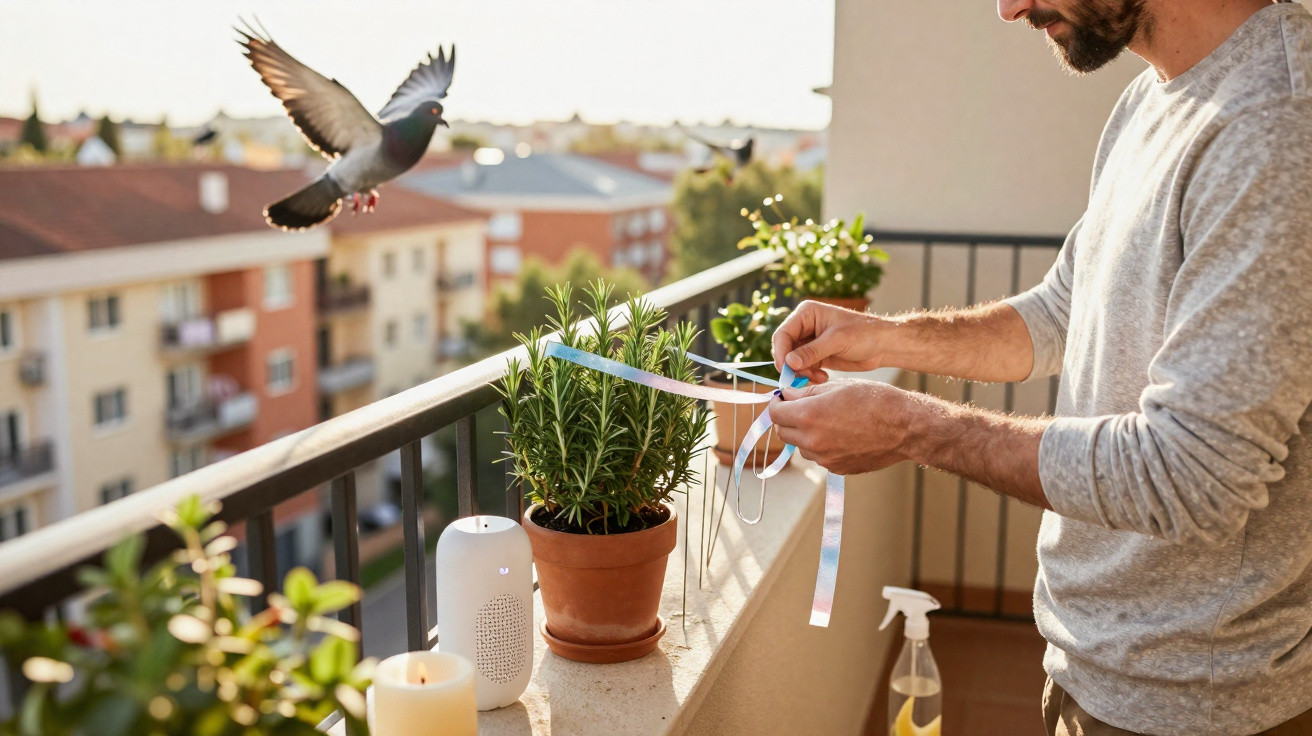
Living in a town or city, you will know the issue: your balcony or terrace could be a peaceful retreat if it were not for persistent pigeons and their unpleasant droppings. For one resident, the problem had become almost a weekly cleaning shift until she combined a few straightforward measures – with surprisingly successful results.
Why pigeons are drawn to your balcony
Before trying to deter the birds, it helps to understand why they come. Pigeons are not acting randomly; they follow a clear pattern. Once you recognise it, you can tackle the causes directly.
- Food within easy reach: Crumbs, barbecue leftovers, bird food or open rubbish bags are effectively an invitation.
- Comfortable landing spots: Window ledges, railings and wall projections provide ideal places to perch and rest.
- Sheltered areas: Covered balconies, recesses beneath roofs and awnings protect them from rain and predators.
“Making your own balcony unattractive to pigeons solves 80 percent of the problem – often without any high-tech equipment or poison.”
The woman who had to clean her terrace every week had precisely this combination: breakfast scraps left outside, wide railings and a partly covered space. The birds only began to disappear gradually once she changed these conditions.
The turning point: cleaning alone is not enough
Many people expect regular cleaning to solve the issue. In practice, cleanliness matters, but it is not a substitute for effective deterrents. Freshly cleaned flooring does little to discourage pigeons – they will return as long as the setting remains appealing.
What she changed
She continued to clean the terrace routinely, but the key was combining three simple actions:
- removing every potential food source consistently
- altering landing and perching surfaces
- using scents and reflections that pigeons avoid in a targeted way
This particular combination made the difference. It works not only on one terrace, but on almost any balcony – whether it is on the fifth floor or at ground level.
Remove food first when pigeons become a nuisance
Pigeons return to places where they can feed safely. Taking away this easy source of food can substantially reduce their visits.
- Do not leave leftovers behind: Clean up immediately after breakfast and remove bread crumbs and crisp remnants.
- Use bird food carefully: Anyone wishing to feed small songbirds can use hanging feeders that larger pigeons find difficult to access.
- Keep rubbish sealed: Open refuse sacks or food-waste bins with lids left ajar actively attract pigeons.
The woman in this example also moved her potting compost and seeds into closed storage boxes. This stopped the birds from rummaging through pots and finding food remnants there.
Uncomfortable surfaces: making your balcony pigeon-unfriendly
Pigeons favour broad, stable surfaces where they can land and perch securely. Disrupting these comfort zones encourages them to move on to another building.
Straightforward structural measures
- Bird-spike systems: Narrow strips fitted with plastic or metal spikes on window ledges and railings prevent birds from landing without injuring them.
- Tension wires and cables: Fine wires pulled tightly across wall edges make the surface unstable. Pigeons avoid uncertain footing.
- Smooth coverings: Thin perspex sheets placed on broad projections create a slippery surface – unpleasant to land on and therefore unattractive.
“The less comfortable their favourite spot is, the sooner pigeons give up and look for a new location.”
On the heavily affected terrace, a few discreet wires along the railing and two perspex strips on the wall were already enough to remove the birds’ preferred perching places.
Scents pigeons dislike: natural deterrent methods
Many householders rely on products that disrupt pigeons through their sense of smell. Their effectiveness depends on the location, but alongside other methods they can be highly useful.
Household remedies that can help
- Vinegar solution: Mix water and clear household vinegar at roughly a 1:1 ratio in a spray bottle. Apply it several times a week to usual landing areas and corners.
- Spices: Hot pepper, curry powder or cinnamon scattered over window ledges or in planter boxes can deter many pigeons.
- Aromatic plants: Shrubs and plants such as rosemary, geraniums and mint may smell pleasant to people but are often disagreeable to pigeons.
The woman positioned several pots of strongly scented mint and geraniums right along the edge of her balcony. Together with vinegar spray on the railings, this noticeably reduced pigeon visits within just a few days.
Reflections and movement: pigeons dislike surprises
Pigeons are sensitive to sudden flashes of light and unfamiliar movement. This can be used easily without spending much money.
Methods that have proved useful
- Hanging reflectors: Old CDs, shiny metal strips or purpose-made reflective tape create erratic flashes of light in the wind.
- Wind spinners: Colourful wind spinners placed in planter boxes produce rotating movement and soft sounds, which pigeons often find unpleasant.
- Artificial predators: Decoy birds of prey or owls can work temporarily, but they need to be moved regularly or the birds will become accustomed to them.
At the affected terrace, two colourful wind spinners and several reflective strips attached to the awning were enough to make the approach unpredictable for pigeons.
Pigeon-control technology: when devices are worthwhile
People facing a serious problem often turn to technical aids. Options range from ultrasonic devices to specialised balloons.
Acoustic systems
Ultrasonic devices emit sounds that people cannot hear but are intended to disturb pigeons. Their effectiveness varies greatly by location, and they may also bother other animals. In densely built-up areas or where pets live in the flat, it is sensible to seek proper information beforehand.
Visual deterrents
Large balloons printed with eyes or plastic birds of prey can be positioned on balconies. They imitate predators and unsettle birds, especially when they are moved slightly from time to time.
“Technology rarely solves everything on its own – it strengthens other measures but does not replace them.”
Structural solutions: when nothing else works
In properties that are particularly badly affected, owners may opt for lasting structural changes.
Protective nets and barriers
- Nets fitted in front of balconies: These seal off the area from outside and prevent birds from flying in altogether. They may not suit every taste visually, but they are very effective.
- Sealed cavities: Open roof overhangs, recesses or shafts should be secured with mesh or covers so pigeons cannot nest there.
Older buildings in particular are worth inspecting above balcony level: birds often do not merely sit on the balcony but nest in gaps around the roof. Properly blocking these access points usually reduces pressure on balconies considerably.
Legal limits: what is permitted – and what is not
Anyone taking action against pigeons can quickly enter the scope of animal-welfare law and local authority regulations.
- Do not feed pigeons in urban areas: Many local authorities prohibit deliberately feeding pigeons. Those who breach these rules may face fines.
- No violence: Traps, poison and deliberately injuring birds are not acceptable. Only measures that deter rather than kill are permitted.
If you are unsure, contact your local council or environmental health department before installing extensive measures.
Everyday tips for balconies and terraces
To achieve the same results as on the terrace mentioned at the beginning, a clear plan is helpful. One possible checklist is:
- Remove all food sources and avoid creating them in future.
- Modify perching and landing spots with wires, bird-spike systems or smooth coverings.
- Combine scent and light effects – vinegar, spices, plants and reflections – deliberately.
- Clean the terrace regularly but without rushing; short, frequent cleans are better than occasional lengthy ones.
- If the problem is severe, consider nets or further structural solutions.
Anyone who applies these steps consistently can create a balcony that feels unappealing to pigeons but far more pleasant for people. The experience of many affected residents shows that pigeons are adaptable, but they also prefer convenience. When a place becomes too difficult and uncomfortable, they will usually move on to another roof quickly.
Comments
No comments yet. Be the first to comment!
Leave a Comment