
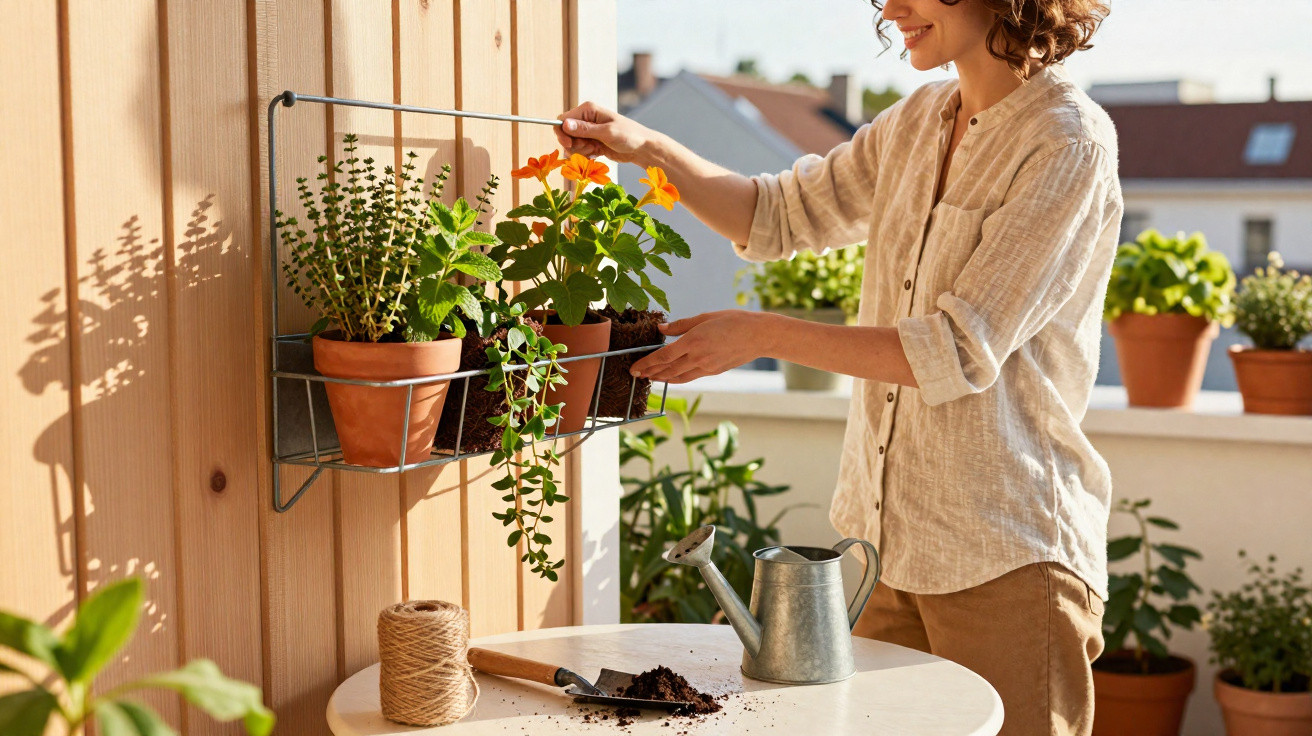
An old colander can be given a purpose beyond the kitchen by turning it into a hanging planter. Its existing holes allow surplus water to drain away, while its openwork structure can add visual interest to balconies, gardens and other outdoor areas.
Why can a colander work as a planter?
The holes already built into the piece are its main benefit. They give excess water a route to escape, which is important for preventing the growing medium from staying permanently waterlogged.
Its shape can also make it easier to create a hanging container. Depending on the design, you may be able to use its side points or the colander's own frame to attach suitable rope, chains or brackets.
Preparing the colander before planting
Start by washing the item thoroughly and removing every trace of food. Then check that the material is sound and that it has no excessive rust, cracks, sharp edges or loose sections.
Because a colander has many openings, growing medium may fall through them. Fitting an appropriate mesh liner inside can help retain the growing medium without preventing drainage.
Plants suited to this type of planter
Smaller plants can work particularly well, especially varieties that do not need a very deep container. Succulents, certain herbs and compact ornamental plants can make an attractive arrangement.
Your choice should chiefly take account of the available light and the depth required by the roots. A plant that needs plenty of root space may not thrive in a shallow colander.
How to turn a colander into a hanging planter
Once the piece has been prepared, add growing medium suited to the plant and arrange the young plants without over-compressing it. Next, secure the colander to a sturdy support, using ropes or chains appropriate for its final weight.
Bear in mind that the container will become considerably heavier once it contains growing medium and water. The fixing point must therefore be able to carry that load safely. In this way, repurposing a colander as a plant pot can turn an old object into a decorative, practical feature for the garden.

Comments
No comments yet. Be the first to comment!
Leave a Comment