
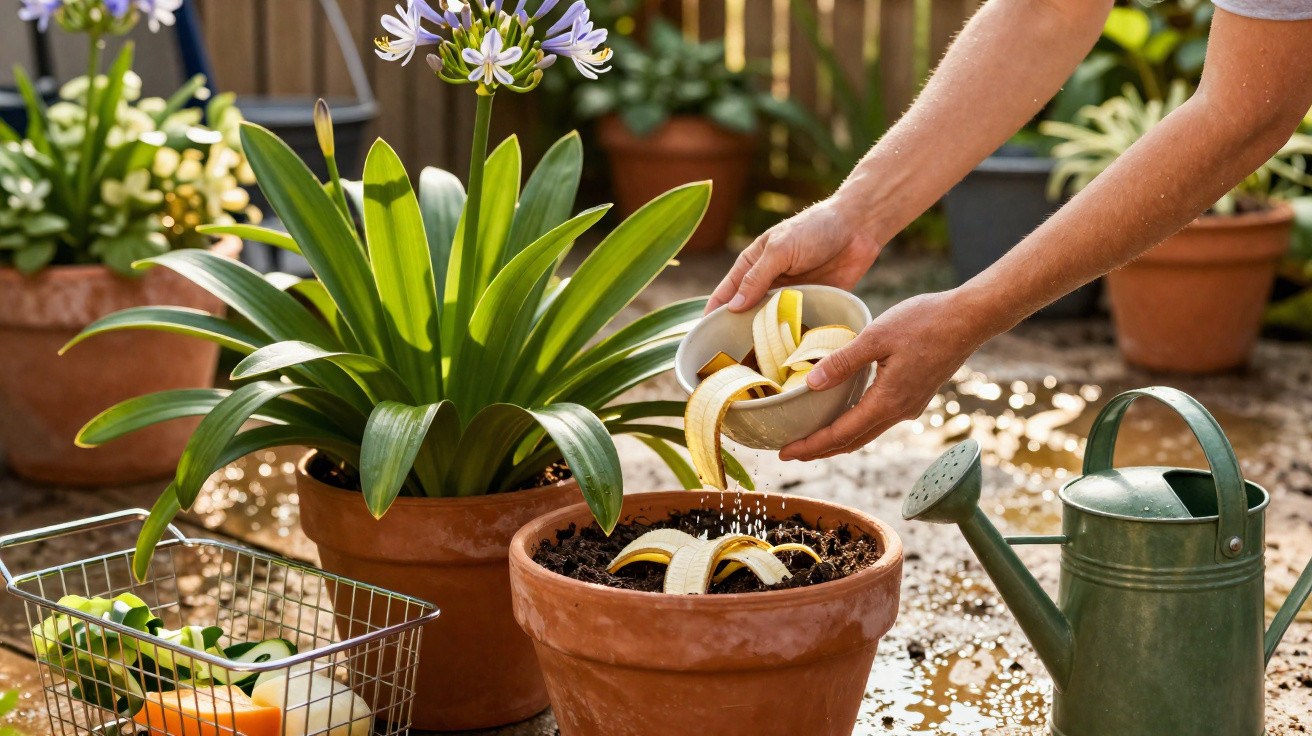
A simple addition from the food-waste bin can make a difference.
After a wet winter, borders can often seem as though they have been washed clean. Agapanthus, also known as African lilies, are particularly prone to producing plenty of foliage but few flowers in these conditions. Applying a particular kitchen waste directly around the root area at the right time in April gives the plant precisely the prompt it needs at this stage.
Why Agapanthus often flower poorly after wet winters
Many amateur gardeners recognise the situation: the African lily produces vigorous, healthy leaves, yet flower buds are few and far between. This is rarely caused by poor care; the soil is usually the issue.
Heavy, prolonged rainfall leaches readily soluble nutrients from the upper layers of soil. Light, sandy garden soils are especially vulnerable. At exactly this point in spring, Agapanthus begins drawing on the reserves stored in its rhizomes and forming new flower buds, but it encounters a nutrient balance that is no longer right.
“The plant has vigour, but it lacks the right building block in the soil to produce sturdy flower stems.”
Within the nutrient trio of nitrogen (N), phosphorus (P) and potassium (K), potassium is particularly important for flower-stem quality and the strength of the shoots. Too much nitrogen, by contrast, merely encourages foliage growth – deep green, yet often accompanied by disappointingly few flowers.
Potassium as a spring trigger for Agapanthus
Potassium does not produce flowers on its own, but it regulates several key processes:
Stronger flower stems and shoots
- It supports the formation and stability of flower stems.



Comments
No comments yet. Be the first to comment!
Leave a Comment