
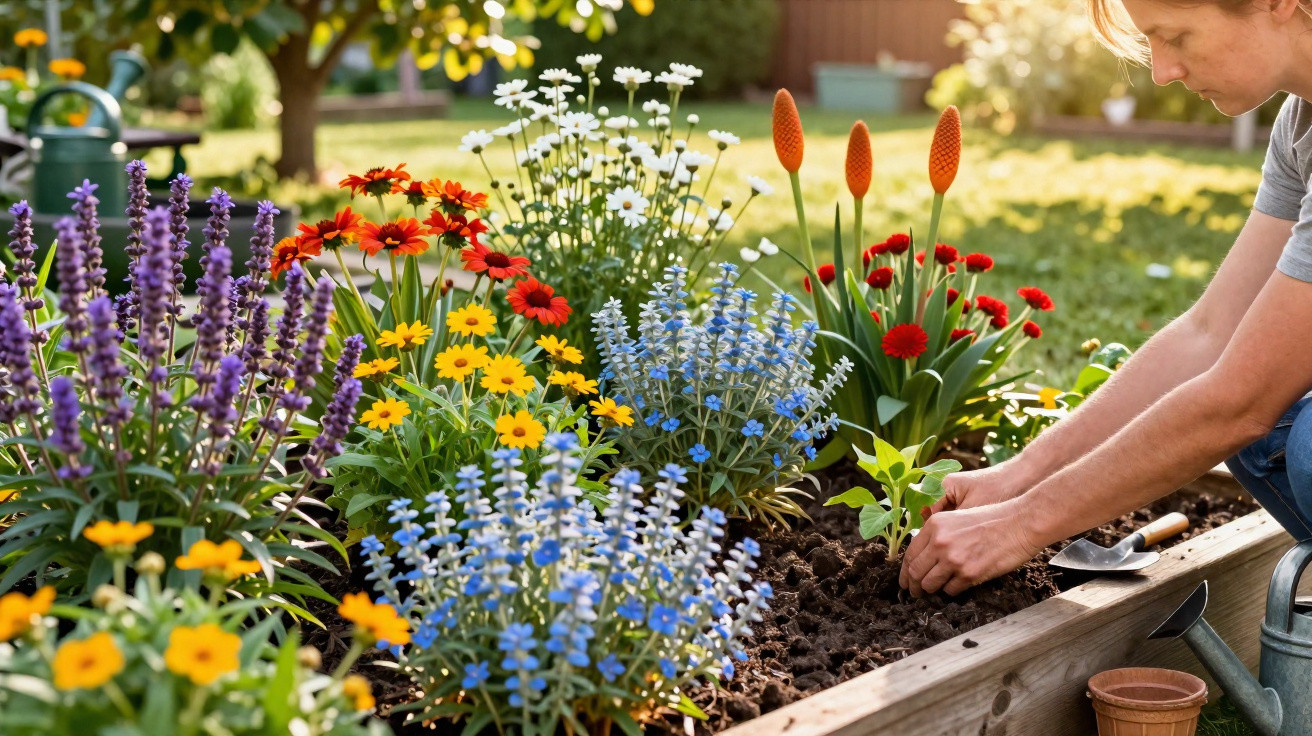
Many amateur gardeners know the sight of bare soil between newly planted specimens. The wait can feel endless, weeds seize every open patch and the border simply looks empty. Carefully chosen, fast-growing perennials can shorten this phase considerably: they fill borders quickly, flower for a long time and provide insects with a generous feast.
Why fast-growing perennials are a game changer in the garden
Perennials return from the same root system every year, saving a great deal of work compared with annual plants. Choosing varieties that establish rapidly brings two benefits: the garden looks full and lively sooner, while the plants suppress weeds by swiftly covering bare ground.
Fast-growing perennials bring structure, colour and life to the garden – permanently, rather than for just one season.
There is also a conservation benefit. Many of these species are classic insect magnets, supplying nectar and pollen to solitary bees, honey bees, bumblebees and butterflies, often for many weeks. A flower-rich garden does not merely look attractive; it also buzzes and flutters with activity.
Most perennials follow a similar development pattern: they establish roots in their first year, make substantial growth in the second, and by the third they have often formed mature clumps. The species described here noticeably speed up that process – provided their position and care are suitable.
Location, light and soil: helping perennials get off to a strong start
Light determines whether these plants truly thrive. Full sun means roughly six hours or more of direct sunlight each day, while partial shade is broadly around half that amount. Put a sun-loving perennial in shade and, instead of flowers and growth, you will get disappointment and weak, straggly shoots.
Nearly all fast-growing perennials prefer well-drained soil. Waterlogging causes roots to rot, particularly during winter. It is therefore worth preparing the ground before planting:
- Loosen the soil and remove stones and old roots.
- Dig weeds out thoroughly rather than merely cutting them down.
- Work in sand or grit where the soil is heavy.
- Mix in well-rotted compost to provide nutrients.
Starting with well-rooted plants in larger pots rather than tiny young plants will produce a filled-in area sooner. During the first season, water regularly until the perennials have anchored their root systems deep in the soil.
The 10 fast-growing perennials for quickly filled borders
1. Agastache – fragrant flower spikes for sun and insects
Agastache, often known as giant hyssop, produces upright flower spikes in purple, pink or orange throughout the summer. It quickly develops into compact clumps and performs especially vigorously in full sun. Its foliage has an aromatic scent, while bees and butterflies visit constantly.
2. Catmint (Nepeta) – blue flower cushions with few demands
Catmint rapidly forms broad, low mounds covered with blue or violet flowers. It works well at border edges, beside paths or in front of roses. Maintenance is minimal: cutting it back after the first flowering often encourages a second flush.
3. Tickseed (Coreopsis) – yellow sunbursts through to autumn
Tickseed produces vivid yellow or bicoloured blooms that hover like small suns above the foliage. It grows quickly yet remains airy, never appearing heavy or bulky. It flowers particularly persistently in free-draining, relatively lean soil.
4. Blanket flower (Gaillardia) – fiery colour for hot spots
With its red, orange and yellow flowers, blanket flower creates striking colour accents. Once established, it copes well with heat and drought. Regularly removing spent blooms extends flowering into autumn.
5. Gaura lindheimeri – floating flower clouds in the summer breeze
Gaura lindheimeri carries countless small, delicate flowers on long, flexible stems. It soon gives borders a lighter, more playful appearance. It is ideal for naturalistic planting schemes and combines beautifully with grasses.
6. Red hot poker (Kniphofia) – exotic torches for the centrepiece
Red hot poker sends up bold flower stems that stand like colourful torches in orange, red or yellow. It quickly becomes a feature in sunny, well-drained soil and makes an excellent focal point in mixed perennial borders.
7. Cranesbill (hardy geraniums) – a living ground cover with lasting impact
Hardy geraniums spread rapidly into dense carpets. They conceal bare soil, keep weeds in check and flower in pink, blue or violet, depending on the variety. Some types bloom only in early summer, while others continue for months.
Anyone looking for a lively, low-maintenance ground cover will nearly always make a good choice with cranesbill.
8. Perennial sage – purple flower spikes in succession
Perennial sage produces successive rows of upright flower spikes during the season, usually in rich purple or blue shades. Cutting it back after the main flowering encourages a second display. Bees love its abundant nectar, and sage acts as an organising framework in a perennial border.
9. Daylily – robust flowering clumps with addictive appeal
Daylilies quickly build impressive clumps. Although each individual flower lasts only one day, fresh blooms continuously follow. Their colour range extends from soft cream to deep dark red. The foliage stays attractive for a long time and reliably fills gaps in the border.
10. Bee balm (Monarda) – aromatic flower heads for bumblebees and more
Monarda forms rounded, eye-catching flower heads in red, pink or purple. It spreads by short runners, gradually claiming more ground. The leaves smell of bergamot or mint, and bumblebees positively descend on it.
How to help the perennials knit together even faster
Well-planned spacing speeds up border coverage. Planting very widely apart leaves you looking at bare soil for a long time, whereas planting too densely means dividing plants after only a few years. These guideline spacings allow fast but still healthy growth:
| Perennial | Recommended spacing | Plants per m² |
|---|---|---|
| Catmint, tickseed | 30–35 cm | 8–10 |
| Cranesbill, perennial sage | 35–40 cm | 6–8 |
| Daylily, red hot poker | 40–50 cm | 4–6 |
| Monarda, Agastache | 40 cm | 6–7 |
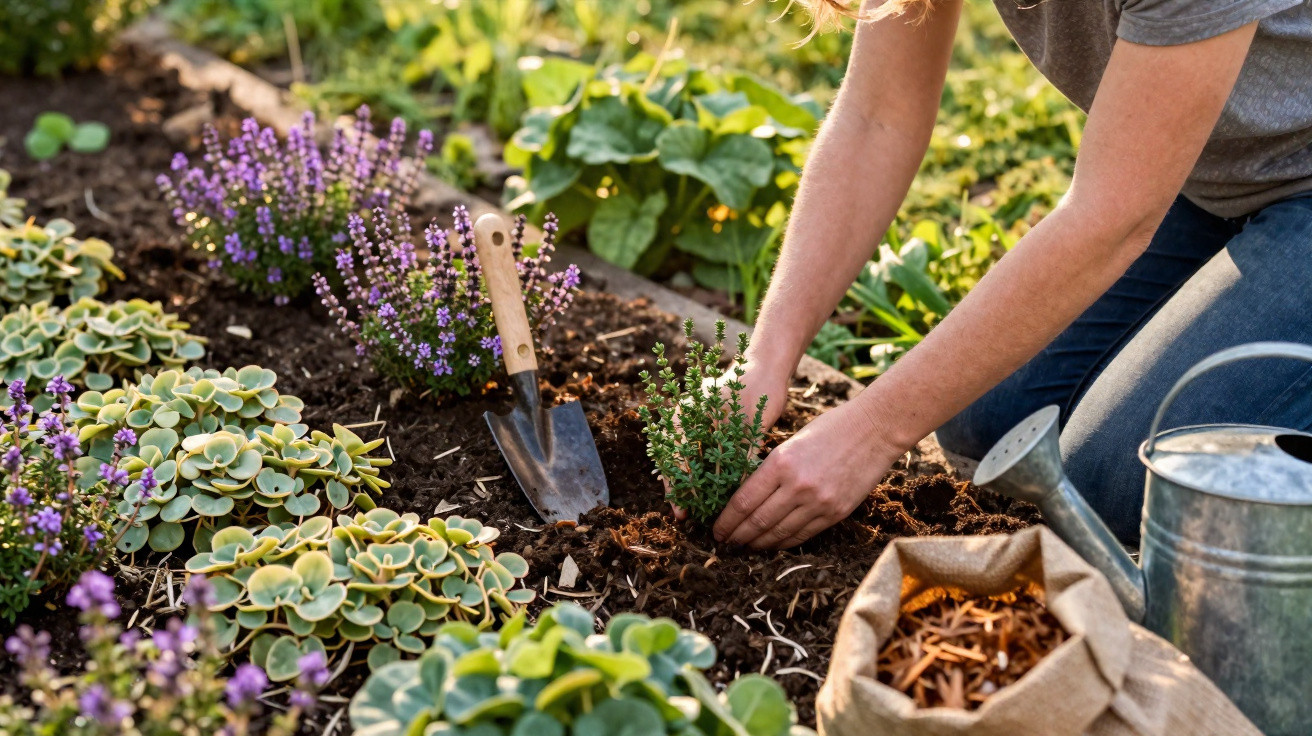
An organic mulch made from composted bark, woodchips or leaves reduces evaporation, keeps soil moist for longer and makes it harder for weeds to establish. This protection makes a major difference to growth rates, especially in the first year.
Sunny, dry or moist: suitable combinations
Some of the listed species enjoy heat and dry ground, while others prefer a slightly moist part of the garden. The following are particularly suitable for dry, sunny positions:
- Agastache
- Catmint
- Tickseed
- Blanket flower
- Gaura lindheimeri
- Red hot poker (with drainage)
Monarda and many cranesbill varieties, by contrast, appreciate fresher soil. Daylilies manage in both conditions, provided water does not stand permanently around them. When planning mixed planting, place varieties with similar needs together so that no species suffers over time.
What gardeners should also bear in mind
Some of these perennials can be so vigorous that they crowd out weaker neighbours. Monarda and certain cranesbill varieties are particularly strong spreaders. To control them, plant them with root barriers or divide the clumps with a spade every few years.
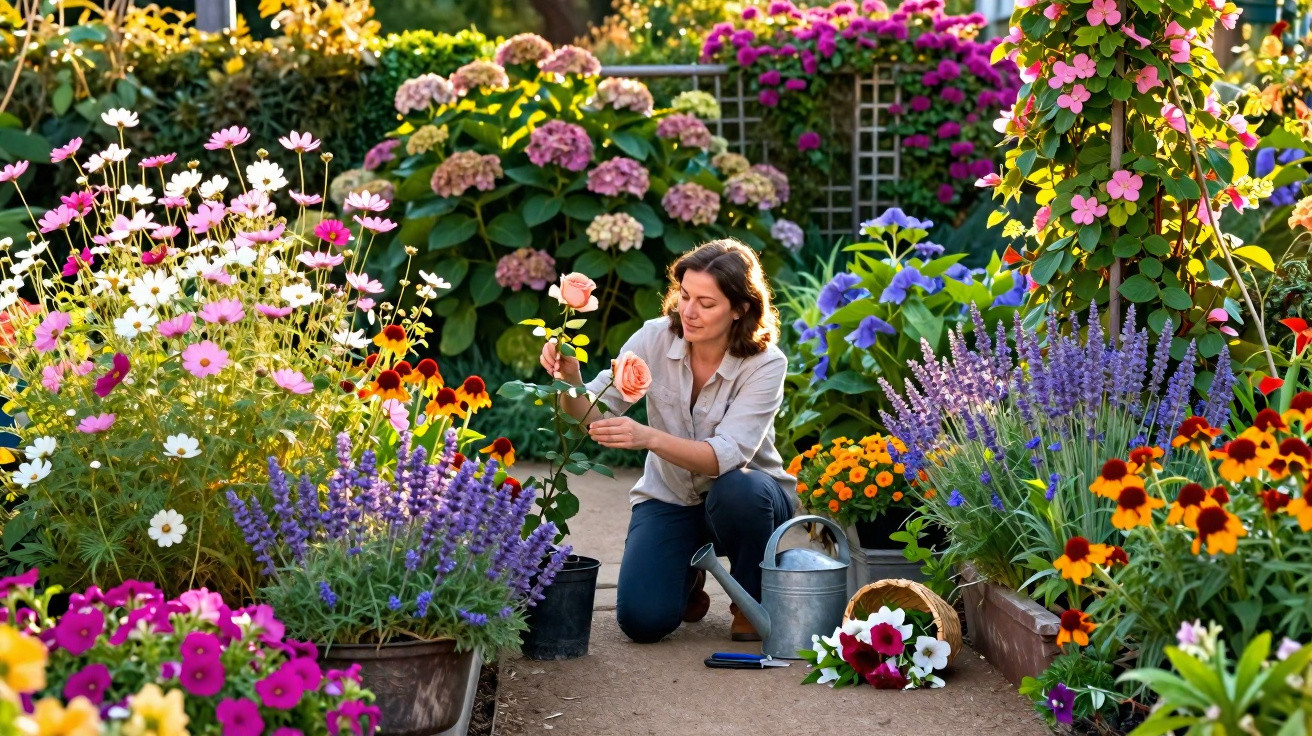
Perennials have greater impact in groups than as isolated plants. Three to five plants of the same species already create a harmonious effect. Repeating catmint, perennial sage and tickseed, for example, throughout one border creates a dense, colour-coordinated area with clear structure within a single season.
These plants are also practical for people with little time. Once established, they often need only pruning, occasional division and a little compost now and then. The reward is a garden densely planted from spring to autumn, appearing far more labour-intensive than it really is.
Comments
No comments yet. Be the first to comment!
Leave a Comment