
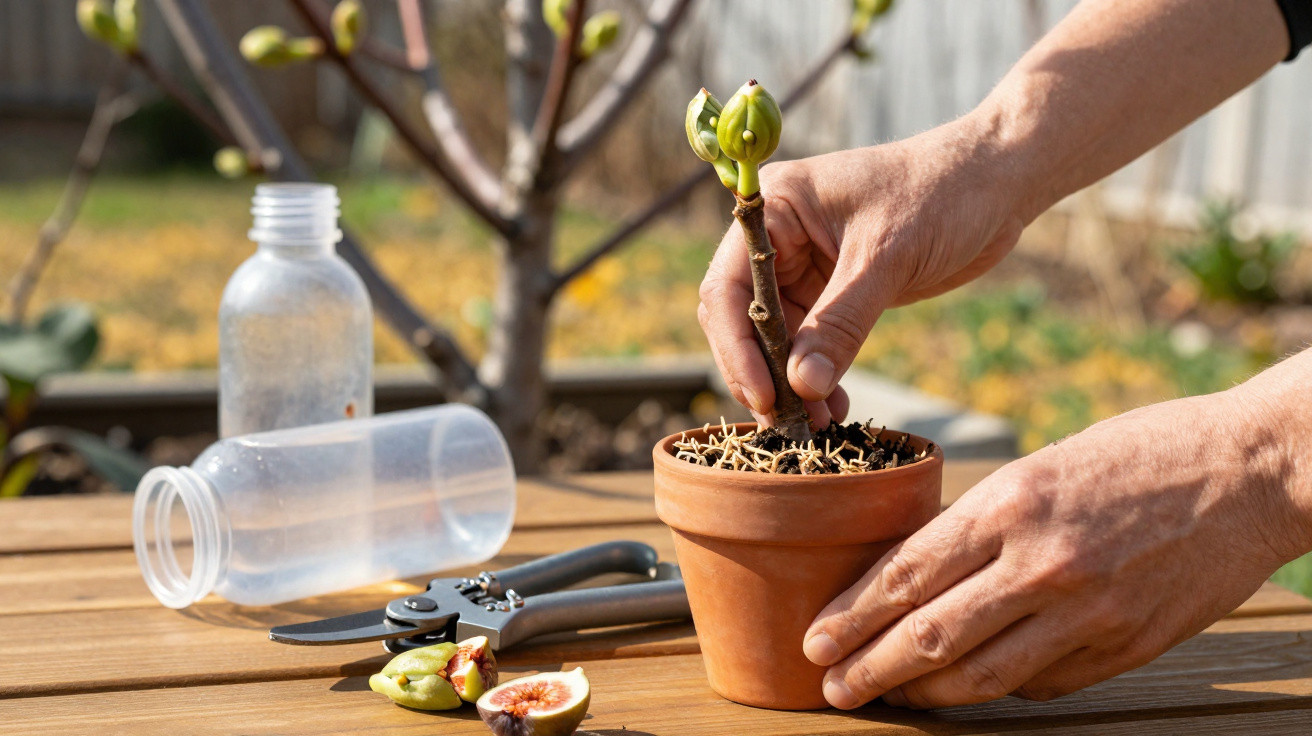
One cut at the right time – and one fig tree becomes two.
No gardening qualification required, and with virtually no expense.
Many amateur gardeners would love a second fig tree in the garden or on the balcony, yet are put off by propagation methods that seem complicated. In fact, a very simple task at the end of winter is enough to raise a genetically identical twin from an existing tree. Once you know the timing and technique, you can produce new plants free of charge every year.
Why late winter is the ideal time for fig tree propagation
A fig tree often looks bare and lifeless in February. Inside the plant, however, plenty is already happening: sap is beginning to rise slowly, while the shoots are packed with nutrients stored over winter.
This is precisely what makes the period so useful for propagation. A freshly cut hardwood cutting has no leaves to support yet. Rather than directing energy into a crown, it can send those reserves straight into forming new roots.
Cutting figs in late winter uses the full strength of their stored reserves for fast, reliable rooting.
If you wait until after new growth has emerged, root formation and leaf development compete for the same resources. This noticeably weakens the young plant and reduces the success rate. February is especially suitable in mild areas, while very early March is better in harsher locations. Once spring has arrived and the buds have fully opened, wait until the following winter.
Choosing the ideal branch: not every shoot will do
Selecting the right branch is key to producing a strong new fig tree. Woody grey-brown shoots from the previous year are particularly suitable. They are sturdy, fully mature and contain sufficient stored nutrients.
Use the following features as a guide:
- Cutting length: around 20 to 25 centimetres
- Diameter roughly equal to a pencil
- Three to four clearly visible buds
- Hard, smooth wood that is no longer green
- Position on the tree: a well-lit, healthy area with no damage
Young shoots that are still green and very soft quickly succumb to fungal disease and rot in the pot. Choose a mature, but not overly old, branch that grew during the previous year.
How to cut and prepare hardwood cuttings
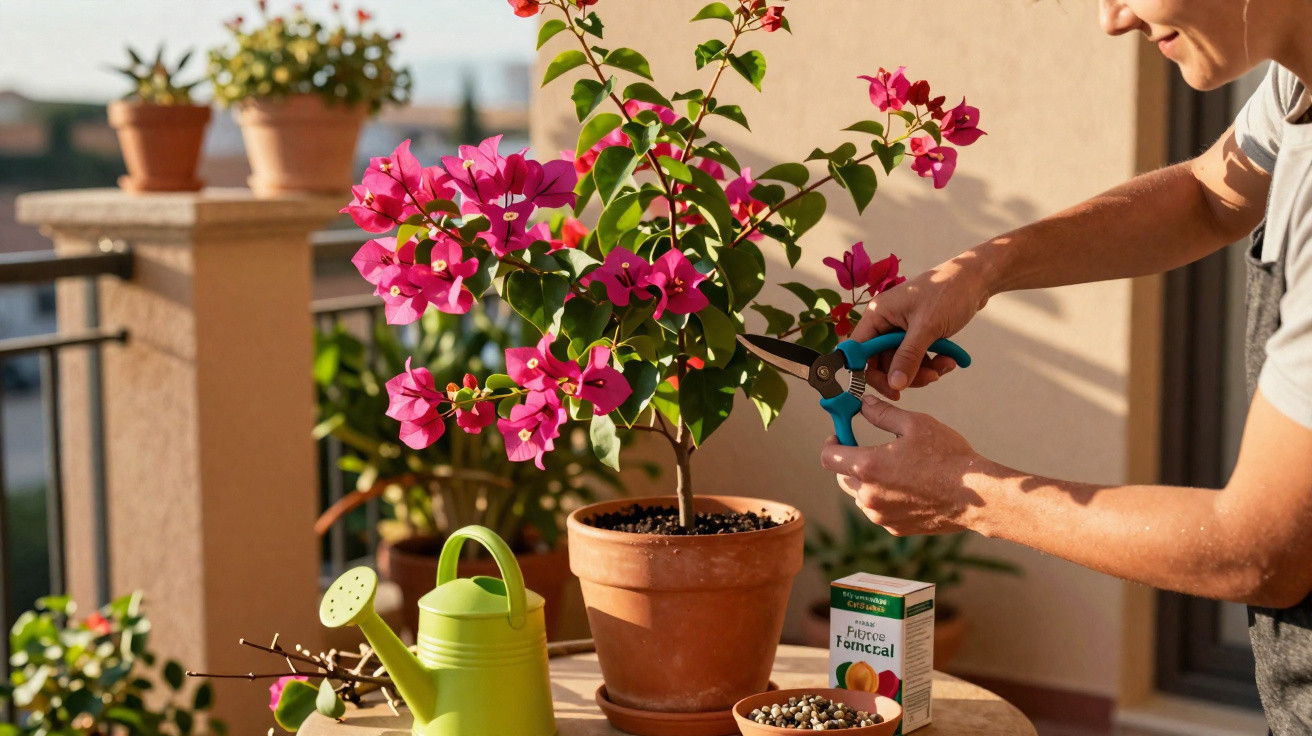
Before making the first cut, check your tools. Clean, sharp secateurs or pruning shears prevent crushed tissue and reduce the risk of infection.
The correct cut at the bottom and top
First remove a sufficiently long shoot from the parent tree. Then divide it into individual sections measuring around 20 to 25 centimetres:
- Make a straight cut at the bottom directly beneath a bud. This is where many natural rooting hormones are found.
- Make a slightly angled cut at the top, around one centimetre above the final bud. This allows rainwater to run off more easily and ensures you do not confuse the top with the bottom.
There are generally no leaves in late winter. If the shoot does still carry foliage, trim back large leaves so they do not dry out the small plant. Special rooting powders are usually unnecessary for fig trees, as the species naturally produces new roots readily.
Planting fig hardwood cuttings and making a mini greenhouse
Fig trees prefer loose, well-drained soil. It is easy to recreate the right mix in a pot. Proceed as follows.
The right growing medium
For example, mix:
- 2 parts compost or high-quality planting substrate
- 1 part coarse sand or perlite for aeration
The pot should be fairly deep so the hardwood cuttings have enough support, and it must have a drainage hole at the bottom. Waterlogging is the greatest enemy of young fig roots.
Planting the hardwood cutting correctly
Insert the prepared shoots roughly two-thirds to three-quarters of their length into the moistened growing medium. Only one bud should remain above the surface. Firm the compost well around the sides so that the shoot stands securely and makes contact with the soil throughout.
Water lightly, without turning the pot into mud. At this stage, too much water is just as unfavourable as complete dryness.
A simple mini greenhouse made from a bottle
You do not need professional equipment to create a warm, consistently humid microclimate. A clear plastic bottle is enough:
- Cut off the upper half of the bottle.
- Place it over the pot to act as a cover.
- Leave the cap slightly open or make a few holes in it so air can circulate.
This improvised mini greenhouse keeps humidity high without drowning the hardwood cuttings in a tropical climate. Put the pot somewhere bright, but out of intense midday sun. A sheltered position by an east- or west-facing window, or against a mild house wall, works well.
Light, yes; blazing sun, no – young fig trees love brightness, but not heat shock beneath a plastic cover.
How to tell whether the new fig tree is taking root
After a few weeks, small leaves will appear from the upper bud. This may look impressive, but it says little about root development. At first, the young plant uses reserves stored in the shoot to unfurl its first leaves.
Resist the urge to pull on the hardwood cutting to “test” the roots. Doing so damages the delicate strands and slows growth. Instead, rely on visual signs:
- New, ongoing growth of leaves and shoots
- No dark, soft areas around the base of the stem
- Growing medium remains loose rather than becoming musty
Water sparingly, preferably with lukewarm water. The surface may dry slightly, but the compost beneath should stay evenly moist. Once rooting has taken place, remove the plastic cover more frequently and gradually, until the plant has adjusted to normal humidity.
The right time for its permanent position
Fig trees grow fairly quickly, but need time to establish a stable root system. Leave your new plant in its pot until at least autumn.
In the following autumn or early winter, you can move the young fig tree into its permanent place, either directly into garden soil or into a much larger container. By then, it will have formed enough roots to withstand a normal winter, provided the location is reasonably sheltered.
Which fig variety suits your garden?
One major advantage of propagation from hardwood cuttings is that the new fig tree will be exactly the same variety as its parent. If the mature tree fruits twice a year, the young plant will also produce two crops. If the tree provides only a summer or autumn harvest, this will remain the same for the new fig.
When planning, it is worth considering the variety groups:
| Type | Characteristic | Suitable regions |
|---|---|---|
| Fig trees with two crops | Harvests in early summer and late summer | Warmer locations, mild winters |
| Fig trees with one crop | Main harvest in late summer/autumn | Cooler regions, more northerly gardens |
Popular varieties for small gardens are compact types that do not become excessively large and can be kept successfully in containers. Vigorous fig trees with strong root growth are far happier in large gardens or against warm house walls.
Practical tips for a high success rate
Taking several hardwood cuttings improves your chances and lets you choose the strongest plants later. A few simple rules can noticeably raise the success rate:
- Label every hardwood cutting with the date and its origin.
- Briefly clean and disinfect secateurs after every cut.
- Plant the shoot deeply enough, while leaving at least one bud above the soil.
- Protect young plants from late frosts, for example with horticultural fleece or a position beside a house wall.
- In dry centrally heated air, lightly mist with a spray bottle instead of watering constantly.
Risks, common mistakes and how to avoid them
The most frequent issues are excessive moisture and insufficient airflow. If the growing medium remains soaking wet, the shoots will rot quickly. Good drainage and careful watering when needed, rather than according to a schedule, provide the solution.
Another critical issue is direct midday sun beneath the plastic cover. It acts like a magnifying glass, causing temperatures inside to rise sharply. This leads to heat stress and scorched tender leaves. A bright position with indirect light is the better choice.
Why this fig tree trick is especially worthwhile for beginners
Compared with many other fruit species, the fig tree is among the most forgiving plants for propagation from hardwood cuttings. It tolerates minor errors, needs no specialist chemicals and roots just as successfully in a pot as it does in a greenhouse.
Anyone who has watched and tried the process once can later apply the same principle to other woody plants, such as grapevines, currants or certain ornamental shrubs. At a time when plant prices are rising, a free “twin tree” in your own garden is especially appealing.
And perhaps the greatest reward comes years later: every new fig tree grown by your own hand tells a story. Of a winter afternoon with secateurs and a flowerpot, of patience in spring – and of the first home-grown fruit from a plant created, quite literally, with a single movement of the hand.
Comments
No comments yet. Be the first to comment!
Leave a Comment