
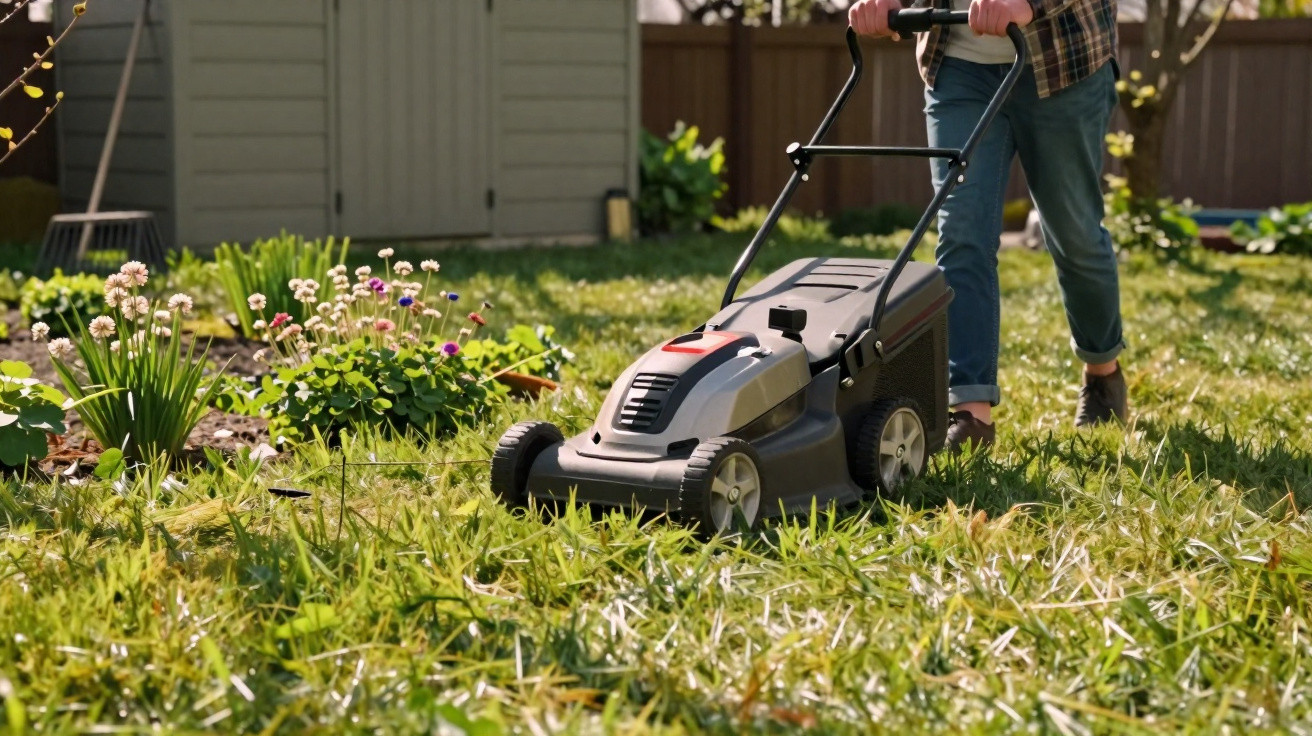
Anyone eager to put winter behind them often begins by giving the lawn a very short cut. Yet this is precisely what weakens turf that is already under strain. Experts stress that, in early spring, one simple and little-known rule determines whether the lawn looks lush, green and dense in summer – or becomes dominated by moss and bare patches.
Why March determines the lawn season
After winter, the lawn is effectively in a recovery period. Its roots have endured cold, wet conditions, while the days were short and light levels low. Grass blades act like tiny solar panels: the more leaf area they have, the more energy the plant can collect.
“In early spring, the lawn needs one thing above all: as much green leaf area as possible to store energy and produce new shoots.”
If the grass is suddenly cut back drastically in March, those “solar panels” disappear. The plants then have to push up fresh blades from weakened roots. As a result, the grass responds slowly, turns yellow and develops gaps – ideal conditions for moss and weeds.
Lawn experts therefore advise making the first cut considerably later than many gardeners are used to. Conditions matter more than calendar dates:
- No night frosts, or only very occasional ones
- Soil temperature consistently at around 7°C or above
- Grass roughly 8–10 cm tall
- Ground that is no longer waterlogged or frozen
Across much of the German-speaking region, this means the first mow is often better left until late March or even early April, rather than carried out during the first sunny weekend.
The one-third rule: how to make the lawn visibly denser
The real key to dense turf is a remarkably straightforward formula: the one-third rule. It means never removing more than one third of the current blade length in a single cut.
“Anyone who never cuts off more than one third of the blade length protects the roots and encourages the grass to grow outwards rather than simply upwards.”
For example, if the lawn is around 9 cm high, the first cut should leave it at roughly 6 cm – no shorter. Rather than shearing the whole lawn “neatly short”, only the tips should be removed.
This gentle approach has several benefits:
- The plant retains sufficient leaf area for photosynthesis.
- The lawn produces more side shoots, becoming denser rather than merely shorter.
- The soil receives more shade, so less light reaches weeds and moss.
- Roots remain strong and can absorb water and nutrients more efficiently.
After the first spring mow, lawn professionals recommend settling on a cutting height of around 5 to 6 cm. This keeps the area looking tidy without making it appear scalped. Cutting too short, especially in the still-young spring season, puts the lawn under intense stress.
Common mistakes with the first spring cut
Many summer lawn problems can be traced back to the first mowing sessions of the year. Frequent mistakes include:
- Mowing too early when the ground is still cold or frozen
- Setting the cutting height far too low – creating a “golf-course look” in March
- Using blunt blades that fray the grass rather than cutting it cleanly
- Running heavy lawnmowers over soft ground and compacting the turf
Each of these issues weakens the lawn and encourages later problems such as moss cushions, patches of clover or extensive bare areas.
How to prepare for the perfect March day for the first cut
Anyone preparing their lawn for the season should assess the soil rather than simply watching the calendar. A few basic checks are enough:
- Spade test: If the soil can be dug easily without being muddy, it is firm enough.
- Foot test: If deep footprints remain visible in the lawn, it is still too wet.
- Hand test: If the upper layer of soil no longer feels icy cold, the temperature is suitable.
Before reaching for the mower, it is also worth checking soil aeration. Making individual holes with a garden fork or lawn aerator helps water and oxygen reach the root zone more easily. This makes the turf more resilient and supports growth after cutting.
“Well-aerated soil plus a gentle first cut in March does for the lawn what a slow warm-up does for athletes – it protects against injury and improves performance.”
When mowing, use a high setting, sharp blades and a slow pace. The blades should almost “stroke” the grass tips rather than tearing them off brutally. Anyone familiar with the sound of a blunt mower pulling at grass instead of cutting it should have the blades sharpened before the lawn suffers the consequences.
What happens after the first spring mow
Once the first cut has been made, the lawn enters the stage in which it gradually becomes denser. Consistency is more important than drastic cuts. If mowing is delayed until the blades are very long again, the old problem returns: more than one third is removed at the next mow, and the stress begins all over again.
A better approach is to mow every one to two weeks, depending on growth, while gradually adjusting the cutting height. Once temperatures rise and the lawn begins growing strongly, it can carefully be reduced to 4 to 5 cm without breaking the one-third rule.
| Phase | Target height after cutting | Note |
|---|---|---|
| First cut in spring | 5–6 cm | Remove only the tips and follow the one-third rule strictly |
| Early spring | 4.5–5 cm | Mow every 7–14 days, depending on growth |
| Late spring / early summer | 4–4.5 cm | Do not cut too low, to prevent drought stress |
Let wildflowers grow: combining lawn care and nature conservation
Many garden enthusiasts now choose not to maintain every corner with centimetre-perfect precision. The trend is towards areas that are mown less often. Daisies, clover and other wild plants can flower here, providing food for bees and butterflies.
Those taking this approach can combine a short, easily walkable area around the house with attractive, slightly taller borders. The important point is that the main lawn should still follow the one-third rule and retain a higher cutting height in spring. This keeps the garden usable without turning it into a sterile “green space without life”.
What really causes moss, clover and yellow patches
When lawn problems emerge during the year, their causes often date back to the first weeks after winter. Typical symptoms and their possible triggers include:
- Patches of moss: Often caused by compacted, wet soil, cutting too short and shady positions.
- Bare areas: Heavily used sections or roots weakened early in the year.
- Yellow blades: Stress caused by cold, drought or severe cutting.
Paying attention to gentle care and the correct cutting height in March prevents many of these issues. Moderate spring fertiliser can also help once the lawn is actively growing again. It supports the grass as it develops new leaves and side shoots, making the surface more even and stable.
Another point many people underestimate is that a healthy, dense lawn is the best defence against weeds. Once the turf closes over, there is scarcely any room left for unwanted plants. The one-third rule is therefore not just about appearance; it is also a key tool in tackling clover, plantain and similar weeds.
Anyone who resists the urge to cut the lawn short in March is taking a long-term view. A later, higher first cut, sharp blades, aerated soil and regular, gentle follow-up mowing are often all that is needed to turn a pale winter lawn into a hard-wearing, dense green space by summer – one where children can play, garden furniture can stand and hardly any gaps remain visible.






Comments
No comments yet. Be the first to comment!
Leave a Comment