
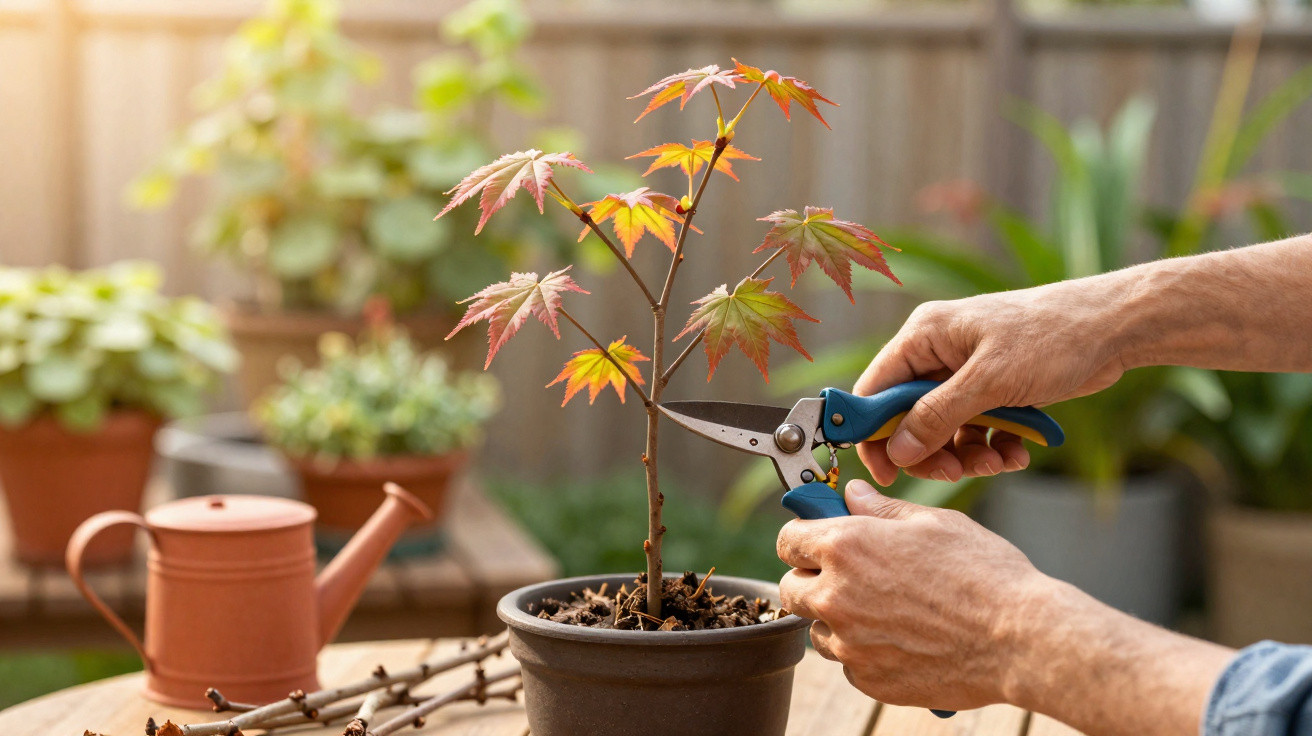
The leaf edges are scorching, fresh shoots fail to appear and, despite regular watering, the tree looks weary: this is a familiar sight in many gardens with Japanese maples. Yet in spring, this elegant ornamental plant primarily needs one thing: proper protection around its base. Acting in good time in March can visibly stimulate growth and substantially reduce the risk of brown leaf margins.
Why Japanese maples quickly lose vigour
Japanese maples (Acer palmatum) have a delicate appearance – and they are just as sensitive. Their root systems sit very close to the soil surface, where temperatures and moisture levels fluctuate sharply: late frost overnight, the first warmth of the sun during the day, and wind that dries the ground quickly. These changing conditions place considerable stress on the tree.
Typical results include:
- Growth slows or stops, while new shoots remain short and weak.
- Leaf edges soon turn brown.
- The tree develops an overall sparse, open appearance.
- It becomes more susceptible to fungal diseases and pest infestations.
Many people respond by giving more water, but this can often make matters worse. The shallow roots may then sit in wet soil for periods, only for the ground to dry out abruptly again later. Japanese maples dislike both extremes.
“Above all, Japanese maple roots need stability: consistent moisture, consistent temperatures and no extremes.”
The crucial March task: a protective layer
This is where suitable soil cover becomes important. The aim is to recreate the tree’s natural growing conditions. In its native habitat, it often grows in open woodland, on a loose layer of leaves, bark fragments and weathered wood. This covering keeps the soil cool and evenly moist without causing waterlogging.
In the garden, the same effect can be created with a layer of organic material. Over time, it gradually decomposes and also releases nutrients. It is not complicated, but timing matters: March is the ideal month, as soon as the ground is no longer frozen.
How to mulch Japanese maples in March, step by step
1. Prepare the soil around the tree
Before applying the protective material, give the area beneath the canopy some attention:
- Pull out weeds by hand – do not use a hoe, as this could damage the shallow roots.
- Carefully loosen only the top 2 to 3 centimetres of soil.
- Remove stones, old grass remnants and deep-rooted weeds as completely as possible.
Taking care over this stage prevents later problems with weeds competing with the maple for water and nutrients.
2. Apply the layer correctly
Next, spread the material on the ground around the trunk. Both the depth of the layer and the distance from the trunk are important:
- Layer depth in a border: around 5 to 8 centimetres
- Area: cover the entire area beneath the canopy, preferably extending a little beyond it rather than stopping too short
- Trunk area: leave a clear ring of around 10 centimetres around the trunk
This uncovered ring helps protect the trunk from rot and fungal infection. If the base of the tree is permanently enclosed in damp, dark material, bark diseases can establish themselves quickly.
3. Suitable materials – and those to avoid
Japanese maples particularly appreciate slightly acidic, humus-rich soil. The protective layer should support these conditions. Suitable options include:
- Composted pine bark
- Well-rotted leaves, ideally from beech, oak or maple
- Woody chippings from thin branches that have already been left to mature for a while
- Mature garden compost in a thin, not overly coarse layer
Less suitable, or even harmful, materials include:
- Dark decorative gravel in full sun – it heats up intensely.
- Heaps of fresh lawn clippings – they rot and form a dense, sticky mass.
- Plastic sheeting – it traps water and air, effectively causing the soil beneath to “suffocate”.
“The protective layer should breathe, allow water through and slowly turn into valuable humus.”
How mulch changes watering and growth
With properly laid soil cover, the root zone remains moist for longer without becoming waterlogged. This does not mean watering is no longer necessary, but the routine becomes much less demanding.
Gardeners specialising in Japanese maples recommend the following general guidelines for trees growing in borders:
- In normal weather: two thorough waterings each week
- During hot spells: three to four times per week, directed precisely at the root zone
- Water deeply less often rather than giving the tree a small daily “spray”
Because of the protective layer, water reaches the roots more evenly and does not immediately evaporate from the surface. The tree responds with steadier shoot growth, fewer scorched leaves and denser foliage overall.
Special considerations for Japanese maples in pots
Many gardening enthusiasts keep their maple in a container on a balcony or patio. Slightly different rules apply here because pots heat up and dry out far more quickly.
For container-grown plants:
- Layer depth: 3 to 5 centimetres is sufficient; any more keeps the surface wet for too long.
- Empty saucers after watering so that waterlogging cannot develop.
- Do not place the pot in intense midday sun on bare stone surfaces.
A thin protective layer also helps keep roots more evenly supplied in a pot. At the same time, it buffers extreme temperature shifts, which are far more pronounced in containers than in borders.
Further worthwhile care throughout the year
The March layer provides the foundation. Over the course of the year, a few additional measures can help keep the maple strong:
- In May, work in a small amount of organic slow-release fertiliser.
- Carefully prune back scorched or dried shoot tips in early summer.
- During storms or very hot winds, put up light shade fabric, particularly for varieties with finely cut leaves.
Towards the end of summer, it is worth reducing watering slightly without allowing the tree to dry out. This helps it prepare for autumn colour and develop more intense shades.
Common mistakes and how to avoid them
People new to Japanese maples often encounter the same pitfalls. With a little knowledge, three of them are easy to prevent:
- Planting too deeply: The base of the trunk must always remain visible. If soil or the protective layer gradually builds up, clear the area around the trunk again.
- Exposed positions: Cold winds severely dry out the fine leaves. Plant in a bright but sheltered spot instead, such as in front of a wall.
- Unsuitable soil: Heavy, clay-rich soil with little structure cannot drain water effectively. When planting, incorporating a loose mix of bark humus and sand can help.
Anyone who keeps these points in mind and consistently creates a stable root zone in March will usually see a completely different Japanese maple: more vigorous new growth, fuller foliage and far fewer leaf problems in summer.
Why this single step can have such a major effect
At its heart, soil cover is not merely decorative; it creates a small climate system for the tree. Beneath the protective layer, fungi, bacteria and tiny soil creatures form their own active ecosystem. They gradually break down the material, improve soil structure and continually provide the maple with small amounts of nutrients.
Anyone who has seen a previously struggling tree recover after one or two years of consistent ground cover will naturally reach for the wheelbarrow again in March. The job takes around half an hour – while the benefit supports the tree throughout the entire season.
Comments
No comments yet. Be the first to comment!
Leave a Comment