
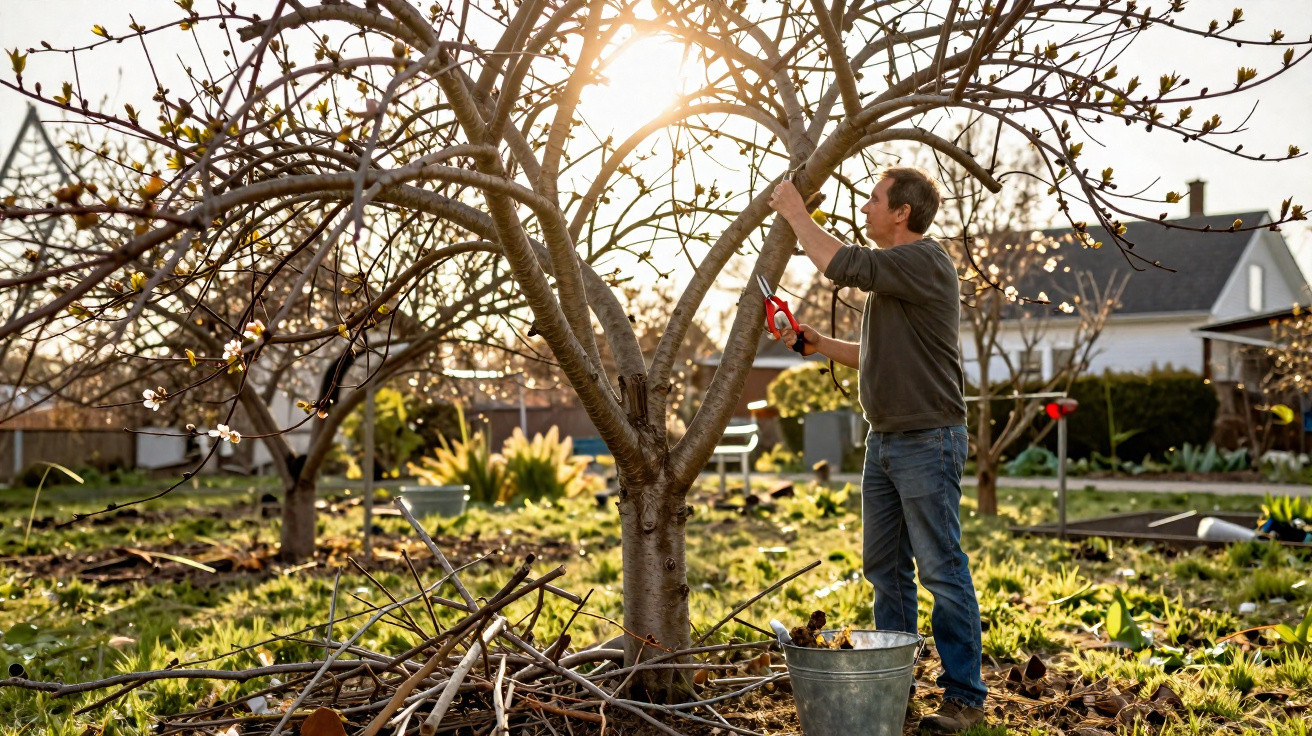
A cherry tree can look perfectly healthy yet produce only a handful of undersized fruit in June. Fertiliser is rarely the cause; in most cases, the issue is pruning – or, more specifically, one vital traditional task that earlier generations routinely carried out in late winter or very early spring.
Why this is the decisive time for your cherry tree
Cherry trees begin their growing year very early. Their buds start to swell gradually before the leaves emerge. At this stage, it is determined whether the tree directs its energy into leaves or fruit.
The brief window before bud break
The best time is as winter recedes and temperatures become milder, when the buds are starting to swell but remain closed. The canopy is still easy to assess, while the sap is already beginning to rise.
"Pruning before the buds open fully directs the tree's energy towards flowers – and therefore towards the cherries that follow."
If you leave it too late, the cherry tree will already be investing much of its energy in shoots and foliage. Pruning in late spring puts it under unnecessary strain and can noticeably reduce the crop.
Look first, then prune
Before picking up any tools, walk around the tree and inspect it. Stand back a little, look at the canopy against the sky, and consider the following:
- Does light reach the centre of the canopy?
- Are many branches crossing within it?
- Are there clear main branches growing outwards?
If the centre resembles a dark thicket, the fruiting branches inside receive very little sunshine. This results in fewer flowers, slower ripening, bland flavour and an ideally damp environment for fungal diseases.
The old gardeners' forgotten trick: clear the inside of the cherry tree
The key practice passed down through earlier generations of gardeners is remarkably straightforward: thin the canopy so that air and light can reach its centre. In essence, this means two things: remove crossing branches and cut away so-called water shoots or gourmands.
Rubbing branches create entry points for disease
Many cherry trees develop shoots within the canopy that point inwards or cross other branches. In windy conditions, these rub together, damaging the bark and creating small wounds. Fungi and bacteria can enter precisely through these damaged areas.
The rule is simple: where two branches rub together, only one should remain. Keep the stronger, better-positioned shoot that grows outwards, and remove the poorly placed branch at its point of origin.
"Every point of friction removed takes away a risk for the tree – and returns energy to its fruit-bearing branches."
Water shoots: vigorous, unproductive and covert energy thieves
The most obvious energy drains are the upright, strongly growing shoots that spring directly from the trunk or from thick side branches. They may look full of vigour, but they almost never bear cherries.
They draw huge amounts of nutrients from the tree and deprive the fruiting branches of energy. They should therefore be removed consistently:
- cut them as close as possible to where they emerge;
- do not leave them for "later" – they will only grow larger;
- ideally, remove them early while they are still thin.
Removing these shoots every year in late winter or very early spring keeps your cherry tree focused on fruit rather than excessive shoot growth.
Clean cuts, not brute force: protecting the cherry tree
Good cherry tree pruning is not a job for a lumberjack. It is closer to a precise operation. The cleaner each cut, the faster the wound heals and the better the tree can remain healthy.
Prepare your tools like a plant surgeon
Blunt secateurs crush the wood, tear the bark and leave broad surfaces vulnerable to fungi. A quick check before you begin is worthwhile:
- sharp, sturdy secateurs for thinner branches;
- loppers or a pruning saw for thicker branches;
- alcohol or disinfectant for regularly wiping the blades.
Disinfecting may sound laborious, but it prevents problems: when several trees are pruned one after another, diseases can otherwise be carried from one fruit tree to the next.
Make the cut just above an outward-facing bud
Every cut should be made just above a bud that faces outwards. This encourages the new shoot to grow away from the canopy instead of heading back into its centre.
"A slightly angled cut above an outward-facing bud guides growth and prevents moisture from sitting on the wound."
Make the cut surface at a slight angle so rainwater can run off rather than collect directly over the bud. Standing moisture encourages rot and can damage the young shoot tip.
How your cherry tree benefits after pruning
Once the canopy has been thinned, dead or rubbing branches removed, and water shoots cut away, the tree will suddenly appear open and airy. That is exactly the intended result.
More light, more air, more cherries
Fruit buds thrive in sunshine. When light reaches the middle of the canopy, more flowers form there. At the same time, the canopy dries more quickly after rain or dew because air can move through it more freely.
| Situation | Effect on the cherry tree |
|---|---|
| Dense, neglected canopy | Fewer flowers, more fungal infection, small or limited fruit |
| Well-thinned canopy | More sunshine on the fruit, stronger growth, better yields |
With consistent spring pruning, you direct the tree's sap towards the buds that truly matter: the fruit buds. These later become the red summer spheres, rather than the lush water shoots.
What to do with the prunings
The cut branches do not have to go into the garden waste bin. Thinner material is ideal for chipping and using as mulch beneath shrubs or in flower beds.
This gradually returns nutrients to the soil, helps protect it from drying out and also reduces weed growth. Thicker branches can be left to dry and later used as firewood or as decorative features in the garden.
Practical guidance for different garden situations
Young cherry tree versus old giant
With young trees, the priority is establishing their framework. Select several strong main branches growing sideways and outwards, then shape the tree around them. Tackle strongly inward-growing shoots early, before they become thick.
For old, neglected trees, a plan spanning several years is worthwhile. Removing too much at once can overwhelm the tree. Instead, take out a few larger branches each year, gradually open up the canopy, and keep water shoots short at the same time.
Risks and essential points to remember
One common error is known as topping, where everything at the top is simply sawn off. This shocks the tree and can trigger even more rampant water-shoot growth. It is better to work selectively within the canopy while largely retaining the tree's natural shape.
Large wounds from cutting thick branches put a cherry tree under considerably more stress than several smaller cuts on younger shoots. It is therefore better to prune early and regularly than to arrive with a saw once every ten years.
What this old gardeners' trick does for your garden over time
Those who make a few carefully considered cuts every year in late winter will notice a clear difference after several seasons: the cherry tree produces more dependable, heavier crops, its fruit becomes larger and more flavoursome, and fungal problems occur less often.
Many fruit-tree care terms may sound complicated, but the principle behind them is simple: the tree should direct its energy where you want it – into flowers and fruit, rather than unnecessary shoots. Systematically removing water shoots and rubbing branches is the key to achieving this.
Combining this care with further measures will get even more from your cherry tree: a thin mulch layer around the root area, gentle watering during prolonged dry spells, and a restrained application of organic fertiliser in spring make a strong combination. Within a few years, a disappointing cherry tree can become a dependable source of fresh fruit, cake toppings and jars of jam – without harsh chemicals, using only an old, almost forgotten spring ritual.

Comments
No comments yet. Be the first to comment!
Leave a Comment