
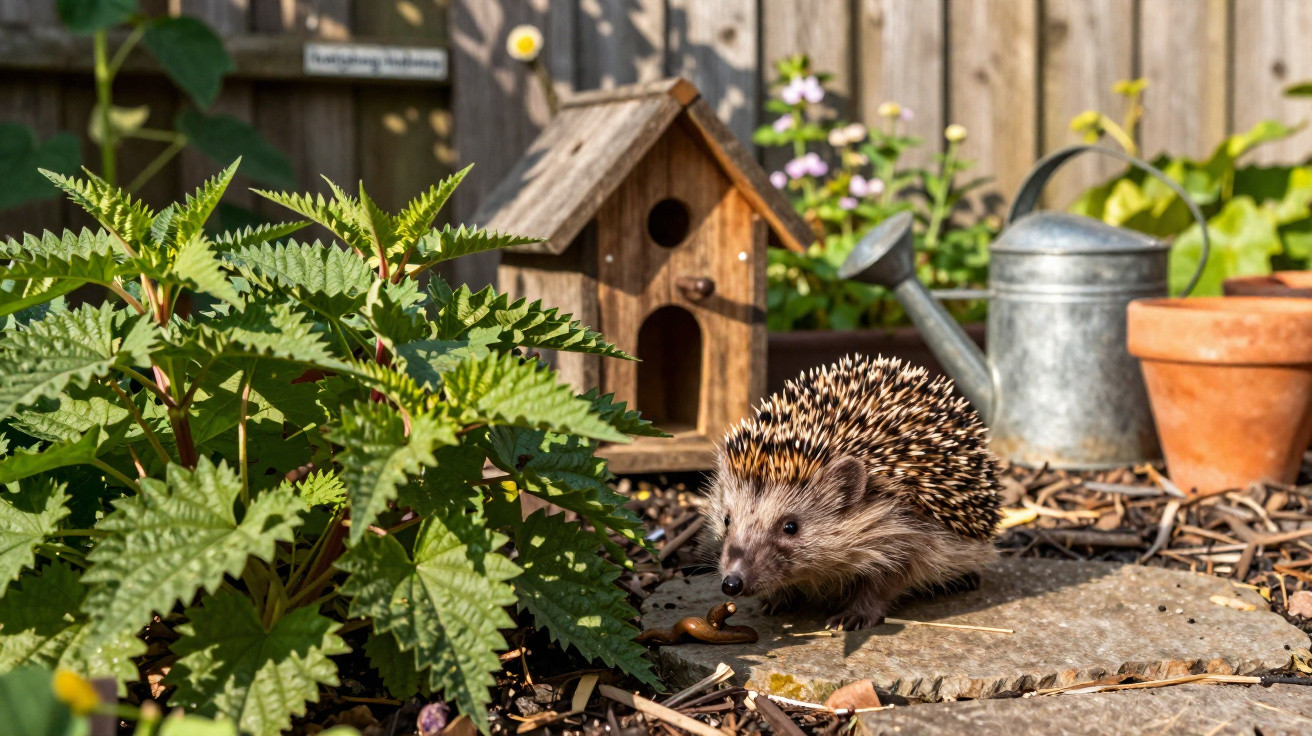
Behind this so-called ‘weed’ lies a quiet, prickly helper for the garden.
Anyone who values a tidy lawn will usually see it as a nuisance. Yet this very stinging plant creates an ideal mini-reserve for hedgehogs, providing shelter, food and a nursery site. Letting it grow in the right place can attract one of the garden’s most useful pest hunters.
Why nettles are so attractive to hedgehogs
The modest annual nettle (Urtica urens) has a poor reputation. It pricks, irritates the skin and can make a garden look untidy. Those are precisely the qualities that make it especially appealing to hedgehogs.
“Among dense nettles, hedgehogs find protection from predators, plentiful food and a peaceful place to retreat.”
Its stinging leaves and stems create a kind of natural barrier. Cats, dogs and foxes often avoid these areas. This gives hedgehogs a protected space where they can sleep during the day or rear their young.
Nettle patches also teem with insects. Aphids, caterpillars, larvae and beetles form a small buffet for these nocturnal, spiny visitors. The plant therefore supports a complete miniature ecosystem that both shelters hedgehogs and keeps them fed.
Observers have also described an unusual behaviour: some hedgehogs deliberately rub themselves against nettles. One theory is that the skin irritation may disturb or drive away parasites, much like birds that sit among ants to rid themselves of lice.
Why hedgehogs are the garden’s best slug hunters
Among keen gardeners, hedgehogs are regarded as genuine allies. They eat many of the creatures most feared in vegetable plots.
- Slugs, particularly soft-bodied nocturnal species
- Small slugs and young specimens
- Caterpillars and larvae on vegetables and ornamental plants
- Beetles and other insects that damage plants
- Worms and spiders as an extra source of protein
A garden visited by hedgehogs needs slug pellets or insecticides far less often. These prickly garden residents act as natural regulators: they consume what becomes too abundant and help maintain balance in the ecosystem.
Hedgehogs often lack safe places to hide, especially in densely built-up areas. Sealed surfaces, unbroken fences and closely mown lawns all remove their cover and food sources. A few untidy corners containing nettles, leaves and wood can become a vital island habitat.
Creating a hedgehog corner with nettles
There is no need to let the entire garden become overgrown. For hedgehogs, one deliberately created area that is allowed to remain partly wild is enough.
The best place in the garden
A quiet corner that is rarely used works best, for example:
- Behind a garden shed or garage
- Along the edge of a hedge
- Close to a pile of logs or leaves
- Beside a fence that is not used every day
Simply leave a patch of ground alone there. When the first nettles appear, do not mow or dig them up; just keep their spread slightly contained. Even a narrow area of two to three square metres is often sufficient.
“A small island of nettles combined with leaves and wood soon becomes a safe refuge for hedgehogs.”
Essential: gaps in fences
Hedgehogs travel long distances each night while looking for food. Fully enclosed fences can become dangerous traps because they force the animals to take detours across roads.
Anyone wishing to support hedgehogs should leave small openings along their property boundary. A useful guideline is an opening of around 13 centimetres in diameter or side length. These ‘hedgehog tunnels’ are easy to make: dig a gap beneath the fence or cut a suitable opening into it.
Ideally, neighbours should coordinate and create these passages between gardens. Several accessible gardens then form a larger connected territory with a much wider food supply.
Build a simple hedgehog house yourself
A small hedgehog house provides useful additional shelter alongside the nettle corner. It does not need to be elaborate; a basic refuge is enough.
- Screw four wooden boards together to make a box, leaving out the base.
- Cut an entrance measuring around 10 x 10 cm.
- Make the roof slightly sloping so rainwater can run off.
- Place the box in a dry spot near the nettles.
- Line the inside with leaves or hay.
The entrance should not face the prevailing wind, so it should ideally point east or south-east. Leaves and twigs can be placed around the outside to make the house look more natural and improve insulation.
Important: do not keep checking inside the shelter during autumn. Hedgehogs often use these houses as winter quarters, and disturbances use up valuable energy during hibernation.
What hedgehogs can tolerate – and what harms them
Many well-intended forms of help do more harm than good. A few basic rules offer lasting protection for these animals.
| Good for hedgehogs | Bad for hedgehogs |
|---|---|
| A shallow bowl of fresh water | Slug pellets and other poisons |
| Wild corners with leaves, wood and nettles | Perfectly cleared gardens with no hiding places |
| Openings in fences | Completely sealed fences and walls |
| Careful use of robotic mowers and trimmers | Robotic mowers at dusk and overnight |
| Specialised hedgehog food or wet cat food | Milk, bread, salty or seasoned leftovers |
Poison baits intended for slugs are particularly risky. For hedgehogs that feed on precisely these animals, they create a high risk of poisoning. Avoiding chemical products helps these spiny visitors twice over: there is more food available and less danger.
Nettles: much more than a hedgehog magnet
This unpopular plant has several further uses. Many gardeners grow it deliberately as a useful plant.
For instance, the leaves can be used to make a liquid plant feed. Pour water over nettles and leave them to steep for several days. The resulting liquid has a strong smell, but acts as a natural fertiliser and strengthens vegetables and ornamental plants.
Nettles also have a place in the kitchen. When properly prepared, they taste similar to spinach. Common ways to use them include:
- As a filling for savoury pancakes or strudel
- In a herb spread or pesto
- In soup or stew
- As tea, when dried and infused
They also contain high levels of minerals, vitamin C and protein. Harvesting the leaves with gloves, then briefly blanching or frying them, neutralises the stinging hairs.
How your garden can become a mini nature reserve
A small stand of nettles may not appeal to everyone visually. Even so, it shows that there is room for more than an ornamental lawn. It creates a small refuge in the middle of a residential area for hedgehogs, insects and birds.
Many local authorities now talk about ‘sponge cities’ and ‘green corridors’. These are areas that retain water, provide shade and connect habitats. Every private garden can become part of this network. Hedgehogs benefit immediately, as does the vegetable garden, which suffers less feeding damage.
If you are unsure, start small: leave one corner unmown for a year, allow nettles to grow there, put out a bowl of water and open up one point in the fence. It often does not take long before the first prickly visitor can be seen sniffing through the beds at dusk.
In this way, a plant that many people instinctively pull out can turn a garden into a livelier, healthier and far more interesting place – for hedgehogs, other animals and, ultimately, the people living there.


Comments
No comments yet. Be the first to comment!
Leave a Comment