
Monstera deliciosa-often simply called a Monstera or the Swiss cheese plant-now appears in countless living rooms, offices and shared flats. Its reputation is urban, stylish and supposedly beneficial for the air. There is more behind that claim than mere marketing, though considerably less than many Instagram posts imply.
How Monstera affects the air in your home
At its core, a Monstera functions like any other green plant: it photosynthesises, absorbing carbon dioxide and releasing oxygen. Its large, perforated leaves provide a generous surface area for gas exchange.
A Monstera can noticeably improve the indoor climate-but it is no replacement for an air purifier with a filter.
There is another effect that often becomes apparent once you own several sizeable plants: the Monstera releases water into the air through its leaves. This process, known as transpiration, raises humidity levels-an advantage in dry, centrally heated homes or a home office where the laptop is permanently running.
What about airborne pollutants?
Since the well-known NASA study of the 1980s, houseplants have been regarded as natural air purifiers. Researchers at the time examined how plants could break down particular pollutants in enclosed spaces. Although Monstera was not the study's main focus, comparable species demonstrate what may be possible in principle.
The central message of current research is that a Monstera can absorb volatile organic compounds (VOCs), such as formaldehyde, to a limited degree-for instance, those released by furniture, paint or cleaning products. The effect is measurable, but far smaller than marketing claims often suggest.
| Pollutant | Monstera's effectiveness | Note |
|---|---|---|
| Carbon dioxide | Moderate uptake | Active during the day through photosynthesis |
| Formaldehyde | Limited reduction | Several large plants are needed for a noticeable effect |
| Dust particles | Good capture | Large leaves trap airborne dust |
| Benzene & co. | Minor effect | Considerably weaker than recognised ‘filter plants’ |
In a typical living room, one Monstera will therefore not ‘radically clean’ the air. It is better viewed as one part of a broader approach involving ventilation, filters and regular cleaning.
Monstera compared with genuine ‘air-purifying stars’
Anyone using plants specifically as natural filters will soon encounter species such as snake plants, devil's ivy and spider plants. Studies repeatedly rank these among the more effective options for reducing certain pollutants.
In the contest for the strongest air purification, the Monstera does not take first place-it excels in other areas.
While snake plants and devil's ivy can often process pollutants more efficiently, the Monstera has different strengths:
- it produces plenty of oxygen during daylight hours;
- it measurably increases humidity;
- its large leaves bind a noticeable amount of dust;
- it is decorative and has a proven positive effect on wellbeing.
According to specialists, roughly two large plants per ten square metres would be needed to make a noticeable difference to particular pollutants. With a Monstera, that means several plants rather than a single pot in the room-and they must be healthy and growing strongly.
Getting the most from your Monstera
For the plant to improve the air at all, it needs to be thriving. A struggling Monstera with yellowing leaves contributes very little to the indoor climate. Proper care therefore makes a direct difference.
Position, light and watering
Monstera originates from the tropical forests of Central and South America. It prefers bright conditions without harsh direct sunlight, along with warm temperatures and no draughts.
- Light: a bright spot with indirect sunshine; avoid hours of midday sun at a south-facing window.
- Watering: water only once the top two centimetres of compost feel dry.
- Humidity: around 60–80 per cent is ideal; misting or bowls of water placed on radiators can help.
- Fertiliser: use a balanced liquid fertiliser about once a month during spring and summer.
- Repotting: move it into fresh growing medium every two years so its roots and leaves can continue developing.
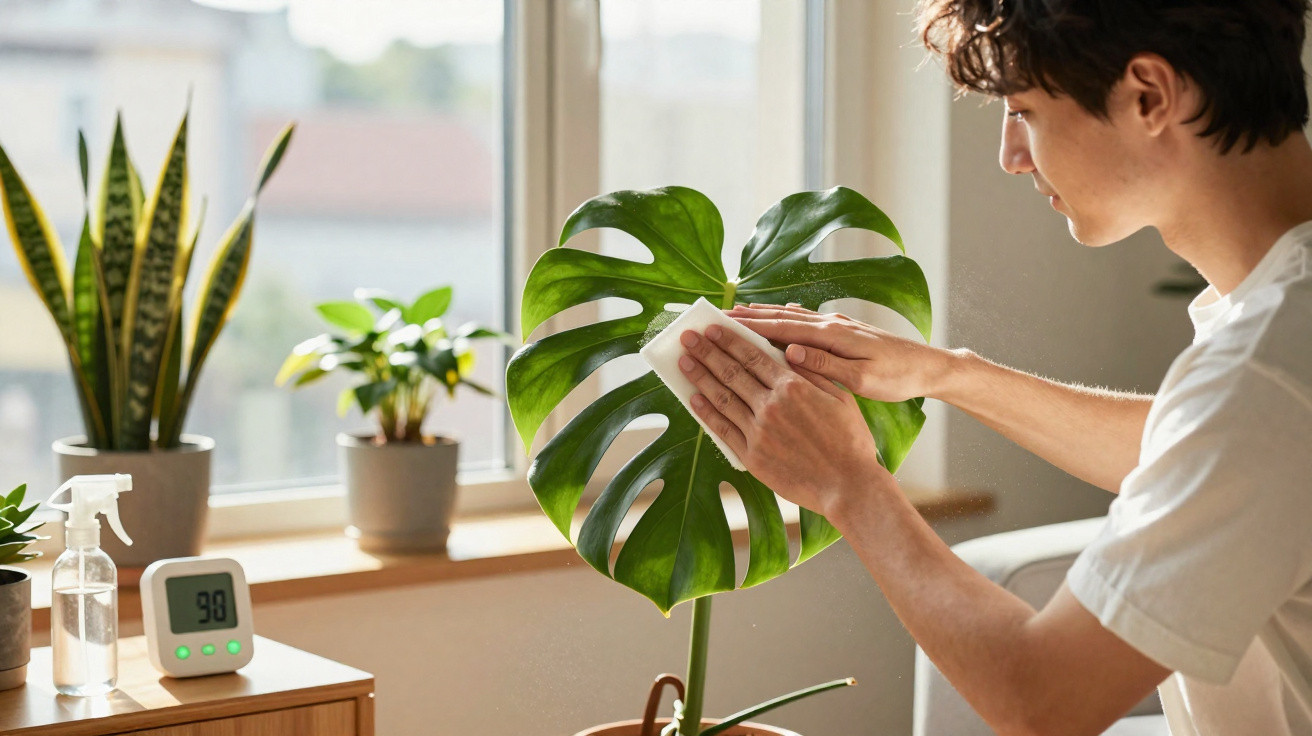
One frequently overlooked detail is that dust on the leaves blocks light and therefore photosynthesis. Wiping your Monstera regularly with a damp cloth immediately improves its performance in oxygen production and humidity regulation.
Combine it with other plants
Rather than relying on one large Monstera alone, it is worth creating a ‘plant team’. Different species complement each other's strengths. A possible living-room combination could include:
- 1–2 large Monstera plants for oxygen, humidity and dust capture;
- 1 snake plant, which also releases oxygen at night and is ideal for bedrooms;
- 1–2 devil's ivy plants or spider plants, which have performed well in studies involving particular pollutants.
This mix more closely reflects the variety found in a natural setting and shares out the ‘jobs’ between several plants, from moisture regulation to pollutant reduction.
Realistic expectations of plants as air purifiers
If you live in a city flat on a busy road, or in a new-build home with substantial emissions from furniture and paint, houseplants alone are not enough. Mechanical systems with HEPA filters, regular burst ventilation and dusting reduce exposure far more effectively than any individual plant.
Plants are one building block for a better indoor climate-not a miracle cure for poor air.
The Monstera's greatest benefits lie elsewhere: people tend to feel more relaxed, focused and creative around green plants. Studies show lower stress levels and improved moods in planted spaces. A Monstera's large tropical silhouette can almost resemble a living piece of furniture, significantly changing how a room feels.
Risks, limitations and sensible everyday use
Despite its benefits, potential risks are worth considering. Monstera leaves and sap are mildly toxic, so young children and pets should not chew them. In most homes, positioning the plant out of direct reach is entirely sufficient.
Anyone whose home is prone to mould should keep an eye on the additional humidity. Too many large plants in a poorly ventilated room can raise moisture levels too much. A hygrometer makes it easier to monitor the readings.
In everyday life, a Monstera works best in these roles:
- as a striking focal point in a living room or workspace;
- as a natural humidifier in winter;
- as a complement to other plants with stronger filtering properties;
- as encouragement to pay more attention to indoor climate and ventilation generally.
What plant ‘air purification’ really means in practice
The term ‘air purification’ evokes laboratory conditions: small chambers, defined quantities of pollutants and controlled airflow. Under these conditions, plants can sometimes achieve impressive figures. Real homes are different, with larger rooms, continual new pollution sources, and open doors and windows.
A Monstera therefore has a more gradual, background effect. It:
- produces oxygen consistently;
- stabilises humidity;
- captures some dust;
- absorbs small quantities of certain chemicals.
Combined with considered ventilation, sparing use of fragranced sprays, smoke-free rooms and an air purifier with a filter, this creates a considerably healthier overall set-up. Anyone buying a Monstera with these expectations-attractive looks, a moderate contribution to air quality and a strong effect on mood-is likely to be very pleased with this trend plant.



Comments
No comments yet. Be the first to comment!
Leave a Comment