
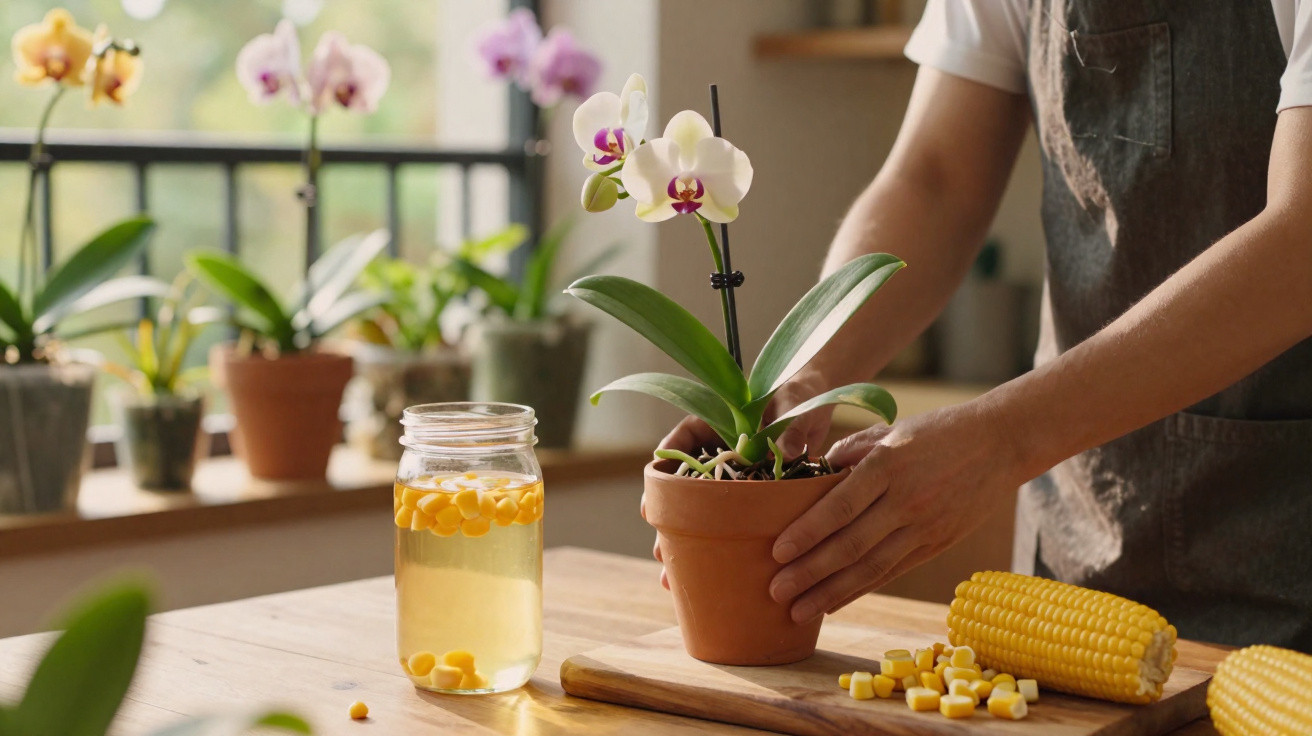
Before putting the pot in the bin, some amateur gardeners turn to a rather unexpected kitchen helper. Instead of buying costly specialist fertiliser, they use a yellow cooked vegetable that would normally be served as a side dish. The method may sound odd, and the results are surprising – it will not work for every plant, but it works often enough to arouse curiosity.
How to tell whether an orchid still has a chance
Before adding any home remedy to the pot, assess the plant’s condition. A Phalaenopsis without flowers is not necessarily beyond saving. Many plants take an extended break after flowering and can look distinctly miserable while doing so.
The roots are what need checking. With a transparent pot, an external inspection is enough. If the pot is opaque, carefully loosen the root ball instead.
- Healthy roots: green or silvery, firm and free from a rotten smell
- Weak but still living roots: slightly wrinkled, but not mushy
- Lost roots: brown, soft and foul-smelling
If most of the roots remain firm, the orchid is generally in a resting phase. Even where the flower spike looks dried out, the plant may still have enough energy to produce fresh shoots.
If a large proportion of the roots has rotted, however, no kitchen trick will be enough. The only option is a drastic cut: remove dead material, use fresh, airy orchid growing medium, keep the pot clean and provide plenty of bright but filtered light. A temperature difference of four to six degrees between day and night can also trigger the formation of new flowers.
The yellow vegetable: what it can actually do in the pot
Many gardeners know the situation: they are about to throw away an orchid they believe to be dead, then hesitate. It is precisely in these moments that one repeatedly mentioned tip comes up: a homemade liquid feed made from a yellow cooked vegetable – specifically, maize.
“As cooked maize breaks down, it supplies starch and sugar, stimulating microorganisms in the growing medium and thereby indirectly supporting the orchid.”
The reasoning is this: countless microorganisms live in the pot. When they receive readily usable energy, the biology of the growing medium becomes more active. This can keep the medium looser, help roots grow better and enable them to take up available nutrients more efficiently. Some amateur gardeners report firmer leaves, fresh root tips and, later on, even new flower spikes.
There have not yet been scientific laboratory studies on this. What does exist is a large number of practical reports from households and amateur gardeners who have noticed comparable effects. Even sceptical plant enthusiasts admit that the trick does not appear entirely useless – provided a few rules are followed.
How to use the maize trick safely
Essentially, this is a mild homemade liquid fertiliser. It is based on cooked, unsalted maize. It is essential that it contains no seasoning, no fat and, above all, no salt.
Recipe for a gentle maize extract
- around 100 grams of cooked sweetcorn kernels (without salt or butter)
- 1 litre of water
- a blender or stick blender
- a fine sieve or coffee filter
Put the kernels and water into the blender and blend them thoroughly. Then filter the liquid as finely as possible so that no pieces end up in the growing medium. Allow it to cool completely afterwards.
For a lower-effort option, use only the cooking water from unsalted maize. This should also be filtered thoroughly. The liquid will keep in the fridge for one to two days. As soon as it smells sour or turns cloudy, pour it down the drain.
“Never make enough to store for weeks: prepare small quantities straight after cooking and use them promptly.”
As little as possible, as much as necessary: everyday application
The biggest mistake with this home remedy is overdoing it. Maize extract is not a routine watering treatment to be poured onto the plant in litre quantities every other week. Gardeners who have had good results with it are very clear: use micro-doses.
The following basic rules have proved effective:
- water the growing medium normally beforehand, so that it is only slightly damp
- then add 1–2 teaspoons of the maize liquid to the pot
- application interval: every three to four weeks
- do not use another home-remedy mixture alongside it (no rice water, sugar solution, etc.)
- stop immediately if the growing medium becomes slimy or smells sour
Ignoring these limits risks producing the opposite result. Too much dissolved starch can ferment in the pot, bacteria can multiply rapidly, the growing medium can become clogged and the roots may start to rot.
“Keep cooking water containing salt or seasoning well away – it is poisonous to sensitive orchid roots.”
What happens realistically – and what does not
Do not expect overnight miracles. Even in ideal conditions, a Phalaenopsis needs time to rebuild its strength. Many people report that the first positive signs only appear after two to three weeks.
Typical indications that the pot is becoming active again include:
- root tips turning a fresh green colour
- fine new root tips appearing in the growing medium or around the pot edge
- leaves looking less limp and no longer drooping as much
It often takes several weeks to a few months before a new flower spike becomes visible. Providing bright, indirect light, moderate humidity and a slight temperature difference between day and night during this period gives the plant additional support.
Once the orchid has visibly stabilised and resumes regular growth, many people stop the maize treatment. After that, a free-draining growing medium, restrained watering and occasional standard orchid fertiliser at a weak dose are usually sufficient.
Risks, limits and useful additions for orchids
As interesting as the trick may sound, it is no substitute for sound care. An orchid that has stood in water for months or remains permanently in deep shade cannot be rescued in the long term by any kitchen ingredient. Maize extract can, at most, enhance the effect of an already well-managed growing routine.
It is worth reviewing the most important care factors at the same time:
- Light: bright, but without direct midday sun, for example at an east- or west-facing window
- Watering: only when the growing medium is almost dry; avoid waterlogging
- Air: no icy cold draughts, but some air movement
- Pot: preferably transparent and fitted with drainage holes
- Growing medium: an airy bark mix, not ordinary potting compost
Anyone with several plants should first try this home remedy on one test orchid only. If it reacts sensitively, it is better not to use it on the others. Every plant responds differently, even when it belongs to the same species.
The approach is interesting for another reason, too: it shows that many kitchen leftovers can be more than rubbish. Maize, rice water and coffee grounds have all circulated as “secret tips” for years. With sensitive species such as orchids, though, gentle options that can be controlled easily remain the better choice.
Using maize extract may offer something besides potential flowers: a closer eye for the plants themselves. Only those who inspect them regularly will notice in time when roots are rotting, leaves are shrivelling or the growing medium is becoming too dense. And this observation is often what determines whether a sad-looking orchid eventually becomes a flowering machine on the windowsill once more.
Comments
No comments yet. Be the first to comment!
Leave a Comment