
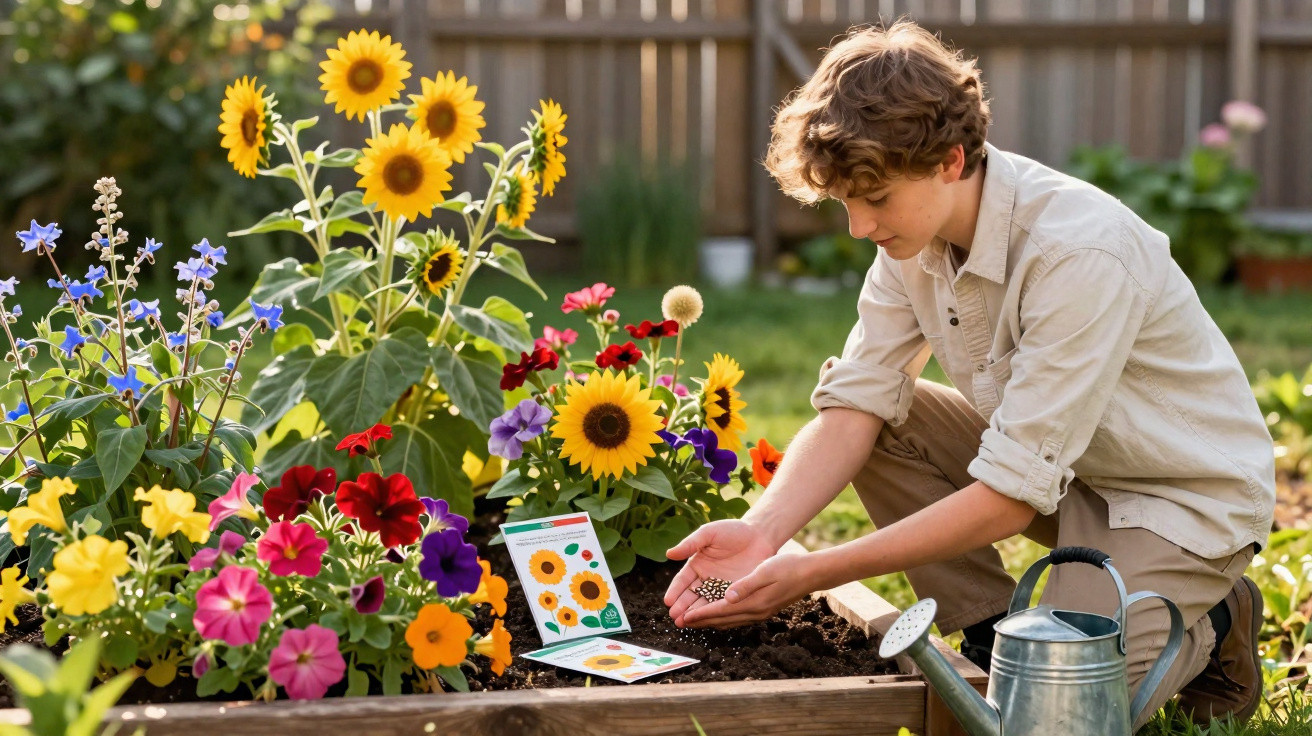
Sowing wisely in early spring can have you walking through a sea of flowers by the start of the summer holidays. Many annual flowers grow at an extraordinary pace, progressing from seed to bloom within just a few weeks. Here are the plants from the gardening toolkit that make this possible, along with advice for creating a dense, almost luxurious garden even though the year has only just begun.
Why fast-growing flowers transform the spring garden
From late February to April, beds can often look bare and rather dispiriting. Perennials need time to establish themselves, while shrubs are only slowly coming into leaf. Fast-growing annuals bridge that gap: they germinate quickly, put on growth rapidly and produce abundant flowers from early summer.
“Those who sow in March and April can often enjoy their first flowers after only 45 to 90 days – almost going from nothing to a sea of blooms.”
The basic rules are straightforward:
- Do not sow outdoors until the last frosts have passed.
- Choose a sunny position with free-draining soil.
- Sow slightly thinly, then thin out later.
- Keep the bed surface loose and avoid waterlogging.
For an earlier start, raise more tender varieties indoors or in a greenhouse, then plant them outside after the risk of frost has passed in mid-May.
How to make the first spring sowings a success
Zinnias are among the most dependable plants for getting started. They clearly demonstrate what “express growth” means in a flower bed. Raised in warmth or sown directly outdoors from May, they rapidly develop into sturdy plants and cover the area with large, usually vividly coloured flowers.
The same sowing method works for almost all quick-flowering plants:
- Prepare the soil until it has a fine, crumbly texture, removing stones and thick roots.
- Scatter seeds sparingly so the young plants will not compete with one another later.
- Depending on the species, cover them lightly with soil or simply press them in; remember that some seeds need light to germinate.
- Firm gently with your hand or a board so the seeds make contact with the soil.
- Water carefully, and do not allow them to dry out during the first few weeks.
Many gardeners underestimate the importance of thinning out. If seedlings are too crowded, they will all remain weak and small. It is better to remove a few plants decisively and give the rest 10–30 centimetres of space, depending on the variety.
The 9 fastest flowering stars for spring beds
To create a garden that is as dense and varied as possible, combine plants with differing heights and flower shapes. This selection of nine covers virtually everything: height, abundance, colour and food for insects.
| Flower | Strengths | Suitable for |
|---|---|---|
| Zinnia | exceptionally colourful, large flowers, rapid growth | beds, cottage gardens, cut flowers |
| Gomphrena (globe amaranth) | long flowering period, heat tolerant, spherical flower heads | beds, pots, dried arrangements |
| Marigold (Tagetes) | tough, bright colours, low-maintenance | bed edges, vegetable gardens, window boxes |
| Sunflower | provides instant height, huge flowers | back of beds, screening, children’s beds |
| Borage | fast growing, blue star-shaped flowers, insect magnet | beds, wildlife gardens, near vegetables |
| Nasturtium | climbing or trailing, edible flowers and leaves | supports, pots, hanging baskets, gaps in beds |
| Celosia | striking flame-like flowers, powerful colours | front of beds, containers, colourful accents |
| Petunia | lengthy flowering, extensive colour range, quickly becomes dense | window boxes, hanging baskets, pots |
| Spider flower (Cleome) | light, airy flowers, adds height and structure | beds, background planting, alongside sunflowers |
How the nine species work perfectly together in a flower bed
The secret to a garden that looks almost “finished” in record time is to arrange it in layers. Tall plants form the backdrop, medium-height varieties fill the main area, and lower growers cover gaps at the front and around the edges.
Height and backdrop: sunflower and spider flower
Sunflowers shoot upwards within a matter of weeks. Varieties range from around 50 centimetres to well over two metres tall. Compact forms suit small urban gardens and balconies, while giant varieties are ideal beside fences and house walls.
Spider flowers look particularly effective in front of, or among, them. They also grow swiftly, but have a more airy appearance. Their delicate flower clusters add movement to the planting without making it feel heavy.
Abundance in the middle: zinnia, celosia and Gomphrena
The middle of the bed can be as bold as you like. Zinnias provide large, almost ruffled flowers in strong colours, making them perfect for a classic summer garden. Celosias contribute flame-shaped or crested blooms that seem to glow in sunlight. Gomphrena complements them with small, rounded heads that barely lose momentum, particularly at the height of summer.
“Mix zinnias, celosias and Gomphrena, and you get a kind of ‘flower fireworks display’ that keeps going from June well into autumn.”
Gap fillers and bed edges: Tagetes, petunia, nasturtium and borage
Around the edges and between taller plants, robust varieties fill in bare patches. Marigolds are ideal along bed borders and, thanks to their scent, can often help keep pests away in the vegetable garden.
Petunias fill the space with large, usually saucer-shaped blooms. They trail softly over the sides of window boxes, while in beds they quickly form a colourful carpet. Nasturtiums can be trained up small supports or allowed to spill freely over wall edges and pot rims. Borage weaves its way between them, growing quickly and attracting bees and bumblebees in large numbers.
The perfect start for fast-growing flowers: timing, position and water
Most of these flowers germinate reliably when soil temperatures are around 10 to 15 degrees. Direct sowing outdoors is possible from April in many areas, though May is better in colder locations. If in doubt, wait until the risk of frost has passed.
- Position: As sunny as possible, with at least four to five hours of direct sunshine each day.
- Soil: Loose and rich in organic matter, with good drainage.
- Watering: Keep evenly moist, but do not drown the plants.
- Feeding: A light initial feed is sufficient; many quick-growing plants do not need many nutrients.
A sheltered spot is particularly useful for zinnias, celosias and petunias, helping their stems remain strong rather than bending or snapping. In exceptionally hot summers, a thin mulch of grass clippings helps prevent the soil from drying out.
How fast-growing flowers create a luxurious garden look
Simply scattering seeds is not enough if you want the result to look “colourful, but random”. A few design techniques will make the garden appear much more professionally planned:
- Create colour families: For example, use only pink, purple and white, or a warm palette of yellow, orange and red.
- Repeat plants: Use the same varieties in several places to visually connect the beds.
- Plant in groups rather than as single specimens: Five zinnias planted together look better than five individual plants scattered around.
- Include pots: Using the same mix in containers on the patio or balcony extends the ribbon of flowers around the house.
This creates a scene in under three months that appears carefully planned over a long period, even though much of it was only sown in spring.
Practical extra tips for beginners
Anyone with little experience of sowing should begin with two or three types, such as zinnia, Tagetes and sunflower. They forgive minor mistakes while still producing flowers reliably. Young plants raised by a nursery can easily be combined with plants grown from your own seed.
Pests and diseases are another consideration. Dense planting dries more slowly after rain, which can encourage fungal diseases. Avoid planting too closely, remove dead or diseased material regularly, and direct the watering stream at the soil rather than the leaves.
Why fast-growing flowers are worthwhile in the long term
Many of the species listed will self-seed if you allow a few flowers to mature. Borage, nasturtium, Tagetes and zinnia often reappear “on their own” in a similar spot the following year. The garden therefore becomes denser and more diverse each season, without the need to keep buying new seed.
There is another benefit: the combination of borage, nasturtium and marigolds is perfectly suited to wildlife-friendly gardens and to planting near vegetables. They attract pollinators, provide shelter for beneficial insects and help tomatoes, courgettes and other crops to benefit too.
Anyone willing to fill a few square metres of bare soil with these fast-growing flowers in early spring will scarcely see any ground by high summer – only colour, shape and a gentle hum above a garden that looks as though it has been established for years.


Comments
No comments yet. Be the first to comment!
Leave a Comment