
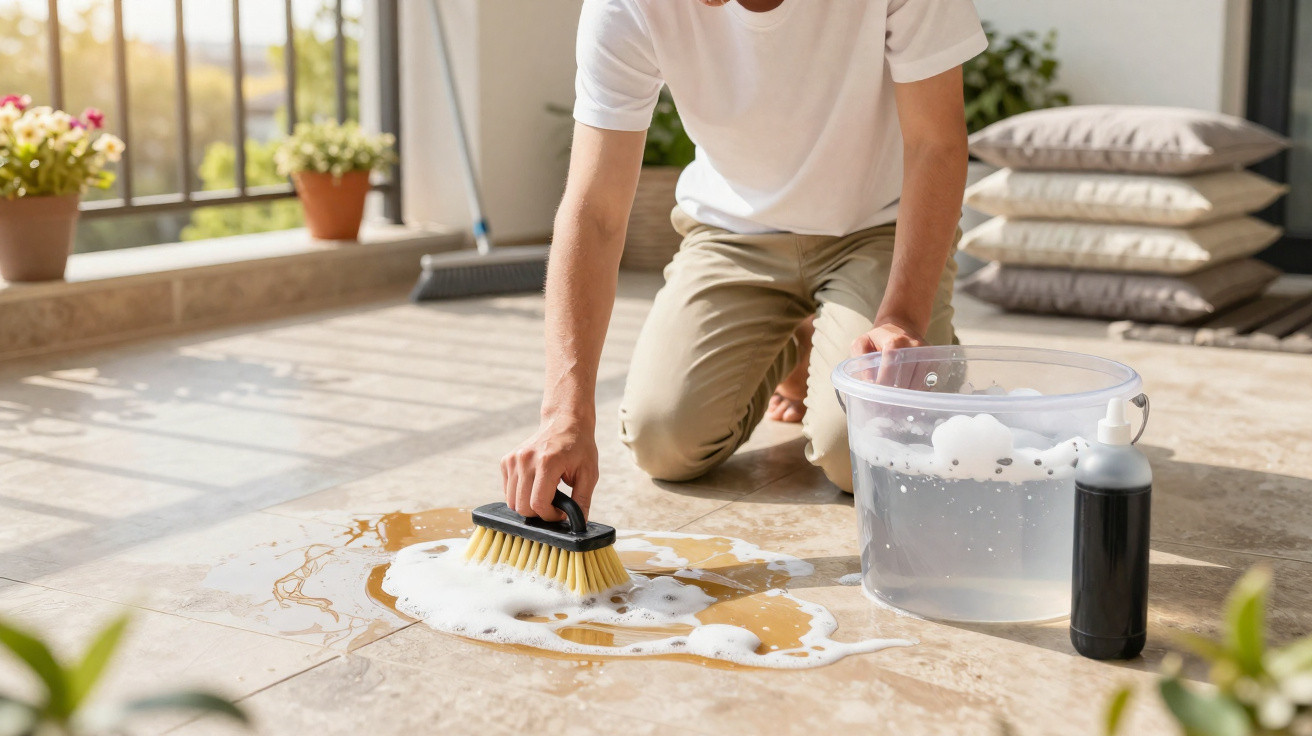
A simple remedy is all it takes to give it a fresh start.
As soon as temperatures begin to rise, the outdoor area is seen in an unforgivingly honest light. The garden table is stained, paving slabs have developed a greenish film, and the joints look more like those on a driveway than part of a relaxing retreat. Many people immediately think of costly specialist products or a noisy pressure washer. Yet an inexpensive, straightforward household solution, some warm water and a little physical effort are often enough to make the patio presentable again at the start of the season.
Why spring is the ideal time to clean the patio
Getting started at the beginning of spring works in your favour because conditions are naturally more suitable. Most of the dirt is still relatively recent: dust, soot particles, leftover leaves, the first signs of moss and algae. Much of this residue has not yet penetrated deeply into the material and is still largely sitting on the surface.
This makes the job considerably easier. At this stage, harsh chemical cleaners are often unnecessary. A gentle cleaner with effective degreasing properties is sufficient to:
- lift grey films from stone or concrete slabs;
- remove dried-on food from the last barbecue of the previous season;
- brighten the joints;
- wash away pollen, soil and roadside grime.
Choose a dry, frost-free day with no rain forecast. The surface can then dry quickly after cleaning, and the results should last for several weeks.
The overlooked all-rounder: liquid black soap cleaner
The key product in this cleaning tip is a household classic: liquid black soap cleaner made from plant oils. In shops, the bottle will often simply be labelled “black soap” or “black soap cleaner”. It contains no solvents, is biodegradable and still tackles dirt very effectively.
“Black soap cleaner works as a gentle degreaser that releases even stubborn dirt without affecting the patio or nearby flowerbeds.”
The cleaner is generally made from vegetable oils that have been turned into soap. This combination offers several benefits:
- it tackles grease marks from barbecues, oil or sun cream;
- it removes dust and soot caused by air pollution;
- it is gentle on plants around the patio edge;
- it does not irritate the paws of dogs and cats;
- it can be used on many materials, including wood, tiles, concrete and numerous types of stone.
As the cleaner is highly concentrated, only a few tablespoons are needed for a bucket of water. One large container can often last several seasons, which is a clear advantage for your budget.
Step-by-step guide: thoroughly cleaning your patio in spring
A structured method is worthwhile for the main spring clean. It saves time and produces a noticeably more even result.
Preparation: clear away loose debris
Start with a broom. Remove all leaves, small twigs, grit and loose dirt before introducing water. Skipping this step simply spreads mud around and makes the task unnecessarily difficult.
Make the solution: getting the dosage right
For a heavily soiled patio, use a bucket containing around ten litres of hot water. Add roughly ten tablespoons of liquid black soap cleaner. The heat helps boost the cleaning action, while the soap cleaner deals with grease and surface deposits.
“A useful rule of thumb for spring cleaning is around one tablespoon of black soap cleaner per litre of hot water for heavily soiled surfaces.”
Stir the mixture briefly so that it is evenly distributed. Gloves are advisable, particularly for sensitive skin, even though this product is much gentler than many other cleaners.
Scrub methodically: do not overlook the joints
Now comes the main task. A sturdy scrubbing brush or a brush with stiff bristles is best. Apply the cleaning solution generously to the surface and work in strips. Areas with heavier dirt, dark joints and greenish corners need more thorough attention.
For particularly dirty patios, a short pause can help: allow the mixture to work for five to ten minutes before scrubbing again. Dried-on grime will then lift much more easily.
Rinse properly: prevent residue and slipping hazards
Once you have scrubbed the surface, rinse it thoroughly with clean water. An ordinary garden hose is enough. The water should wash away every trace of soap, otherwise a slight film may remain on the slabs.
If you wish, finish with a squeegee, an old towel or a microfibre cloth. This speeds up drying and helps prevent water marks.
Fine-tuning black soap cleaner dosage for regular patio care
For routine maintenance during the season, far less soap cleaner is usually needed. Here is an example of a lighter mixture:
| Use case | Amount of water | Amount of black soap cleaner |
|---|---|---|
| Light dirt, small patio | 5 litres of lukewarm water | 3–4 tablespoons |
| Regular maintenance once a month | 8–10 litres of lukewarm water | 5–7 tablespoons |
| Heavy dirt after winter | 10 litres of hot water | 10 tablespoons |
If the surface looks slightly streaky or feels a little greasy after cleaning, the mixture was usually too concentrated or it was not rinsed sufficiently. A second quick rinse with clean water will resolve this.
Take care with delicate materials and alternative cleaners
Many people instinctively reach for household remedies such as vinegar or bicarbonate of soda when tackling stubborn outdoor deposits. These can work, but they also carry risks, particularly for sensitive stone surfaces.
Acidic or strongly alkaline products can damage natural stone, marble, quartz or granite. Stains, dull patches and rough, open pores may result, and the damage is difficult to reverse.
“If you are unsure, test every cleaner in an inconspicuous spot and avoid harsh products on natural stone and premium surfaces.”
Bleach and chlorine-based cleaners should not be used on an ordinary patio either. They can erode jointing material, turn wood grey, harm plants and contaminate groundwater. Equally problematic is using a pressure washer too carelessly: an overly powerful jet can wash out jointing material, roughen timber and even leave smaller stones visibly frayed.
Practical ways to keep the patio clean for longer
To avoid having to start again from scratch after the main spring clean, a few simple habits can make a substantial difference:
- Sweep away loose leaves and soil regularly.
- Treat barbecue grease marks as quickly as possible with a splash of black soap cleaner and warm water.
- Position planters so that some air can circulate beneath them, as dark marks can otherwise form quickly.
- On wooden surfaces, renew patio oil or wood stain in good time to stop moisture penetrating too deeply.
- Use grilles or mats in key areas, such as by the door, to avoid carrying dirt into the house.
In shaded corners especially, it helps to carry out a quick regular clean with a mild mixture of water and black soap cleaner. This prevents moss and algae from spreading across larger areas in the first place.
What many people do not know: why the cleaner works so well
Its effectiveness is based on a simple principle: grease and dirt particles often cling to one another. The soap components surround these particles and make them soluble in water. This means the dirt can be removed more easily while scrubbing and rinsing.
At the same time, the cleaner remains comparatively gentle. This matters outdoors, where rain can carry cleaning water into the ground. Anyone looking for a reasonably environmentally friendly approach without spending hours scrubbing will find it a sound middle ground.
For patios with heavy algae growth or surfaces neglected for years, a second application may sometimes be necessary. In many cases, however, one thorough clean at the start of spring is enough to make the outdoor space usable again - and to enjoy the first coffee in the sunshine without feeling embarrassed by the state of the floor.
Comments
No comments yet. Be the first to comment!
Leave a Comment