
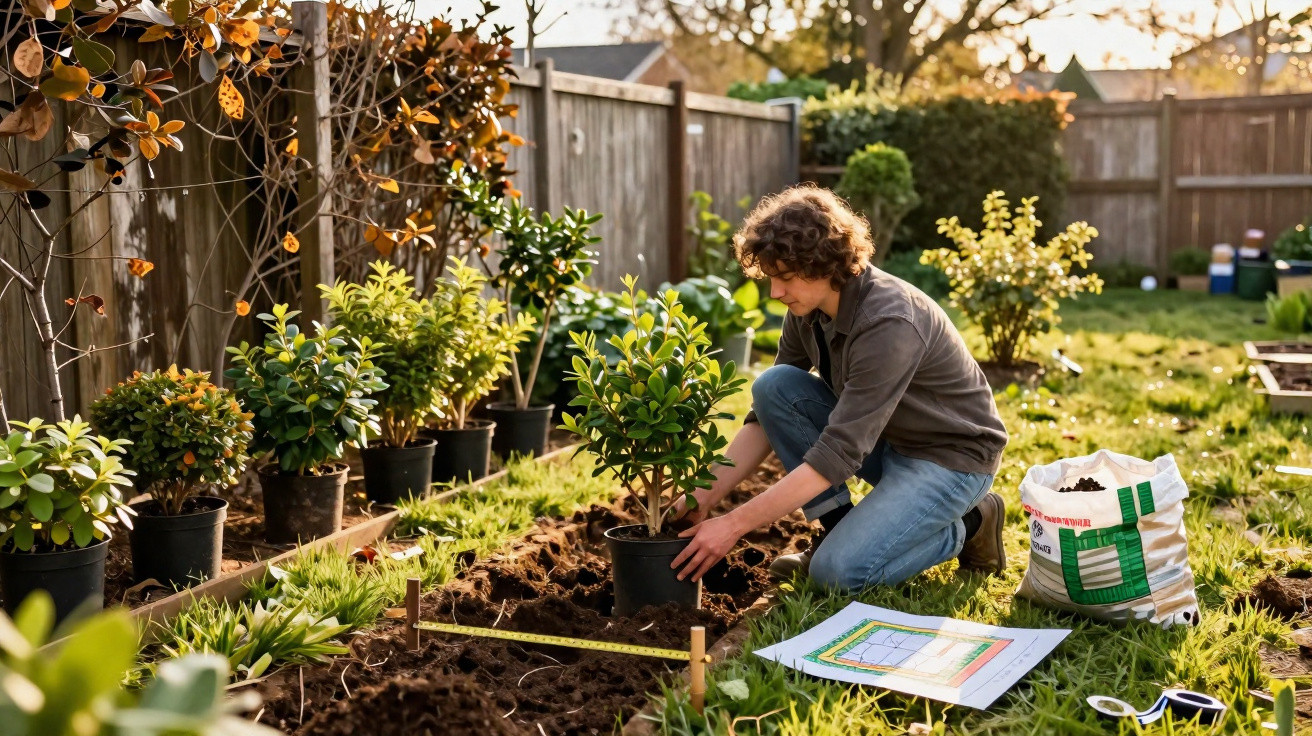
In countless front gardens, one hedge plant has dominated for years: once viewed as a miracle solution, it is now increasingly struggling. Spotted leaves, bare patches and relentless pruning: what previously seemed like a brilliant answer now feels more like permanent maintenance. As a result, more and more gardeners are considering replacing their hedge – and are discovering a successor that is quietly but steadily taking centre stage.
Why the former favourite hedge plant is losing its appeal
In new-build developments and established neighbourhoods alike, the same hedge species shaped streetscapes for years. It grew quickly, stayed green in winter and, with its intensely coloured new spring growth, added a touch of a “designer garden”, even though it appeared to need little maintenance.
That very formula for success is now backfiring. Many hedges now show the same signs:
- Gaps in the hedge that allow a direct view into the neighbour’s garden
- Leaves marked with brown or red spots
- Untidy, uneven growth habits
- Continual trimming without the hedge ever becoming properly dense
What begins as a minor issue – a few spots or a handful of bare shoots – becomes a persistent cycle of decline for many plants. Over several years, affected shrubs simply fail to regain their previous density.
“The point at which you stop repairing and start replacing decisively comes much sooner in many gardens than people are willing to admit.”
Anyone who spends year after year battling disease, gaps and disappointing pruning results eventually realises that replacement does not feel drastic. It feels liberating – and, above all, sensible.
Climate, spacing and disease: what is really weakening hedges
Changing conditions are a fundamental part of the problem. Milder winters, prolonged wet springs and plants positioned too closely together create an ideal environment for leaf diseases. One of the most common is Entomosporium leaf spot, a fungal disease.
It first appears as small reddish or brownish spots on the foliage. As it progresses, leaves dry out and drop. Entire stretches of hedge become thin, compromising both privacy screening and appearance.
Many people unintentionally make matters worse: fallen infected leaves are left where they land, only lightly worked into the soil, or even shredded and spread back over the same area. This keeps the fungal spores within the system. Anyone who then replants the very same species in exactly the same spot is simply setting up the same disappointment again.
“Same plants, same site, same conditions – that is like sending an invitation to the next wave of disease.”
Anyone genuinely intending to change needs more than a quick trip to the garden centre. It requires a different approach: more robust species, improved spacing, careful handling of plant debris and attention to the garden’s own microclimate.
The new favourite: why Pittosporum is taking over the role
The most promising successor is a shrub that has so far remained somewhat under the radar: Pittosporum, sold under a range of cultivar names in many garden centres. It meets precisely the requirements of modern home gardens.
What makes Pittosporum so appealing
- Evergreen: It keeps its foliage throughout the year, providing dependable privacy screening.
- Versatile appearance: Depending on the variety, foliage may be deep green, variegated or silvery in sheen.
- Moderate growth: It grows consistently, without aggressively spreading in every direction.
- Naturally neat shape: It remains orderly in outline even without immaculately precise clipping.
- Less maintenance pressure: One or two trims a year are usually enough.
In many gardens, replacing the old hedge with Pittosporum delivers a calm, dependable green screen for the first time in years. There are no unruly shoots, no constant corrections and less concern about complete failures.
“Instead of a problem hedge that is a permanent building site, you get a ‘green backdrop’ that simply works – and that is exactly what many stressed gardeners want.”
How often Pittosporum really needs cutting back
Most home gardens manage with one annual trim, often in late summer. Those wanting a particularly formal finish, or a very narrow hedge, can allow for two cutting sessions. Since the shrub does not grow explosively, the workload remains manageable.
From monoculture to a vibrant mixed hedge
Another trend is reinforcing the move away from uniform walls made from a single plant species. Landscape gardeners are increasingly recommending mixed hedges. The reasoning is straightforward: if one species is lost to disease, the rest of the planting remains stable.
In these designs, Pittosporum often forms the backbone. It is joined by other plants with distinct strengths:
- Oleaster (Elaeagnus): Highly robust, wind-resistant and well suited to exposed locations
- Cornus (such as common dogwood): Bright winter stems and strong colour accents
- Hazel: Native, valuable for insects and birds, with a looser structure
- Other evergreens: Depending on the region, these may include alternatives to cherry laurel or native shrubs
The result is clear: the boundary feels less like a wall and more like a narrow planted edge made up of different species. Flowers, foliage colours and textures change over the course of the year.
“Instead of a green concrete wall, a living band emerges that can provide privacy while still feeling welcoming.”
Insects, birds and other wildlife also benefit from the greater diversity. More flowering periods, more fruit and berries, and more places to shelter create a small wildlife corridor around the garden’s edge.
What should be resolved before removing a hedge
Removing an entire hedge may initially seem like a huge undertaking. In practice, it can be planned effectively if several points are settled first.
Is a complete replacement necessary?
Before starting up the chainsaw, assess the actual pattern of damage:
- If only individual plants are affected, targeted replacement may make sense.
- If larger sections are bare, diseased or full of gaps, there is much to be said for starting again.
When starting afresh, all diseased plant material – particularly affected fallen leaves – should be removed thoroughly and not composted on site.
Preparing the soil and site
After removal, the remaining strip is often compacted and depleted. To prevent the replacement hedge from immediately facing the same stress, the area needs a little restoration:
- Loosen the soil deeply and remove as much remaining root material as possible.
- Incorporate mature compost or well-rotted manure, but not fresh, heat-generating material.
- Check drainage: if water remains for a long time after rainfall, slightly raising the planting strip can often help.
External factors matter too: how much sunlight reaches the area? How strongly does wind pass through it? How wide can the hedge become without blocking driveways or paths?
The right planting distance: an often underestimated factor
Many hedges fail because of one fundamental mistake: planting too closely. At first, the row looks pleasingly full, but over time the cramped conditions create competition for light, water and nutrients. Disease spreads more rapidly, while the hedge becomes bare on the inside.
For Pittosporum, the ideal spacing depends on the cultivar and desired hedge height, but the following provides a broad guide:
- For a medium-height hedge (1.60–1.80 m): approximately 60–80 cm between plants
- For lower, looser hedges: allow around 80–100 cm
After planting, an organic mulch layer of bark chippings, wood chippings or leaf mould is helpful. It retains soil moisture, reduces weed pressure and helps the soil dry out more evenly.
Common mistakes – and how to avoid them
Those switching to Pittosporum or a mixed hedge can easily avoid several common pitfalls:
- Pruning too early: During the first one or two years, shape only lightly so the plants can build strength.
- Constant watering: Once established, water less often but thoroughly, rather than giving a daily light sprinkle.
- Choosing the wrong variety: Ask specifically about the final height at the garden centre to avoid severe cutting back later.
- A completely shaded position: Pittosporum prefers bright conditions; in dark north-facing sites, it is better combined with other species.
Taking these points into account reduces the likelihood of facing the same dilemma again in a few years’ time.
What gardeners should also know
Many of these terms sound technical at first. Entomosporium leaf spot, for example, is simply a leaf-spot disease caused by fungi that thrive in damp conditions and densely packed planting. It spreads through splashing water, wind and plant debris, which is why it often appears wherever the same species is planted tightly together.
Pittosporum is not automatically immune to every problem, but it responds far more robustly to the typical pressures found in small home gardens: heat islands caused by paved surfaces, inconsistent watering and limited space. Combined with a few native shrubs, it can create a hedge that is not only practical but also offers more visually and ecologically than the former standard solution.
Those who are unsure can begin with a shorter trial section, then monitor growth, frost tolerance and maintenance requirements over two or three years before deciding whether the rest of the old hedge should follow. In this way, the necessity of “renewing the hedge” gradually becomes a deliberate transformation into a durable, low-stress garden boundary.

Comments
No comments yet. Be the first to comment!
Leave a Comment