
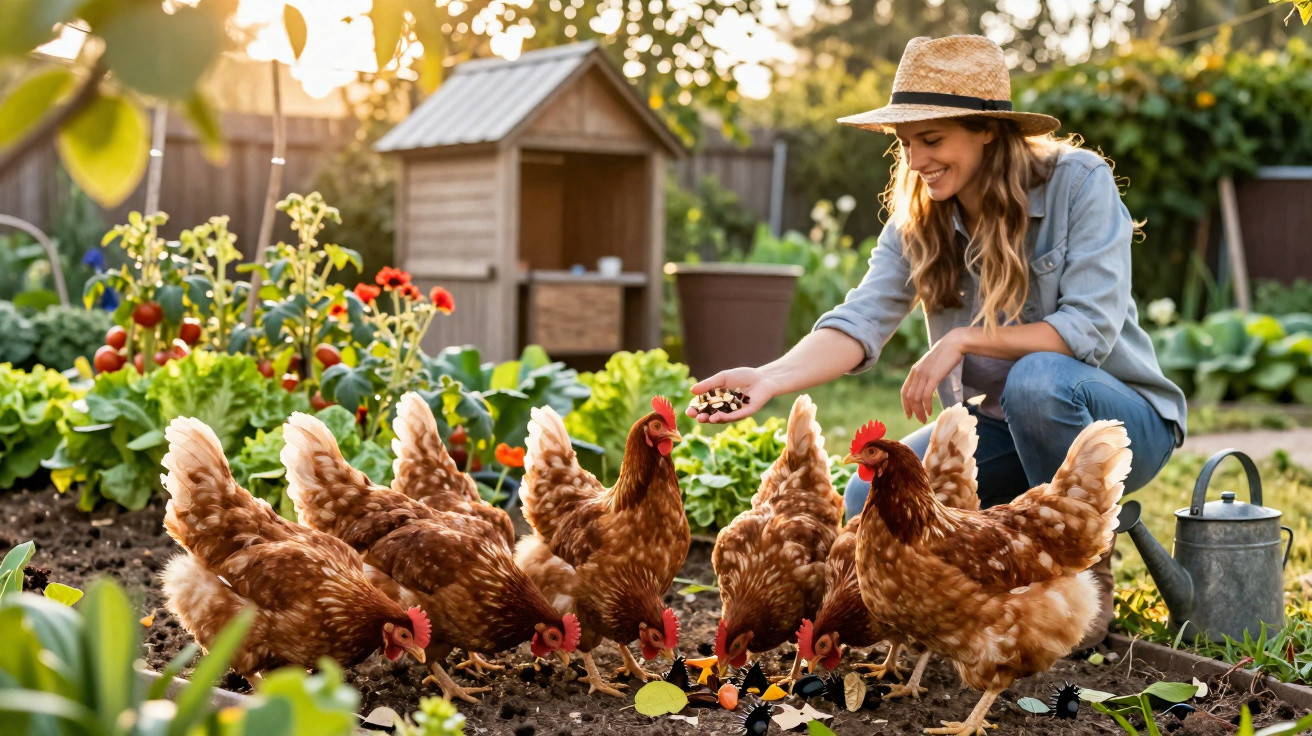
While garden centres pile up pricey bags of specialist fertiliser, a treasure is already waiting in countless back gardens. Anyone who keeps chickens has access to one of nature’s most potent nutrient sources. When handled properly, the blend of bedding and chicken manure becomes a remarkably effective soil tonic that can make vegetable beds, raised beds and fruit gardens far more productive – entirely without chemicals.
The hidden gold from the chicken coop
Why chicken manure outperforms cattle manure
Chicken manure is among the most nutrient-dense organic fertilisers available to home gardeners. It is especially rich in nitrogen, phosphorus and potassium – precisely the key nutrients plants need for growth, flowering and fruit production.
“Chicken manure works like a natural energy boost: vigorous leaves, sturdy shoots, improved flower and fruit set – particularly for hungry crops.”
Compared with conventional cattle or horse manure, chicken manure is considerably more concentrated. This means the same fertilising effect can be achieved with smaller quantities. That is a major advantage for small urban gardens, tiny plots, raised beds and balcony gardens where rabbits or other small animals are kept: little bulk, substantial results.
The ideal blend: bedding and chicken manure
It becomes particularly useful once the droppings combine with the coop bedding. Common materials include:
- Straw
- Hay
- Wood chips or shavings
- Shredded branches or leaves
The bedding mainly contributes carbon, while the manure supplies the essential nitrogen. Together, they form an excellent starting material for compost. So when cleaning out the coop, do not throw this “waste product” away; collect it deliberately instead. Many gardeners buy costly organic fertilisers from DIY stores, even though a high-quality raw material is sitting directly beneath the chickens’ perches.
Why fresh chicken manure mercilessly burns plants
The common mistake: tipping it straight onto the bed
For all its benefits, chicken manure has one drawback: when fresh, it is far too strong. Its high nutrient concentration and ammonia content can severely damage roots. Applying fresh coop manure directly on or beside young plants risks:
- Burnt roots
- Dried leaf edges
- Stunted growth or the complete loss of entire rows
Young lettuces, herbs and newly planted tomatoes are especially sensitive. Gardeners often blame “poor soil” or “odd varieties” afterwards, when overly fresh fertiliser was also responsible.
Six months of resting: turning harsh manure into gentle humus
The solution is straightforward, although it requires some patience: chicken bedding needs time to mature. At least six months. The ideal approach is as follows:
- After cleaning out the coop, build the manure-and-bedding mixture into a heap.
- Choose a shaded, sheltered corner of the garden.
- Keep the heap slightly moist, while protecting it from constant rain.
- Turn it occasionally with a garden fork so that air can reach the material.
“Only through maturation does aggressive fresh manure become crumbly, dark-brown humus that plants can tolerate without difficulty.”
Microorganisms, fungi and soil creatures break down the bedding, reduce the ammonia and bind the nutrients into stable forms of humus. After six months, mature chicken compost can be recognised because it:
- Smells earthy rather than sharp or pungent
- Has a crumbly texture with barely any visible bedding structure left
- Is populated by earthworms and beetle larvae
Careful application instead of the idea that more is better
The maximum thickness of the layer
Once the compost has matured, the crucial stage arrives: applying it. Restraint pays off here. A layer of two to no more than three centimetres is entirely sufficient. More than this places stress on the soil and may upset the delicate balance of soil organisms.
“When using chicken compost, fertilise as though applying a highly concentrated natural preparation – not as if spreading loose bark mulch.”
Ideally, spread the compost evenly over a wide area and lightly rake it in. This allows nutrients to gradually reach the root zone without compacting or clogging the soil.
Plants that benefit particularly strongly
Heavy-feeding plants especially appreciate chicken compost. These include:
- Tomatoes, peppers and chillies
- Pumpkins, courgettes and cucumbers
- Brassicas such as savoy cabbage, broccoli, white cabbage and red cabbage
- Fruit trees including apple, pear and cherry
- Berry bushes such as currants and gooseberries
Around fruit trees, compost can be spread in a circle beneath the canopy. In a vegetable bed, a thin layer works well along the planting row or around established plants. With highly sensitive crops, such as young herbs or seedlings, use a lighter dose or feed only adjacent areas.
The mulch trick: keeping chicken compost effective for longer
Locking in moisture and stimulating soil life
One often overlooked step is that the compost layer should not be left exposed. Adding mulch immediately on top creates ideal conditions. Suitable materials include, for example:
- Dried grass clippings
- Leaves from the previous year
- Finely shredded prunings
- Straw around tomatoes and pumpkins
Mulch retains moisture in the soil, protects microorganisms from drying out and sunlight, and gives earthworms a sheltered habitat. They gradually draw the chicken compost into deeper layers and distribute its nutrients evenly.
A protective barrier against weeds and nutrient surges
The mulch cover acts like a slow-release fertiliser capsule. Rainwater and watering gradually dissolve the nutrients instead of releasing them all at once. At the same time:
- Mulch suppresses much of the unwanted growth
- Soil remains loose and dries out less quickly
- Less watering is needed, particularly during hot summers
“Chicken compost plus mulch is essentially a self-regulating system: the soil takes what it needs and releases the rest later.”
What chicken fertiliser delivers in everyday gardening
Lower costs, less plastic, greater yields
Anyone who uses chicken compost consistently can do without many shop-bought products: liquid fertilisers in plastic bottles, specialist feeds for tomatoes, fruit or berries, and expensive “organic mixes” from the garden centre. This not only saves money but also reduces packaging waste.
At the same time, soil fertility noticeably improves. Typical effects after two or three years of regular use include:
- Looser soil that roots can penetrate more easily
- Stronger plants with lower susceptibility to disease
- Higher yields of tomatoes, pumpkins and fruit
- More intense flavour in vegetables because plants receive better nourishment
Risks and points to watch
Naturally, this fertiliser also has its limits. Three aspects deserve particular attention:
- Hygiene: Fresh chicken manure can contain pathogens. Always allow it to mature and wear gloves when applying it.
- Over-fertilising: Excessive applications may create too much nitrate in the soil. Follow the recommended thin layer and maturation period.
- Salt content: In very sandy soils, too much chicken manure can raise salt levels. Apply it more cautiously in these conditions and mulch well.
Practical examples and useful combinations
How chicken compost can be combined with other methods
This fertiliser becomes even more effective when it is intelligently paired with other gardening practices. Proven combinations include:
- Green manures: Sow legumes such as clover or lupins before or after heavy-feeding crops. These plants fix additional nitrogen, which works well alongside chicken compost.
- Compost from kitchen waste: Chicken compost can be mixed with ordinary garden and kitchen compost. This creates a more balanced nutrient ratio.
- Raised beds: In raised beds, plan for a thin layer of mature chicken compost above the main root layer. Plants can access it particularly effectively there.
If beds are prepared in late summer or autumn, mature chicken compost can be worked in as the beds are cleared. Throughout autumn and winter, the material disperses through the soil, allowing plants to start in spring with optimally nourished ground.
Keeping chickens ultimately means more than collecting eggs. The coop produces a valuable fertiliser that can turn even small gardens into surprisingly productive vegetable and fruit havens – without a chemical toolkit from the garden centre.



Comments
No comments yet. Be the first to comment!
Leave a Comment