
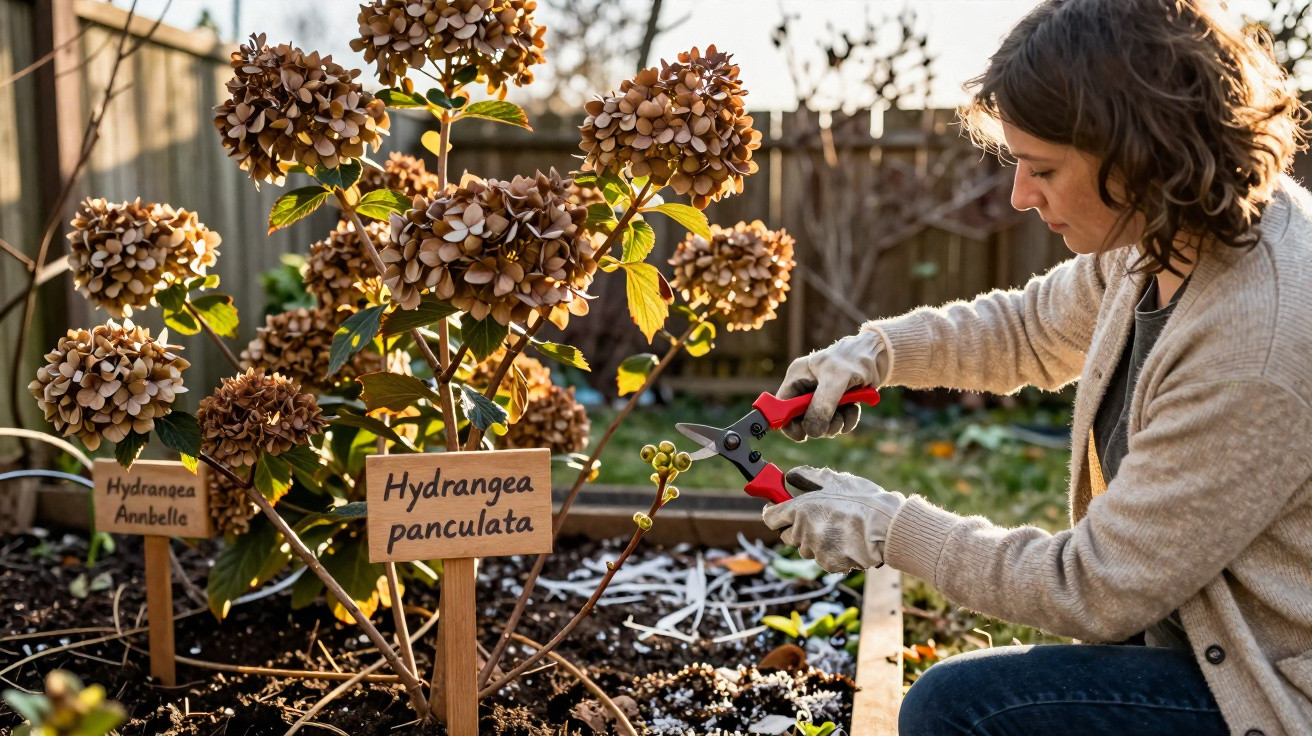
Pruning hydrangeas back too hard towards the end of winter can leave borders bare when you had expected lavish flower heads. The crucial factor is whether a variety flowers on new wood or on the previous year's growth. Understanding this distinction lets you prune at the right time and enjoy abundant flower clusters for months.
Why the timing of hydrangea pruning is so sensitive
Hydrangeas can look rather bleak in winter. Dried flower heads cling to bare stems, making the whole shrub appear ready for a tidy-up. Many gardeners simply cut back anything that seems untidy. That may be suitable for some ornamental shrubs, but it is only partly true for hydrangeas.
The flower buds of many hydrangeas have already formed on their stems during the previous year. Cutting back too far now simply removes the entire coming display.
In broad terms, hydrangeas fall into two groups:
- Hydrangeas that flower on the current year's wood
- Hydrangeas that flower on the previous year's wood
Only the first group can cope with hard pruning in late winter. For all other types, work at this time should be limited to a little tidying.
How to recognise flowering new and old wood
A close look at the shrub reveals a great deal. Stems that developed during the previous summer often have small, plump buds immediately below the dried flower heads. These contain the full flowering display for the season ahead.
New shoots, which emerge only in spring, are not yet visible in late winter. On plants known as “flowering on one-year-old wood”, flower buds form during spring itself. Cutting these plants back hard in February or March does no harm; instead, it can encourage fresh growth.
These 2 hydrangeas can be cut back hard in late winter
Panicle hydrangea (Hydrangea paniculata)
The panicle hydrangea is the robust, sun-loving member of the hydrangea family. It produces large, cone-shaped flower panicles in white or cream, often taking on a slight pink flush in late summer. Growing upright, this shrub tolerates heat and copes with more sun than traditional mophead hydrangeas.
It flowers solely on the current year's wood. This is precisely why it responds so well to late-winter pruning. A firm cut-back in February or early March, before the buds start to grow noticeably, is actively beneficial.
- Shorten all of the previous year's shoots to around 30–50 centimetres
- Remove inward-growing or crossing branches completely
- Leave a few strong basal stems to form a framework
This encourages the panicle hydrangea to produce vigorous new stems carrying large, upright flower panicles. It will still flower if left unpruned, but the shrub becomes woody with age, blooms unevenly and is more likely to flop apart.
Smooth hydrangea / snowball hydrangea (Hydrangea arborescens, for example ‘Annabelle’)
The best-known representative is ‘Annabelle’, with its enormous white spherical blooms. This variety is stunning, but it has one drawback: heavy flower heads can quickly topple over in rain when their stems are too slender.
Here, too, flowers develop solely on new shoots. A substantial cut-back towards the end of winter is therefore not just permitted, but almost essential for producing sturdy stems.
A proven approach is:
- Cut all stems back to around 20–40 centimetres above the ground
- Remove weak, dead branches completely at ground level
- Retain only the strongest stubs as the starting point for new shoots
As a result, the new growth is shorter and thicker, so the heavy flower balls are far less likely to lie flat in the border during summer.
The more decisively you cut back ‘Annabelle’ in late winter, the more reliably upright it will stand in summer – without supports or ties.
These 5 hydrangeas are best left alone in late winter
Most hydrangeas in German gardens belong to the group that flowers on the previous year's wood. Pruning them at the wrong time almost always means losing flowers.
Mophead hydrangea (Hydrangea macrophylla)
The familiar round flower heads in blue, pink or red, along with flat lacecap flowers with large outer florets, all belong to this species. They form their flower buds as early as late summer in the previous year, directly beneath the old flower heads.
What is safe to do in late winter:
- Snip off only the dried flower heads, just above the first strong pair of buds
- Remove dead, frost-damaged or diseased wood
- Occasionally take out old, very thick stems completely in summer after flowering to rejuvenate the plant
Anyone who cuts deeper in January or February risks removing every developing flower or leaving them exposed to frost.
Mountain or lacecap hydrangeas (close relatives of Hydrangea macrophylla)
These are usually slightly shorter and carry flat, delicate flower heads. They also form buds on the previous year's wood. The pruning rules are identical to those for classic mophead hydrangeas.
Oakleaf hydrangea (Hydrangea quercifolia)
This type stands out for its spectacular autumn foliage, which turns vivid red to wine red. Its flowers emerge on stems that grew in the previous year. Hard pruning in late winter will cost you much of the flowering display.
It is enough to remove old flowers carefully in spring and cut out only damaged or awkwardly placed branches. Leave more extensive reshaping until immediately after flowering.
Climbing hydrangea (Hydrangea petiolaris)
This climbing specialist attaches itself to walls and tree trunks with aerial roots and generally needs no regular pruning at all. It flowers on older side shoots that grow from the main framework.
Towards the end of winter, you should only:
- Remove dead, loose or damaged stems
- Lightly shorten shoots that obstruct gutters or windows – but do not cut into the old framework
Repeat-flowering hydrangeas (varieties that flower more than once)
Some more recent cultivars flower on both old and new wood, giving repeated blooms over a long period. Even so, a large proportion of their flowers are borne on stems from the previous year.
The rule is therefore simple: tidy them only in late winter and never cut everything right back. Save substantial shortening for individual old stems after a flowering period.
If you do not know exactly which variety you have, it is always safer to treat it as a hydrangea that flowers on old wood and prune very cautiously in late winter.
If the variety is unknown: the safe approach
Many gardeners no longer know the exact name of their hydrangea. That is not a problem; use this safe method instead:
- In late winter, cut only the dried flower heads, just above the first thick pair of buds.
- Remove wood that is clearly dead, brown or rotten.
- Wait to see how the shrub grows in spring, and note whether flowers appear mainly on older stems or fresh shoots.
After one season, you will have a clearer sense of which group your plant belongs to. Only then is targeted shaping worthwhile.
Frost protection, care and common mistakes
Although dried flower heads can look somewhat scruffy, they serve a valuable purpose: they protect the buds beneath them from frost and wind. Removing them too soon can expose the sensitive flower buds to frost damage.
Additional measures that have proved effective include:
- Applying a thick layer of bark mulch or leaves around the root area
- Covering shrubs with horticultural fleece or fir branches in exposed locations
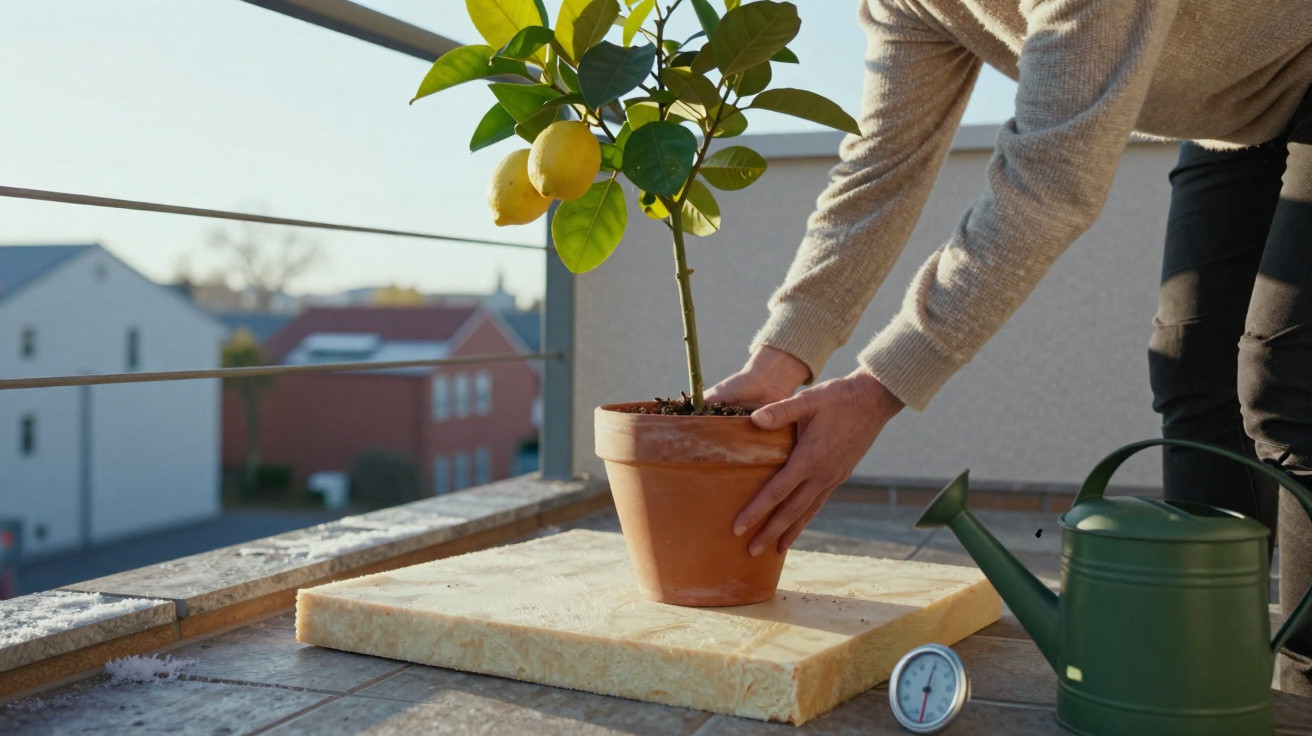
- Moving potted hydrangeas closer to the house wall and insulating the pot
One widespread mistake is cutting every ornamental shrub in the garden back to knee height. This blanket hedge-pruning approach does not work for hydrangeas. Those who cut them to the same height every year often wonder why the plants produce plenty of lush green growth but hardly any flowers.
Practical examples for a flower-rich hydrangea summer
A typical garden border might look like this: a row of panicle hydrangeas at the back, with blue and pink mophead hydrangeas in front. In late winter, cut the back row back firmly, while limiting the front row to removing old flowers and dead stems. In summer, the front shrubs create a colourful band of blooms, while the tall panicles appear behind them like a light curtain.
If you also have a climbing hydrangea on the house wall, leave it almost untouched in winter. This creates a layered display of flowers from June until late summer, without gaps appearing because the secateurs were used at the wrong time.
Behind the seemingly complicated pruning rules lies one straightforward principle: check first where the flowers form, then reach for the secateurs. Making this order a habit will turn your hydrangea border into a reliable source of blooms year after year.
Comments
No comments yet. Be the first to comment!
Leave a Comment