
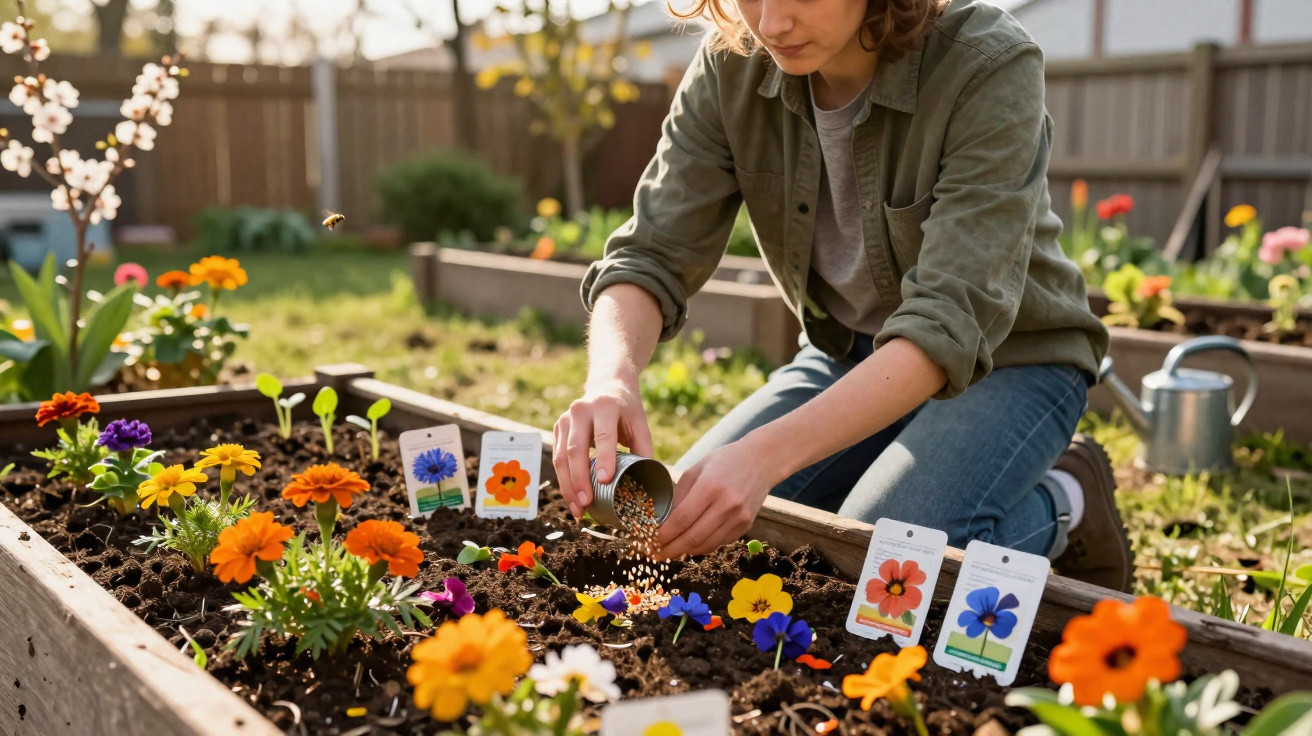
While many amateur gardeners in German-speaking countries are still hesitant in March, sowing for fast spring flowers is already in full swing in the United Kingdom. The key is to choose varieties that race from seed to bloom in record time, then follow a few straightforward routines rather than trying to copy complicated professional techniques.
Why March is the quiet starting gun for flower power
During March, soil gradually begins to warm and daylight hours increase, giving plants a powerful growth boost. Sowing wisely at this point makes ideal use of that natural acceleration. Even gardens that resemble a brown moonscape at the beginning of March can be full of colour by late April or May.
Many traditional bedding plants take around three months to produce their first flowers from seed. For impatient gardeners, that can feel like an age. However, one group is considerably quicker: annual flowers with an exceptionally rapid growth rate. Some reach their first colour in as little as six to ten weeks.
With suitable varieties, March changes from the “waiting month” into the signal for an explosion of early flowers.
Gardeners in the United Kingdom mainly rely on two categories:
- Hardy annuals, which cope easily with cool nights and can be sown straight into beds
- Heat-loving annuals, which are started indoors before taking off outside later on
The quickest flowering sprinters to sow in March
Anyone looking for visible results within a few weeks should choose proven fast starters. Several favourites from the United Kingdom also perform well in German-speaking regions, although sowing dates may need to be moved slightly later depending on the area.
Calendula, cornflowers and more: hardy and rewarding
Hardy annuals include:
- Calendula: tolerates cool weather, copes well with poor soil, and flowers early for a long period
- Cornflowers: a traditional cottage-garden flower that is easy to sow and especially striking when planted in groups
- Love-in-a-mist (Nigella): delicate, finely detailed flowers that are surprisingly tough
- Californian poppy: prefers drier, sunny positions and flowers quickly in vivid shades
These varieties can be sown directly into garden beds, raised beds or larger balcony containers in March. They withstand cooler nights and use every spell of sunshine to grow.
Zinnias, Tagetes and petunias: heat-loving long-flowering plants
The second category gets off to a slower start, but gathers impressive momentum as soon as temperatures rise:
- Tagetes (French marigolds): can flower after around 45–60 days in favourable conditions
- Zinnias: generally take about 60–70 days to bloom, rewarding the wait with strong colours and long-lasting flowers
- Petunias: not quite the quickest, but they have an exceptionally long flowering season into autumn
- Cosmos: delicate plants that grow rapidly in warmth and give beds an airy appearance
These varieties initially need a warm position, such as a bright windowsill, conservatory or simple indoor propagator. Once the risk of frost has passed, move them outside, where they will then perform at their best.
A speedy option with added value: nasturtiums and borage
One particularly useful tip from British gardens is to grow edible flowers:
- Nasturtiums: grow rapidly, flower in orange, yellow and red, and also brighten salads
- Borage: produces blue star-shaped flowers, attracts bees like a magnet and often self-seeds later on
Nasturtiums usually reach flowering stage in just over two months. Borage takes a little longer, but then often provides new plants for the following year with little effort.
Planning your “quick-flower bed”: combinations and timing
Combined thoughtfully, these flowers bring colour from late spring and continue through the summer. A mix of hardy and heat-loving varieties works particularly well.
| Flower group | March sowing method | Expected first flowers |
|---|---|---|
| Calendula, cornflowers, Nigella, Californian poppy | Sow directly into beds | Late spring / early summer |
| Tagetes, zinnias, petunias, cosmos | Start indoors | From late spring, then throughout summer |
| Nasturtiums, borage | Sow directly outdoors or in larger pots | After around 8–10 weeks |
Sowing in March and following up with a second, slightly staggered sowing in April extends the flowering period considerably. This creates beds that continually refresh themselves instead of fading all at once.
The simple March routine for colour in record time
Fast-growing flowers do not need professional equipment to fulfil their potential; what matters most is a clear routine.
Prepare the soil and choose the position carefully
Before opening a packet of seeds, carry out a quick check:
- Loosen the soil: use a rake or garden fork to work over the top 10–15 centimetres
- Add compost: a thin layer of mature compost improves both soil structure and nutrient availability
- Select the site: aim for at least six hours of sunshine each day
For pots, a good-quality, loose compost is sufficient. The essential point is that water can drain away and the compost does not remain constantly saturated.
How to sow hardy and heat-loving varieties in March
Three simple rules in March often determine whether your garden has colour in May or not until high summer.
- Sow hardy annuals directly: scatter seeds thinly, press them in gently or cover them with only a very light layer of soil. Keep the soil evenly moist, without waterlogging it.
- Start heat-loving varieties indoors: sow into trays or small pots, cover lightly with compost and place them somewhere bright and warm. Avoid waterlogging.
- Do not overcrowd plants: prick out seedlings in good time so that they receive enough light, water and space.
Once frost is no longer expected outdoors, move indoor-raised plants outside gradually. Start with a few hours in partial shade, then extend the time day by day so they can adjust to wind and sunshine.
Common mistakes that waste time - and how to avoid them
Many amateur gardeners wonder why fast starters take longer than promised. In many cases, simple causes are responsible.
- Plants are too close together: densely sown seedlings remain small and fail to get going
- Too much fertiliser: overfed young plants develop soft growth, topple more easily and often flower later
- The wrong position: without enough sun, growth falls well short of expectations
- Waterlogging: permanently wet roots slow root development and encourage rot
Avoid these pitfalls and it soon becomes clear that many varieties genuinely live up to their “fast starter” labels.
Why German gardens can benefit from looking to the United Kingdom
The climate in many parts of the United Kingdom is similar to that of northern Germany, Belgium, the Netherlands and some Alpine valleys. Many plants proven there for March sowing therefore also work well in these areas, provided sowing dates are adjusted slightly and local late frosts are considered.
These flowers are an especially practical option for busy people with limited time: one or two hours spent in March can create a much more welcoming patio, entrance or colourful balcony railing by late spring, without any complicated gardening technology.
More benefits: bees, food and children
Fast-growing flowering plants also bring several welcome everyday advantages:
- Bee magnets: cornflowers, borage and nasturtiums attract solitary bees and bumblebees
- Cooking: edible nasturtium and borage flowers add colour to salads, along with a lightly peppery or cucumber-like flavour
- Gardening with children: a short wait for flowers keeps children interested and makes seed-growing projects easier to understand
For small urban gardens and balconies, mixes of annual bee-friendly plants have proved effective. Many retailers already offer ready-made seed mixtures containing some of the fast starters listed above. Anyone who prefers to stay in control can create their own collection of “quick flowers”.
March ultimately shows that a colourful garden depends less on space than on planning. Choosing the right varieties, preparing the soil briefly and following a simple routine can leave you standing before a bed in late spring that was still a brown desert only a few weeks earlier.





Comments
No comments yet. Be the first to comment!
Leave a Comment