
Many people are currently reaching for expensive miracle products, when the answer is usually right beneath their feet.
A tired, yellow lawn rarely has just one underlying cause. Thatch, unsuitable watering, mowing too short and a shortage of nutrients nearly always occur together. Turning a garden into a resilient, thick green carpet for the long term does not require a chemistry lab; it calls for a clear four-step approach. This is precisely the system owners of especially well-kept gardens have used for years: quietly, effectively and at surprisingly little cost.
Why your lawn is actually turning yellow
Yellow blades are not simply bad luck: they are the soil asking for help. Your lawn is showing that air, water and nutrients can no longer reach the roots properly, or are being used incorrectly. Rather than repeatedly adding more fertiliser and water, it pays to look below the surface.
“The foundation of a lawn that stays green is breathable soil with deep, strong roots – not a bag of miracle fertiliser.”
Many issues can be traced back to three central mistakes:
- excessive lawn thatch, which prevents water and air from getting through
- continual light watering, which makes roots lazy
- mowing too low, which effectively “burns” the soil in the sun
Addressing these areas while building a natural nutrient supply often produces a noticeable improvement within only a few weeks.
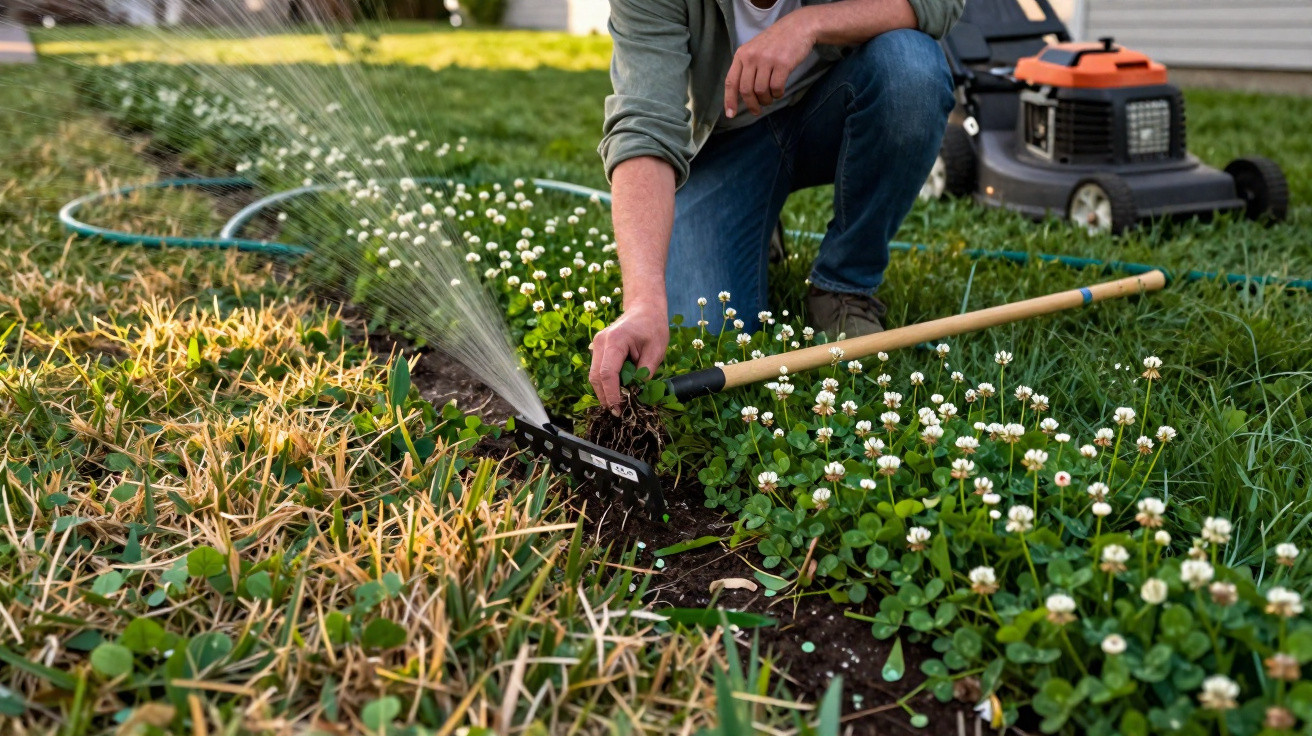
Step 1: Remove lawn thatch so the soil can breathe again
Hidden thatch: the invisible lawn killer
Over time, grass clippings, leaves and moss build up on the surface of the soil. This creates a dense, springy layer known as lawn thatch. Although it may feel soft, it behaves like a plastic sheet: water runs off, little air gets through and nutrients remain at the top.
The roots are then trapped beneath a kind of blanket. They receive too little oxygen, begin to weaken, and the lawn turns yellow, particularly after winter and during dry spells.
Scarify gently rather than tearing up the soil
The answer is to loosen the surface carefully. Instead of cutting aggressive, deep grooves into the ground, a light treatment is often enough:
- run a scarifier or hand rake lightly across the lawn
- score only the upper layer rather than digging deeply into the soil
- thoroughly rake up and dispose of moss and thatch
If it feels as though you are combing the lawn, you are doing it correctly. The turf remains intact, while the soil opens up and air and rain can penetrate again. Early spring or early autumn is ideal, when the lawn can recover quickly.
Step 2: Water properly – infrequently, but thoroughly
Daily watering weakens the lawn
There is a common instinct to switch on the sprinkler every evening when a lawn goes yellow. That may ease your conscience, but it does nothing for the soil. Frequent, brief watering reaches only the top layer. Roots stay in this comfortable zone, barely grow downwards and become highly vulnerable to heat or missed watering.
A continually damp surface also creates ideal conditions for fungal diseases. Patches, rot and an even more exhausted lawn are the predictable result.
Encourage roots to grow deeper
A hard-wearing lawn needs deep roots. That can happen only when water genuinely soaks into the soil. The rule of thumb is:
- water only once or twice a week
- on those occasions, water for long enough to moisten the soil to a depth of 15–20 centimetres
- water in the morning so the blades can dry during the day
If you are unsure, make a spade cut: if the soil is still dry at this depth, you have not applied enough water. After several weeks of this routine, the grasses “learn” to root more deeply. The benefit is especially clear at the height of summer: while a neighbour’s lawn burns off, your own area remains richly green for longer.
Step 3: Raise the mower setting – grass as natural sun protection
Cutting too short: convenient but highly risky
Many people choose the lowest mowing height in summer to avoid mowing as often. Yet this is exactly what accelerates drying out. Short grass no longer shades the soil, sunlight strikes the bare ground directly, the surface heats up and moisture evaporates at record speed.
There is a second consequence as well: weeds take advantage of the extra light and germinate more readily. Anyone aiming for a formal, immaculate lawn will ultimately create more work and more frustration.
Mow higher for a lawn under less stress
The solution could hardly be simpler: increase the cutting height. For the vast majority of gardens, this means:
- set the mowing height to at least 7–8 centimetres
- mow more often if necessary, but remove less each time
- never cut off more than one third of the blade length in a single mow
“Longer grass forms a shady ‘cover’ over the soil that retains moisture, buffers heat and suppresses weeds.”
This makes the lawn look fuller, feel softer and cope far more easily with hot periods. If you wish, leave fine clippings on the lawn in summer; they provide an additional protective layer as well as a light fertiliser.
Step 4: Trifolium instead of chemical fertiliser – how tiny leaves feed the soil
Why mini clover is a game changer for lawns
When lawns turn yellow, many people immediately use mineral fertiliser. It often delivers a fast green colour, but it also makes the lawn dependent on a constant supply. It becomes more interesting when some nutrients come from the air, free of charge.
This is where low-growing white clover comes in. This legume fixes nitrogen from the air and releases it into the soil. The surrounding grasses benefit without the need for continual fertilising. Clover stays low, forms small, dense cushions and remains green for a long time even during dry periods.
Overseeding rather than starting again: how the clover mix works
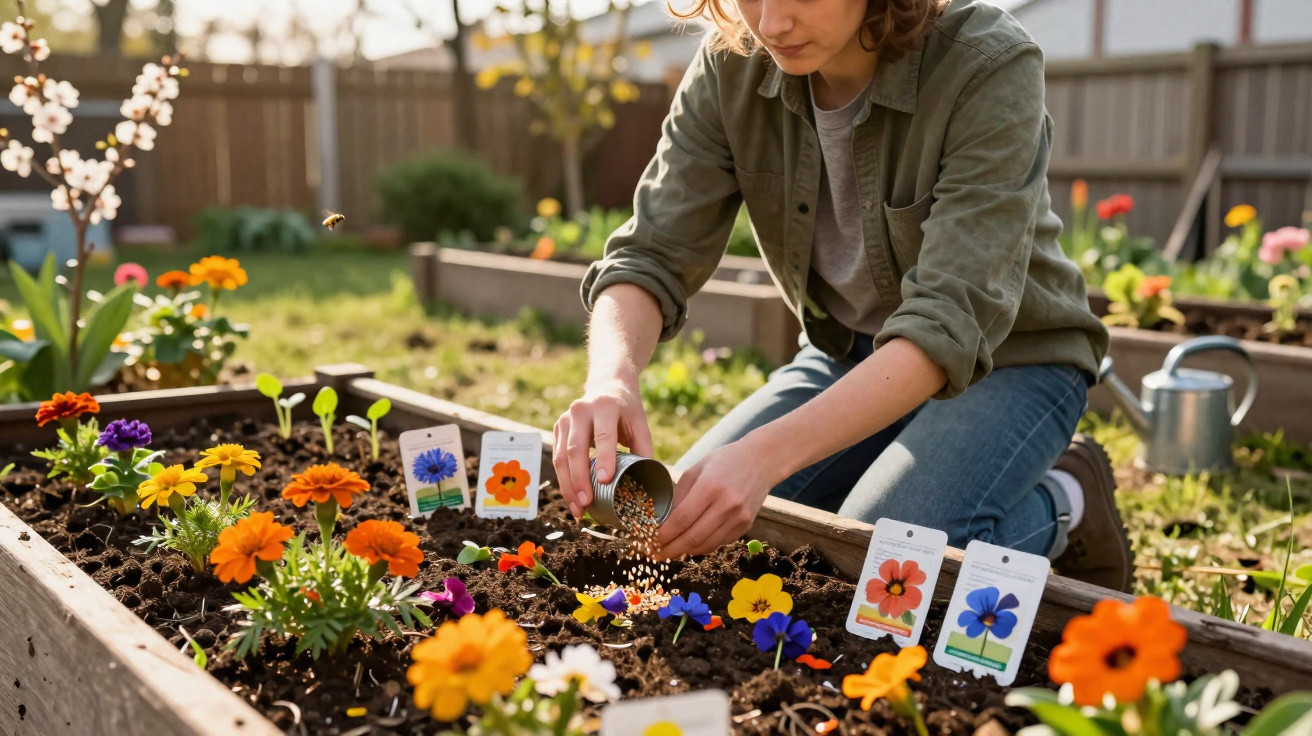
A targeted sowing of clover is a good way to fill bare or yellowing patches. The process is simple but highly effective:
- lightly roughen damaged areas after scarifying
- scatter around 5 grams of clover seed per square metre
- press the seed into place, for example with a board or roller
- keep the soil consistently lightly moist until germination, for around 10–12 days
After a few weeks, grass and clover merge into a dense, hard-wearing carpet. This mix often feels more pleasant under bare feet than a lawn made solely of grass. Fertiliser costs also fall noticeably.
How your garden changes over the long term
More life, less work
By loosening the soil, using water wisely, mowing higher and incorporating clover, you gradually create a small, stable ecosystem. Earthworms, soil bacteria and micro-organisms become more active again; the soil develops a more crumbly texture, holds water more effectively and gains a greater capacity to regulate itself.
Rather than continually intervening, a steady routine is generally enough: occasional light scarifying, controlled watering, keeping the mower height set appropriately and a little clover overseeding when needed. Many people report that this method leaves them spending less time on rescue measures and more time enjoying the garden.
Limits, risks and useful additions
Naturally, there are situations where these measures reach their limits: soil severely compacted by heavy machinery, unsuitable soil types, persistent waterlogging, or heavy shade from buildings and trees. In these cases, a soil analysis can often help, for example by allowing the pH level and structure to be improved in a targeted way.
Useful additional measures may include:
- working sand or compost into dense soil to loosen it
- deliberately using heavily shaded areas as shade beds rather than lawn
- choosing drought-tolerant seed mixes for particularly dry areas
Those who see a lawn as a living carpet rather than a plastic surface will gain a robust, adaptable garden soil over time – and far fewer yellow surprises in spring.

Comments
No comments yet. Be the first to comment!
Leave a Comment