
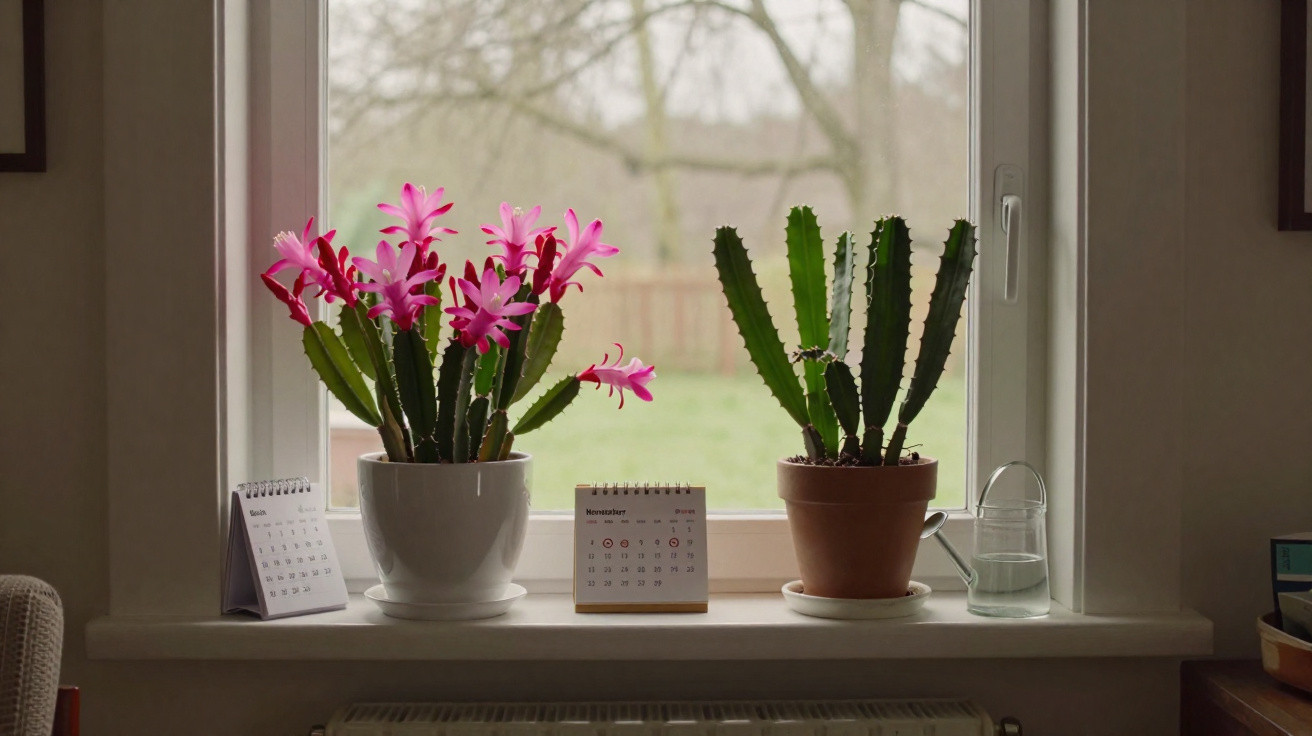
Often, the cause is a simple winter mistake.
Many plant enthusiasts know the situation: at the garden centre, the Easter cactus was a true flowering marvel; at home, it shines for one season – then nothing happens the following year. Its shoots are rich green and the plant appears healthy, yet when Easter arrives, there is not a single sign of a bud. This disappointment is rarely down to a lack of gardening skill; more often, the winter routine has been planned incorrectly.
What makes the Easter cactus so special
The Easter cactus (botanically Rhipsalidopsis, sometimes also Hatiora) is not a desert cactus but a tropical epiphyte. In the humid forests of South America where it originates, it grows on tree branches, surrounded by filtered light and moisture in the air – far from blazing sun and bone-dry soil.
It therefore needs very different living-room conditions from those required by many traditional cacti:
- bright light, but no direct midday sun
- loose, well-draining compost rather than heavy potting soil on its own
- consistently slightly moist compost, but never waterlogged
- no position exposed to extremely dry central-heating air
Its natural flowering period runs from March to May. During this time, the plant becomes covered in upright, star-shaped flowers – provided that its annual cycle has been right beforehand.
Easter cactus or Christmas cactus – the crucial difference
Many households confuse Easter cacti with Christmas cacti. That can easily lead to the wrong care at the wrong time, and ultimately to frustration.
| Feature | Easter cactus | Christmas cactus |
|---|---|---|
| Flowering period | Spring (March–May) | Winter (November–January) |
| Shoot segments | More rounded, with softer outlines | Clearly toothed, with sharper edges |
| Typical purpose | Flowers at Easter | Flowers during Advent |
Anyone who treats an Easter cactus like a Christmas cactus – or even gives it summer conditions throughout the year – unknowingly prevents exactly what they want: buds for Easter.
This winter oversight prevents buds
The most common reason for a lack of flowers is a winter position that is too warm and too bright, with no dormant period. Many people simply place the pot on a windowsill above a radiator and continue watering “as usual”. The plant may keep growing, but it will not produce buds.
“The Easter cactus needs 8 to 12 weeks of genuine winter mode: cooler, darker, drier – otherwise it remains stuck in ‘permanent summer’ and goes without flowers.”
The crucial period falls between late autumn and late winter. At this stage, the cactus internally switches from growth to preparing for flowering. If anything goes wrong then, it simply will not have formed the basis for buds by Easter.
The ideal annual calendar for your Easter cactus
Autumn: a gentle move into dormancy
From September or October onwards, gradually reduce the amount of water. The shoots should remain plump, but they should no longer sit in constantly wet compost. Stop feeding the plant. It can now be moved to a slightly cooler, bright room – preferably away from the heat of a direct windowsill position.
November to January: the cool resting period
During these months, it is decided whether spring will bring flowers or simply more green growth.
- Temperature: 10 to 15°C is ideal; do not exceed 15°C
- Light: around eight hours of indirect daylight, with no strong artificial lighting in the evening
- Darkness: at least twelve uninterrupted hours of night; no permanent living-room lighting or television flicker nearby
- Water: a small drink every three to four weeks is sufficient; the root ball must never become saturated
An unheated guest room, a cool hallway with a window or a bright stairwell can often be ideal locations. One important point: do not place the pot directly on a cold floor, as this can damage the roots.
February: gradually wake it up again
In February, raise the temperature moderately to around 18 to 20°C and move the cactus to a brighter place, while still protecting it from direct midday sun. Increase watering slightly; the root ball may now be lightly moist more often, but it must not stand in water continuously.
This is when the first buds begin to form. Any major change – moving it, draughts or a blast of radiator heat – can cause them to drop within days.
March to May: the Easter-time reward
At this point, the Easter cactus shows what all the effort was for: it produces one flower after another. Keep its care consistent:
- provide a bright position without harsh midday sunshine
- keep the compost slightly moist, but avoid “wet feet”
- do not repot it or keep turning it around on the windowsill
There is a useful trick for increasing humidity: place the pot on a saucer filled with damp expanded-clay pebbles, ensuring that the pot itself remains dry above them. This raises the humidity around the plant slightly without leaving its roots in water.
The biggest care mistakes – and how to avoid them
Too warm in winter
A permanent spot at 20°C near a radiator will almost certainly prevent flowering. The plant effectively “thinks” that it is always the growing season and does not bother making buds. Better: give it a deliberate cool spell within the acceptable range of 10 to 15°C.
Too much watering
The Easter cactus appreciates moisture, but not waterlogging. Typical warning signs of rot include glassy, soft shoot segments or a musty smell coming from the pot. The only response is to move it somewhere drier immediately and, if necessary, repot it into fresh, loose compost.
A suitable compost mix could look like this:
- around two thirds good-quality potting compost
- around one third materials that add structure, such as perlite, coarse sand, pumice or fine pine bark
Light pollution during the resting period
One point many people underestimate is that the Easter cactus responds to the length of the night. If the lights stay on in the same room until midnight throughout winter, this disrupts its internal calendar. During the dormant months especially, it is worth placing it in a room that genuinely stays dark in the evening.
Stress while buds are forming
As soon as buds are visible, the plant becomes extremely sensitive. Common reasons for bud drop include:
- repeatedly turning or moving the pot
- icy draughts while airing the room
- sudden exposure to heat, such as direct spring sunshine
At this stage, the rule is simple: choose a suitable position, then leave it unchanged as far as possible.
How to save a shop-bought flowering Easter cactus for the long term
Many plants arrive from retailers with a kind of flowering boost already built in: they have been deliberately forced to bloom at the right time through controlled light and temperatures. Those conditions are absent at home, so the cycle then breaks down.
From the first year after purchase, there is only one solution: consistently return it to its natural rhythm. Even if the cactus is still weak in its first “unassisted” spring, it is worth persevering. By the second year at the latest – and often in the first – a well-planned winter routine will be rewarded with much fuller garlands of flowers.
If you own several specimens, you can experiment effectively: give one cactus the recommended 8 to 12 weeks in cooler, darker conditions, while leaving the other in the warm living room as before. The difference in spring flower production is often more convincing than any theory – and reassures many people that the cool resting period will not harm the plant.



Comments
No comments yet. Be the first to comment!
Leave a Comment