
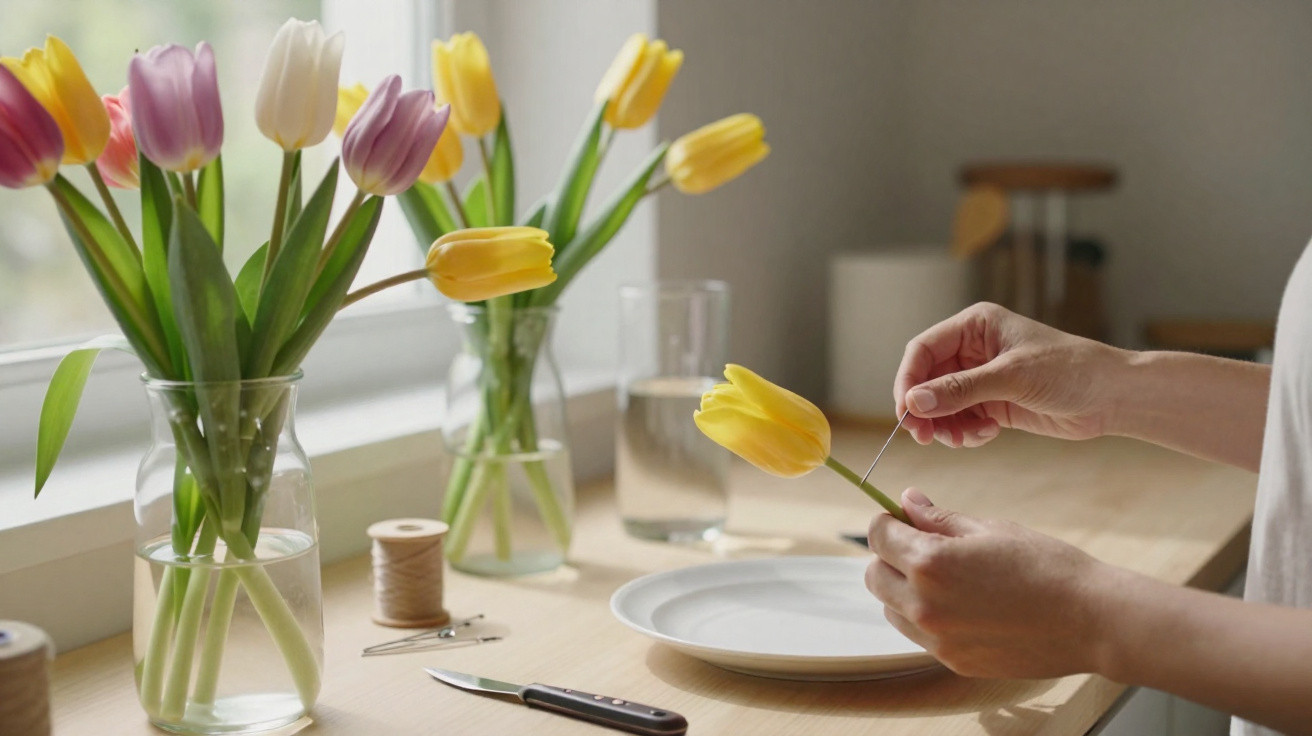
A simple needle trick is said to solve the problem within seconds.
This was put to the test in a British kitchen: four vases, the same bunch of tulips and six days of observation. Familiar remedies such as copper coins and vodka were pitted against an inconspicuous drawing pin. In the end, one method proved remarkably dependable at preventing a looming flower disaster – and it is just as easy to replicate at home.
Why tulips droop so quickly in a vase
Strictly speaking, bringing home tulips means bringing home a plant that is still alive. Their stems continue to grow after being cut, reaching towards the light, twisting slightly and gaining a few millimetres each day. Although this looks wonderfully lively, it creates a problem: the flower head becomes heavy, the hollow stem starts to yield, and the bloom soon hangs over the vase rim.
Central-heating air only makes matters worse. In a well-heated room, tulips lose water more rapidly, the stem cells become less firm and their natural curve becomes more pronounced. Placing the vase on a sunny windowsill can dry the flowers out even further.
There is another source of stress inside the stem. Tulip stems are hollow, allowing small pockets of air or colonies of bacteria to form. These obstructions disrupt water uptake. As a result, the bloom receives less moisture, looks limp and topples over, even when there is still plenty of water in the vase.
“When tulips in a vase are about to topple over, an air blockage in the hollow stem – rather than simply too little water – is often the cause.”
Four-vase kitchen test: one clear winner
A hobby gardener in the UK wanted a definite answer, so she turned her tulip bouquet into a small kitchen experiment. She divided the flowers between four identical vases, with two stems in each. Every tulip received a fresh diagonal cut under water before the vases were placed side by side in the same spot.
The four methods compared were:
- Vase 1: water with a splash of vodka
- Vase 2: tap water with several coins placed at the bottom
- Vase 3: fresh water only
- Vase 4: fresh water plus one tiny needle puncture just below the flower
After six days, the outcome was clear. The stems in the vodka vase looked the most tired, with many lying almost limp across the edge. The coin treatment and the vase containing only water performed slightly better, but their flower heads had noticeably lowered as well.
The needle-treated tulips, however, remained far more upright, felt firmer and retained that condition for longer. The brief puncture appeared to do exactly what many florists have suspected for years: release the air bubble inside the hollow stem.
How the tulip needle trick works
The principle behind this trick is straightforward. The hollow stem can act like a sealed drinking straw. If an air bubble is trapped inside, it prevents water from travelling upwards. A fine puncture lets the air escape, allowing water to reach the bloom freely again.
An ordinary sewing needle or drawing pin is sufficient. It must be clean, however. Wipe it briefly with alcohol or hot water before starting.
- Take the tulip out of the vase and make a new diagonal cut in the stem under running water.
- Position the needle around one centimetre below the base of the flower.
- Push the needle straight through the green stem once – quickly, without drilling into it.
- Put the tulip back into cool, fresh water immediately.
The puncture is generally invisible because the leaves conceal the area. It will not cause the stem to snap, as the tulip’s outer layer is surprisingly tough. Many people report that slightly bent flower heads visibly lift again within a few hours.
“Three seconds with a needle can be enough to restore water flow in the stem and stabilise the bloom.”
Preparing tulips properly for a vase
The needle trick is especially effective when the basic care is right. Treating tulips correctly from the moment they are arranged can visibly extend their vase life.
A fresh cut and a clean vase
Before putting tulips in a vase, inspect the stems closely. Dry or bruised ends interfere with water uptake. A diagonal cut of one to three centimetres, ideally made under water, reopens the water-conducting channels.
The inside of the vase should also be free of slimy residue and old plant matter. Bacteria multiply quickly there and clog the tiny channels in the stems. If you do not own a special vase brush, use hot water with a little washing-up liquid, then rinse thoroughly.
Water, temperature and position
Tulips prefer cool water. Lukewarm or warm water may initially speed up flowering, but it also encourages wilting later. Tap water is often enough, although you can mix in the supplied cut-flower food if you wish.
A shaded position in the room is usually best. Stems lose their firmness in direct sunshine or immediately above a radiator. Tulips should not stand beside a bowl of ripe fruit either, as fruit releases ripening gases that make cut flowers age faster.
- Refill the vase with fresh water every day, or at least every other day
- Trim the stems slightly every two to three days
- If possible, move the bouquet to a cooler room overnight
What popular household remedies really do
Advice involving alcohol, copper and sugar has circulated online for years. The kitchen test suggests these remedies often achieve less than expected.
Vodka in flower water
The theory is that alcohol slows bacterial growth in the water while also reducing the flower’s metabolism. In practice, many people pour too much into the vase. This can damage the cells in the stem and create stress rather than providing care. The vodka tulips in the experiment looked exactly like that: exhausted, soft and with hardly any resistance left in the stems.
Coins at the bottom of the vase
Many coins used to be made from copper alloys, which could indeed release small amounts of copper ions into the water. These inhibit certain germs. Modern euro coins contain far less freely available copper, so the effect is correspondingly limited. The coin-treated tulips did not perform badly in the test, but their flower heads did not become properly stable either.
The needle method outperforms both approaches because it acts directly on the stem, where the bottleneck occurs: the trapped air.
Risks and points to consider when puncturing tulip stems
Although the method seems simple, several details matter. The needle must be clean, otherwise germs can be introduced directly into the water-conducting tissue. When treating several stems, it is better to wipe the tip between each one or use separate needles.
Puncturing too deeply or at an angle can damage the stem more than necessary. One short, straight puncture across the stem is entirely sufficient. If you feel strong resistance, you are probably too close to the cut end at the bottom. The puncture belongs in the area directly below the flower.
It is also worth considering the variety. Some particularly delicate parrot tulips or heavily double cultivars can be more sensitive. In these cases, test the technique on a single stem first to see whether the bloom lifts as intended before treating the whole bouquet.
Combining the needle trick with other tulip care tips
A needle puncture alone will not work miracles on tulips that were already old when bought. The technique is most effective when combined with two further measures: a cool position and regular water changes. Moving the bouquet into the hallway or by a cool window overnight noticeably slows the ageing process.
This may also interest many hobby gardeners: trapped air is not limited to tulips. Florists report similar experiences with other hollow stems, including certain varieties of ornamental allium and daffodil. In those cases, proceed more cautiously and, if in doubt, ask a specialist retailer whether the trick is suitable for the particular species.
For everyday use in the living room, this means that anyone who does not want to see their tulips sadly hanging over the vase edge by the second day needs neither laboratory knowledge nor specialist products. A fresh cut, cool water, a reasonably cool place and three seconds of confidence with a needle are often enough to keep the bouquet visibly firmer for several days.
Comments
No comments yet. Be the first to comment!
Leave a Comment