
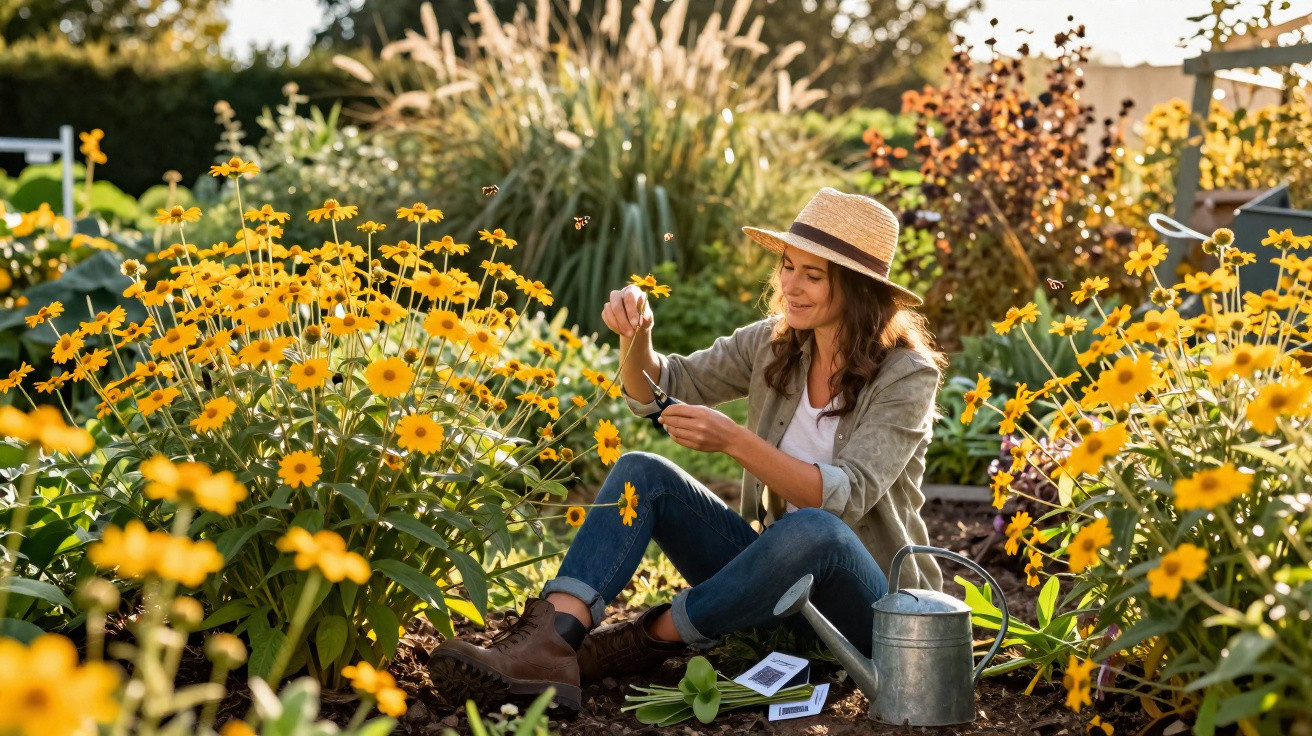
Many amateur gardeners plant the same summer flowers every year, then wonder why their beds look empty and dreary in autumn. A comparatively little-known long-flowering perennial can change that: Bidens aurea. This hardy plant produces bright yellow blooms for many months, attracts bees and requires remarkably little attention.
A continuous display of yellow: what makes Bidens aurea so special
Originally from Mexico, Bidens aurea belongs to the daisy family. In a border, it has the character of both a wild meadow flower and an elegant perennial. Its many small, star-shaped flowers shine a rich yellow, often with a touch of white at their tips.
“From high summer until late autumn, Bidens aurea flowers dependably – even when many other perennials have long since given up.”
In mild areas, its flowering season stretches from July into November, sometimes lasting until the first light frosts. That is precisely what makes it so appealing to gardeners: while dahlias and summer flowers are already fading, this perennial keeps going, bringing colour when it is most missed in the garden.
Its scent is another advantage. The yellow flower heads release a delicate, honey-like fragrance reminiscent of warm late-summer days. Anyone who enjoys sitting on the patio, or plants it close to a seating area, will notice this fragrance especially clearly.
Relaxed, light and natural: how the perennial looks in borders
Bidens aurea has fine, airy foliage and stems that arch gently over. As a result, it never appears rigid or formal, but rather like a well-tamed wild perennial. It slips almost effortlessly into naturalistic planting schemes.
It works particularly well as a background plant in perennial borders, as well as in the middle of larger beds. Combined with ornamental grasses, asters, rudbeckias or coneflowers, it creates a lively, almost rural scene – much like a cottage garden or field edge.
The ideal companion for ‘movement-filled’ gardens
Gardeners who prefer not to maintain their plot as a tightly clipped show garden, and are happy to let plants spread a little, will appreciate Bidens aurea. This perennial can stray slightly out of line, lean forwards or mingle with its neighbours – and that is exactly what gives beds a contemporary, naturalistic appearance.
It is also an interesting choice for anyone planning a ‘prairie garden’. Pairing it with tall grasses such as Miscanthus, Panicum or Pennisetum creates a display with structure that remains into winter. Once flowering has finished, dry seed heads develop; these look highly decorative when backlit and are well suited to dried bouquets.
Exceptionally easy to care for: the conditions Bidens aurea needs
Despite its abundant appearance, Bidens aurea is not a delicate diva. On the contrary, it copes well with relatively poor soil and is considerably tougher than its fine foliage suggests.
- Position: sunny to full sun; the more light it receives, the more profusely it flowers.
- Soil: loose and free-draining, preferably slightly sandy, with no waterlogging.
- Water needs: moderate; water regularly in pots, and only during prolonged dry spells when planted in beds.
- Height: usually 80 to 100 centimetres, and occasionally a little taller in especially favourable locations.
In colder regions, Bidens aurea is regarded as only partly hardy. With substantial winter protection – such as a layer of leaves or straw over the root area – it will usually tolerate temperatures down to around minus 8 degrees Celsius. In exposed locations, choose a sheltered position, for instance in front of a house wall.
A small trim with a big effect
This perennial grows quickly and naturally tends towards a slightly ‘wild’ habit. Those who prefer a neater appearance can use the shears in June: cutting the shoots back to around 20 centimetres encourages stronger branching and produces a more compact, bushy plant. Rather than preventing flowering, this often makes it more even.
There is no absolute need to remove faded flower heads. They dry attractively in place and also provide food for birds. For a particularly tidy look, individual stems can be cut out gradually.
A magnet for bees and butterflies
Its plentiful nectar and extended flowering period make Bidens aurea a genuine insect-friendly plant. Especially in late summer, when many other sources of flowers are running out, this perennial shows everything it has to offer.
“Between July and the first frosts, Bidens aurea buzzes and flutters with activity – ideal for anyone wishing to turn their plot into a small insect paradise.”
Bees, bumblebees, hoverflies and butterflies use the yellow blooms as a refuelling stop. This not only supports wild pollinators, but also brings more activity to the garden. For those with children, this perennial is an excellent way to explain the subject of ‘biodiversity’, as there is always something to observe.
Where the perennial looks best in the garden
Bidens aurea is surprisingly versatile:
- Cottage garden: among phlox, oxeye daisies, coneflowers and grasses.
- Modern garden: in clean-lined beds featuring grasses and a small number of repeated perennials.
- Balcony and patio: in large pots or containers, combined with trailing plants.
- Front garden: as a relaxed, welcoming boundary along a fence.
In a pot, the perennial needs a good drainage layer and low-nutrient, loose compost. Regular watering is essential, but waterlogging must be avoided. If sufficient space is allowed, it can be mixed with delicate grasses or smaller flowering plants to form an almost wild miniature oasis.
A quick practical guide: Bidens aurea at a glance
| Position | Sun to full sun |
| Soil | Light, well-drained, not overly nutrient-rich |
| Flowering period | July to November |
| Height | Up to around 1 metre |
| Hardiness | Down to approx. –8 °C with substantial winter protection |
| Care | Cut back in June for denser growth; water moderately |
| Propagation | Division in spring or raising from seed |
Tips for buying, planting and combinations
Plants from specialist garden centres are generally available in spring and early summer. Anyone wishing to plant a larger area can begin with just a few pots and divide the perennial later. One important point when planting is to water thoroughly, so the roots make contact with the surrounding soil.
The best planting companions are those with similar requirements: plenty of sun and free-draining soil. Popular combinations include:
- tall ornamental grasses for structure and movement in the breeze,
- late-flowering plants such as asters and Japanese anemones,
- continuously flowering rudbeckias or heleniums for a warm colour palette,
- fragrant herbs such as sage or thyme at the front of the border.
For those who enjoy contrast, add cool purple or blue accents, for example Russian sage or catmint. This makes the yellow of the Bidens flowers appear even more intense.
What beginner gardeners should know
For gardening newcomers, Bidens aurea is a rewarding introduction to growing perennials. The plant forgives minor care mistakes and gives clear signals: it flowers less freely in insufficient light, while waterlogging causes it to struggle, so it quickly teaches gardeners what matters.
The only essential point is to keep winter in mind. In mild areas, the perennial can remain in the same spot for several years; in colder regions, it is worth having a backup. Either take cuttings in autumn or overwinter one specimen in a pot away from frost, for example in a cool, bright stairwell.
Anyone who has seen how long this yellow long-flowering perennial continues will not want bare borders in autumn again. Bidens aurea fills exactly that gap – with little effort, plenty of colour and extra life in the garden.
Comments
No comments yet. Be the first to comment!
Leave a Comment