
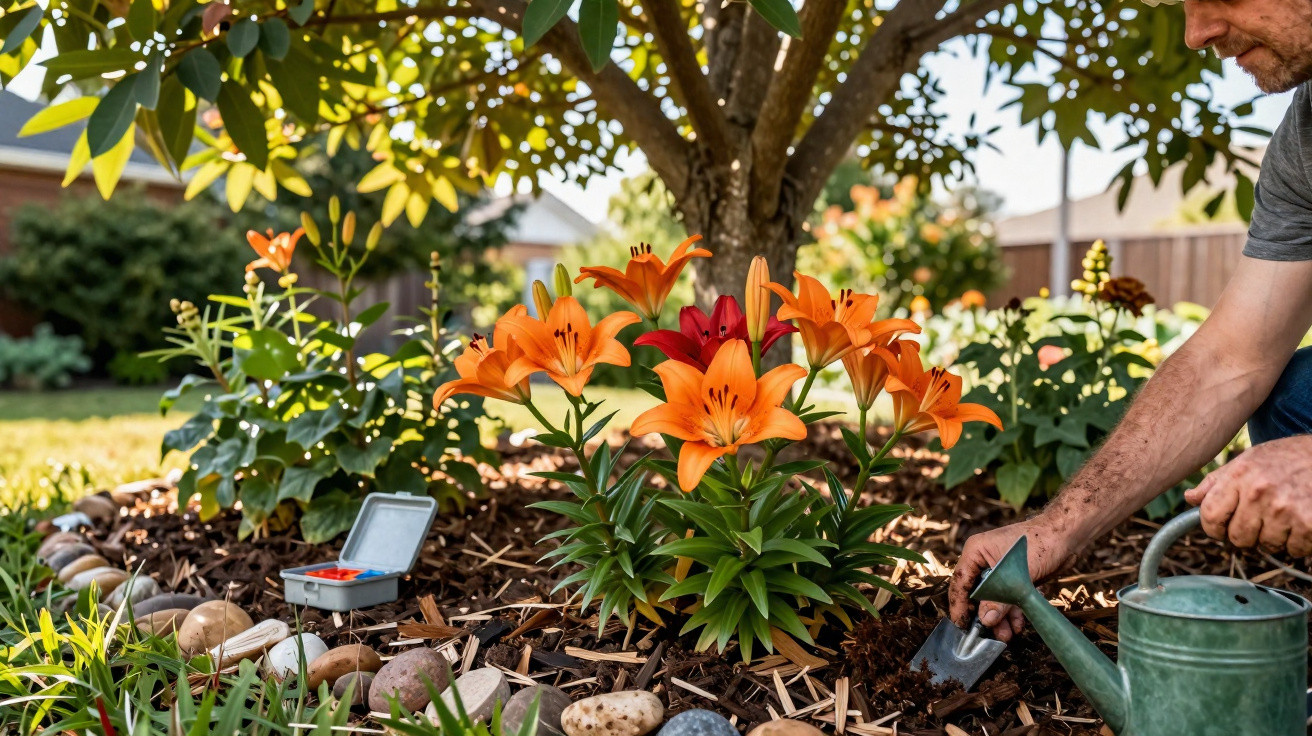
– yet one popular summer flower proves surprisingly resilient in the toxic zone around walnut roots.
Anyone with a towering black walnut or walnut tree in the garden will know the issue: apparently nothing grows properly beneath its canopy. The cause is a plant toxin called juglone. But what happens if you want to plant Asiatic lilies there of all places? Will they thrive, or will the bulbs collapse within days?
What juglone does in the soil
Walnut trees – particularly black walnut, butternut and English walnut – release juglone into the ground. The compound occurs in their roots, bark, leaves and nut husks. Rain, decaying plant matter and root contact create an invisible toxic area, generally extending 15 to 25 metres around the trunk.
In susceptible plants, juglone disrupts cellular respiration. Once the roots absorb it, cells receive too little energy, with symptoms appearing fairly quickly:
- after 24–48 hours: limp, wilting shoots
- shortly afterwards: yellow leaves and stalled growth
- in severe cases: the entire plant dies
How severe the response is depends greatly on the soil. Heavy clay soils retain juglone for considerably longer than sandy or well-drained garden soils. Waterlogging makes matters worse because roots remain in contaminated water for longer.
Typically sensitive to juglone: tomatoes, peppers, potatoes, rhododendrons and many heath family plants – even small quantities can cause serious damage.
On the other hand, numerous species grow entirely normally directly beneath walnut trees for years. Many spring bulbs, certain hardy perennials and a wide range of native woodland plants have developed a clear tolerance.
How Asiatic lilies respond to juglone
The encouraging news for flower lovers is that Asiatic lilies are considered moderately to highly tolerant of juglone. Both trials and practical observations show that they flower remarkably reliably even close to walnut trees.
Specialist advisers and university trials consistently place Asiatic lilies among juglone-tolerant ornamental plants. They seldom display the dramatic wilting seen in tomatoes growing in the same spot. Their physiology appears to be the reason: the lilies’ metabolic pathways seem less sensitive to the blockage caused by juglone.
Asiatic lilies tolerate juglone – but they are not superheroes. Stress often becomes apparent only through weaker growth and fewer flowers.
A direct comparison makes this clear: the same variety in a ‘clean’ border and within the influence of a walnut tree will often grow slightly shorter beneath the canopy, with narrower leaves and occasionally fewer buds. Gardeners report complete failures only rarely, however, provided the site is suitable.
Differences between lily groups
Not all lily types respond to the same degree. Studies and practical reports broadly classify them as follows:
| Lily group | Assessment of juglone tolerance | Recommended zone from the walnut tree |
|---|---|---|
| Asiatic lilies (hybrids) | moderate to good | possible within 15–25 m |
| Oriental lilies | medium | 15–25 m, only with very good drainage |
| Trumpet lilies | medium | preferably at the edge of the affected area |
| Species lilies | variable, mostly good | usually feasible in the juglone area |
North American species, especially Lilium canadense and Lilium superbum, are regarded as particularly robust because they evolved in regions containing many walnut species.
Site conditions are crucial: drainage is essential
The site determines how well Asiatic lilies truly cope with juglone. The most important consideration is that water must drain away quickly. If it remains in the planting hole, juglone accumulates too, increasing the pressure on the bulbs.
A simple test can help assess the situation: dig a hole around 30 centimetres deep, fill it with water and check it after 24 hours. If water is still present, the soil needs improvement or a different planting approach is required.
- In heavily compacted soil: incorporate coarse sand or grit
- Work in plenty of well-rotted compost to improve soil structure
- In very heavy soils: use raised beds or mounded beds instead
Asiatic lily bulbs should ideally sit 15 to 20 centimetres deep. At that depth, they are somewhat shielded from the surface, where freshly fallen walnut leaves decompose and briefly release especially high amounts of juglone.
The looser and more humus-rich the soil, the faster juglone is diluted and broken down by microbes – giving lilies room to breathe.
Practical tips: helping lilies survive beneath a walnut tree
A few targeted measures can substantially reduce the toxic belt around walnut trees without harming the tree.
Reducing juglone pressure with care measures
- Remove walnut leaves, nut husks and young shoots from the lily bed promptly instead of allowing them to rot there.
- Apply an annual 5–7 centimetre layer of mulch made from bark compost or leaf mould, which will break down gradually.
- During dry spells, water deeply rather than merely sprinkling the surface – this washes dissolved compounds further down.
- Monitor lilies regularly in their first year: even slight wilting or pale leaves are warning signs.
- Use a balanced general fertiliser so plants grow strongly enough to cope better with stress.
Placement matters just as much. The outer areas beneath the canopy drip line are particularly favourable: this is where intense root dominance gives way to the ‘normal’ garden area. Juglone levels are usually noticeably lower there, while the lilies still create an attractive effect close to the tree.
Choosing suitable companion plants
Anyone wishing to plant more than lilies in a walnut-tree bed should choose other tolerant species. Gardening experience suggests that suitable options include:
- hostas for shadier areas
- astilbes, which cope with moister, humus-rich soils
- a range of ferns to enhance the woodland feel
- many spring flowers, including daffodils and crocuses
These companion plants create a stable planting scheme in which gaps are less likely to result in total loss. If one species fails, the bed’s structure remains intact.
How long does juglone remain active – and what does this mean for planning?
Juglone levels do not remain constant throughout the year. The concentration is generally highest during the tree’s main growing season and immediately after leaf fall, when fresh quantities enter the soil. During colder months and after heavy rainfall, concentrations tend to decline.
Good timing is worthwhile in practice: many lily enthusiasts plant their bulbs in early spring or late autumn. At these times, the ground is usually less saturated with fresh compounds from walnuts, allowing bulbs to form new roots undisturbed before the tree becomes fully active again.
Common misconceptions about walnut trees and lilies
Garden forums frequently claim that ‘nothing grows’ beneath a walnut tree. That is not entirely true. Many difficulties stem from a combination of factors: deep shade, competition from roots, dry soil and, of course, juglone.
Asiatic lilies in particular benefit greatly when these issues are addressed separately: a little more light, a slightly raised bed and extra watering in summer. In many cases, these steps can substantially offset the toxin’s influence.
Walnut trees are not forbidden zones for lilies. With suitable variety selection and sensible soil care, they become an exciting backdrop rather than a planting nightmare.
Those exploring the subject in greater depth will also encounter the term ‘allelopathy’, which specialists use for chemical interactions between plants. Juglone is simply one prominent example. Countless such compounds act together in mixed beds, often with beneficial effects, as in traditional companion planting in vegetable gardens.
For this reason, Asiatic lilies should not be dismissed too quickly in areas affected by walnut trees. By starting with small trial plantings, improving the soil deliberately and closely observing how the plants respond, it is possible to create colourful lily displays despite juglone in front of one of the most impressive trees in the home garden.





Comments
No comments yet. Be the first to comment!
Leave a Comment