
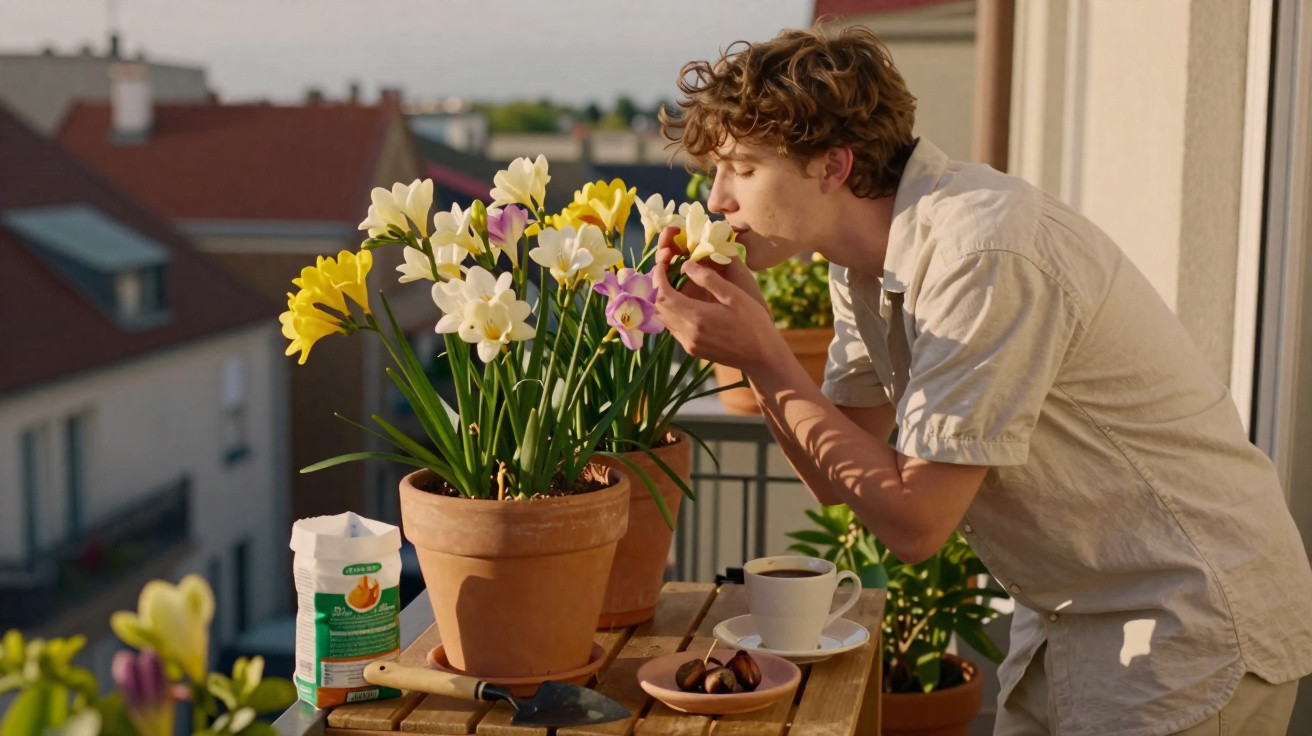
Many people dream of a terrace that evokes summer and holidays. Yet in practice, pots soon pile up, plant care takes time, and some varieties barely flower. In fact, just one flower can turn a balcony or terrace into a fragrant retreat – provided you choose the right variety and position it wisely.
Why one plant can fragrance an entire balcony
When people think about scent in the garden, they often buy lavender, jasmine, roses and several exotic plants all at once. The result is a small jungle that needs watering, feeding and protecting through winter. The key is not the number of plants, but the strength of their fragrance – and how effectively it collects in compact spaces.
On balconies and small terraces, every square metre matters. One powerfully scented variety in the right position outperforms five plants with a faint fragrance.
Air tends to linger in enclosed courtyards, loggias and balconies with side walls. These are exactly the places where a richly scented flower can show its full potential: its perfume remains in the air, spreads evenly and creates that “Wow, what smells so good here?” moment as soon as the balcony door is opened.
The overlooked fragrance powerhouse: freesia
Freesia is the unsung star of fragrancing a balcony. Originally native to southern Africa, this plant has been used by the perfume industry for years. Its scent brings together notes of honey and citrus: clean and light, yet still warm. This particular balance means that its fragrance remains noticeable without causing headaches.
In appearance, freesia produces slender, gently curving stems, with flowers arranged like small trumpets along one side of the flower spike. Its colours range from pure white and yellow to pastel pink, as well as vivid red and violet. The plant is particularly well suited to pots and containers on balconies and terraces.
Even just a few pots of freesia can fill an entire outdoor seating area with fragrance – including spaces of only six to eight square metres.
For more variety, plant several colours together in one larger container. Colour does not affect the fragrance, but it creates a livelier, more decorative display.
How to plant freesia in pots for maximum fragrance
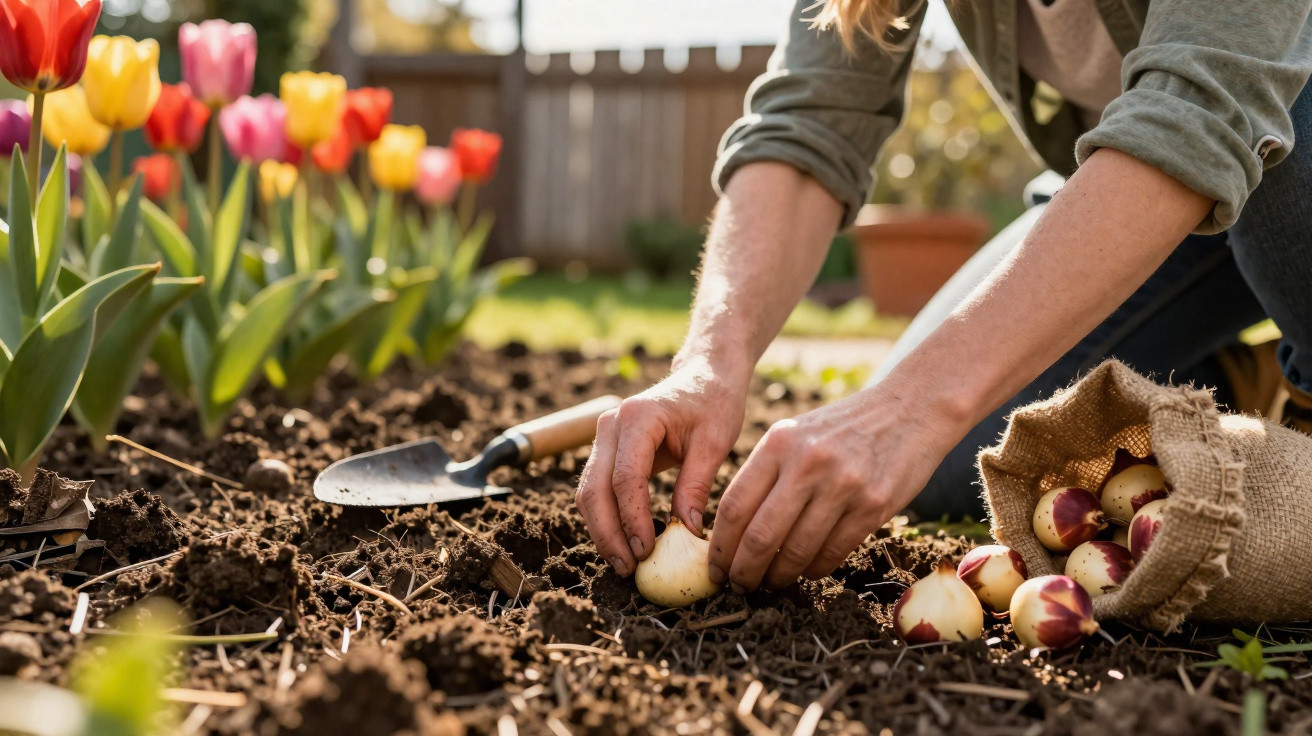
Freesia grows from bulb-like storage organs known as corms. They can be treated much like gladioli or dahlias, although they are considerably more compact and therefore ideal for balconies.
Choosing the right pot and growing medium
A container measuring 20 to 30 centimetres across is sufficient for a “fragrance pot”. Depth and a drainage hole are essential, so that excess water can escape.
- Diameter: at least 20 cm; 25–30 cm is better
- Depth: at least 20 cm, allowing the corms to root properly
- Material: terracotta (dries out faster) or plastic (retains moisture for longer)
A free-draining mix prevents waterlogging, as freesia is sensitive to sitting in wet soil. A reliable blend consists of:
- around 50% good-quality multipurpose compost
- around 25% sand or fine grit
- around 25% loose organic material, such as well-rotted compost or coir fibre
A 15-centimetre pot holds 5 to 7 corms; use proportionally more in larger containers. Plant the corms 3 to 5 centimetres deep, with their tips facing upwards and spaced roughly 5 to 6 centimetres apart. This will later produce a dense cluster of flowers that resembles a bouquet.
The best time to plant
In places with mild winters, the corms can remain in the soil. Across most parts of the United Kingdom, however, the following approach is advisable:
- Spring planting: after the last overnight frosts, usually from April/May onwards, for summer flowering.
- Autumn planting: only in highly sheltered, frost-free positions, such as enclosed courtyards or directly beside house walls.
Allow roughly 10 to 12 weeks between planting and the first blooms. Starting at the right time makes it possible to plan the fragrance specifically for the main terrace season.
The ideal position for freesia on a balcony or terrace
Freesia thrives on light and warmth. A position in full sun or light partial shade works best, as long as it receives around six hours of direct sunshine each day.
- South- or west-facing balcony: usually ideal, provided the wind is not too strong.
- East-facing balcony: well suited, with gentler sunshine and often a longer flowering period.
- North-facing balcony: often too dark, resulting in weaker flowering and fragrance.
Place the pots as close as possible to the seating area or balcony door – this is where the fragrance will be most noticeable, without needing to scatter plants everywhere.
A sheltered position against a house wall helps the delicate flower stems stay upright. On an exposed balcony, place the pots inside large, weighty outer containers or secure them to the railing to prevent them from toppling over.
Care: minimal effort, maximum impact
Once planted, freesia mainly needs consistent but moderate moisture. Let the soil surface dry slightly between watering, but do not allow the compost beneath to dry out completely.
| Care task | Frequency | Note |
|---|---|---|
| Watering | 1–3 times per week, depending on the weather | Avoid waterlogging; do not leave saucers permanently filled with water |
| Feeding | every 14 days during budding and flowering | Use a liquid feed for flowering plants, preferably with a higher potassium content |
| Supporting | as required | Support long, flower-heavy stems with small canes or rings |
The flower stems also make excellent cut flowers. Taking a few stems for a vase will not mean losing the terrace fragrance – there will generally be enough blooms left to continue scenting the space.
Overwintering freesia corms: bringing the fragrance back every year
In areas with harsher winters, it is worth lifting the corms. As the foliage turns yellow in autumn, gradually reduce watering. The corms can be removed from their pots after the first light frosts.
Then follow this straightforward process:
- Shake off loose soil, but do not wash the corms.
- Leave them to dry for a few days in an airy, shaded place.
- Put them in a box with some dry growing medium, such as sawdust, dry soil or sand.
- Store them somewhere cool and dry, ideally between 4 and 10 degrees, such as a cellar or frost-free garage.
The following spring, the corms can be replanted in fresh compost. Adding a few new corms each year helps to ensure that flowering does not diminish over time.
Practical advice for small city balconies
Every task matters, particularly in rented homes with limited space. A few simple measures can make caring for freesia even easier:
- Large pots, greater impact: Choose two larger containers rather than five small ones – this reduces maintenance and intensifies the blanket of fragrance.
- Companion plants: Underplant with low-growing, non-dominant varieties such as sedum or cushion-forming perennials, which will not overpower the scent.
- Link watering to a routine: Water each morning or evening when you are already going onto the balcony – this makes it less likely that you will forget the plants.
Anyone with children or pets should briefly check beforehand whether any parts of the plants may be mildly toxic, then choose a position where nobody can dig up or nibble on the corms.
Freesia as an introduction to outdoor fragrance design
Freesia is an excellent way to test whether a strongly scented balcony truly suits your daily life. Some people love intense fragrances, while others quickly find them overwhelming. Growing it in a pot keeps its location flexible: if the scent proves too close to the bedroom door, simply move the container farther away.
Combining it with quieter scent notes can also be appealing. A nearby pot of thyme or lemon balm adds a second, very different aroma that is especially noticeable when touched. This creates a surprisingly varied fragrance profile with just a few containers, without crowding the terrace with plants.
For anyone who buys new scented plants every year before eventually giving up in frustration, freesia offers a far more relaxed alternative: plant a few corms, position them well, provide a little care – and all summer long, your balcony will smell like the end of the working day as soon as you open the door.


Comments
No comments yet. Be the first to comment!
Leave a Comment