
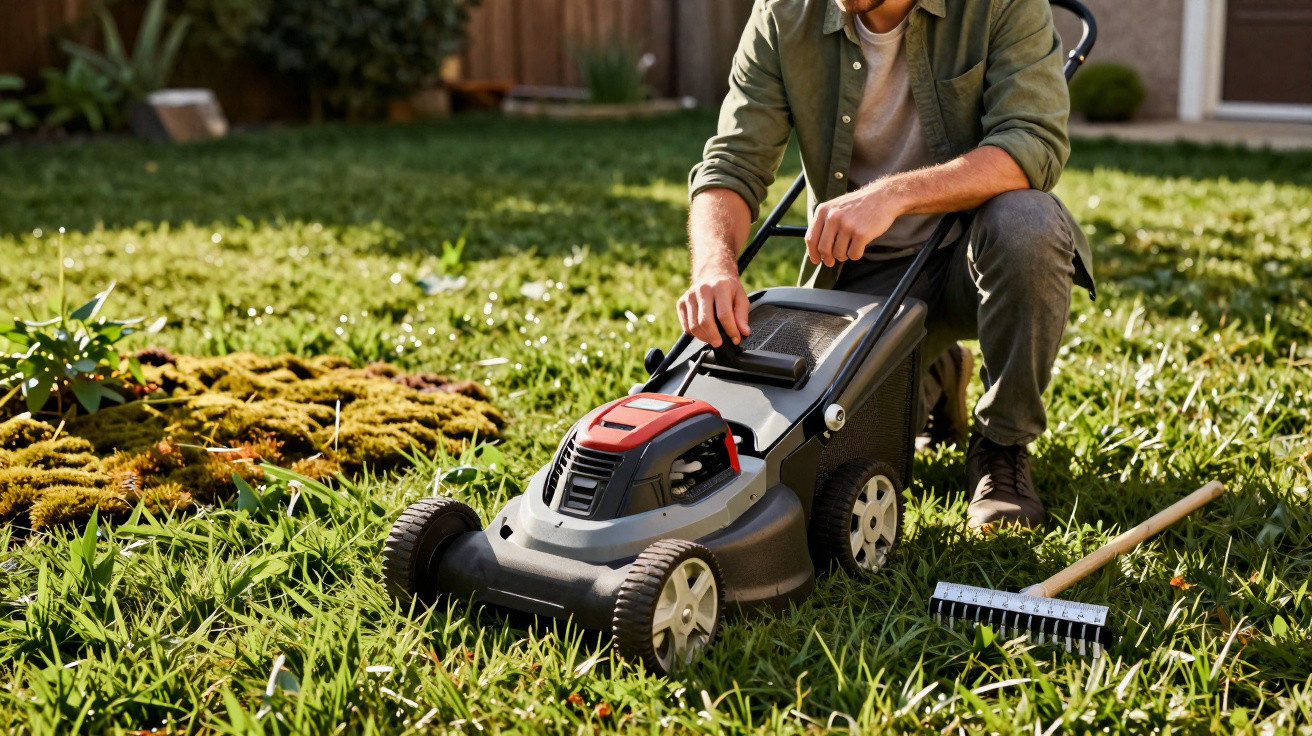
The real trigger is often not in the soil at all, but right on the handle of your garden equipment: the lawn mower’s height adjustment. Just a few centimetres too high or too low can weaken grass and allow moss to spread like a carpet. However, if you know the correct cutting height and maintain it consistently, you can achieve a much denser, greener lawn – without chemicals and without constant frustration.
Why cutting height determines whether you get moss or a dream lawn
Grass blades are not green wallpaper that can simply be cut back whenever you feel like it. Every mow affects how effectively the plant produces energy, how deeply its roots grow and how much moisture remains in the soil. This is precisely what determines whether grass takes the lead – or moss does.
When the blades are left slightly longer, they have more surface area for photosynthesis. The grass develops deeper roots, can access water and nutrients more effectively, and does not dry out as quickly. The lawn remains hard-wearing and retains a rich green colour.
If a lawn is repeatedly cut very short, the plants have to rely on their stored reserves. Their roots become shorter, the soil heats up and dries out faster, and bare patches appear. Moss and unwanted weeds are the first to colonise these gaps.
Letting grass grow very long permanently creates a different problem: the blades flop over, moisture builds up and a dense layer of thatch develops. Moss thrives in this damp, poorly ventilated “carpet” and spreads rapidly.
The correct cutting height is the most important tool against moss – far more effective than yet another fertiliser or moss killer.
Ideal cutting heights for different lawn types
The perfect height depends on how the lawn is used and on its location. A family lawn in full sun needs a different mower setting from a shady corner beneath trees.
Family lawn in full sun
For most UK gardens, a standard hard-wearing lawn in a sunny position should generally be cut to 4 to 5 centimetres for most of the year.
- Below 3 centimetres: The grass becomes stressed, roots stay shallow, the soil dries out and moss has an easy time establishing itself.
- 4 to 5 centimetres: Blades remain strong, the surface withstands use, the turf closes up and leaves little room for intruders.
Lawn in shade or damp locations
In shade, grasses must also cope with a lack of light. They need more leaf area to generate sufficient energy, making 6 to 8 centimetres ideal.
The longer blade acts like a small solar panel: more leaf surface means more photosynthesis, stronger roots and better recovery. At the same time, the slightly taller growth suppresses moss because the grass remains denser and more competitive.
Fine ornamental lawn and a “bowling-green” appearance
Those maintaining an ornamental lawn made up of fine grasses can cut lower – but only with a suitable grass variety, excellent maintenance and ideal soil. In these conditions, 2 to 2.5 centimetres is possible. This approach is not suitable for a typical hard-wearing lawn: the surface becomes extremely sensitive to drought and foot traffic, while moss soon appears if maintenance is anything less than perfect.
The one-third rule: how often you should really mow
The interval between mowing sessions matters just as much as the actual cutting height. Many gardeners mow infrequently, then remove a large amount of growth in one go – a severe shock for the lawn.
Basic rule for a healthy lawn: never remove more than one third of the current blade length in a single cut.
In practical terms, this means:
- If the grass is 6 centimetres tall, cut it back to no less than 4 centimetres.
- If it reaches 9 centimetres, it should be cut to no shorter than 6 centimetres.
During spring, this may mean mowing twice a week when growth becomes vigorous. From around March to October, weekly mowing is usually sensible. Immediately after winter, set the mower to its highest position first, then lower it gradually; do not take the lawn from a “winter meadow” to “short as a golf course” in a single cut.
Recommended cutting heights through the year
A broad guide based on the season and location is useful in practice. The following figures suit typical home gardens with hard-wearing lawns:
| Season | Sun | Shade / damp areas |
|---|---|---|
| Spring | 4–5 cm | 6–8 cm |
| Summer | 5–6 cm in hot weather | 6–8 cm |
| Autumn | 5–7 cm | 6–8 cm |
In summer, it is worth raising the cutting height slightly during hot weather. Longer grass blades shade the soil, retain moisture for longer and limit heat damage. In autumn, a medium to slightly higher setting lets the grass build reserves for winter without creating dense clumps that collapse over.
Common mowing mistakes that practically invite moss
Anyone wanting to prevent moss should, above all, stop three habits that have become common in many gardens:
- “As short as possible, then I will not have to mow again for longer”: The lawn is scalped and may look tidy briefly, but it loses strength. Gaps develop, and moss uses them relentlessly.
- Letting it grow for weeks, then cutting it drastically: Blades become far too long between mows, followed by an abrupt severe cut. This places plants under major stress and holds back the lawn more than any type of moss could.
- Using one fixed setting everywhere: Sunny family lawn, shady corner and damp hollow are all cut at the same height. This causes problems precisely where the grass is already weakened.
What else helps against moss – alongside the correct mower height
Cutting height is the number-one factor. Anyone wishing to do more can reinforce its effect with several simple measures:
- Mow in the morning during dry weather: The grass experiences less stress and the cut surfaces recover more quickly.
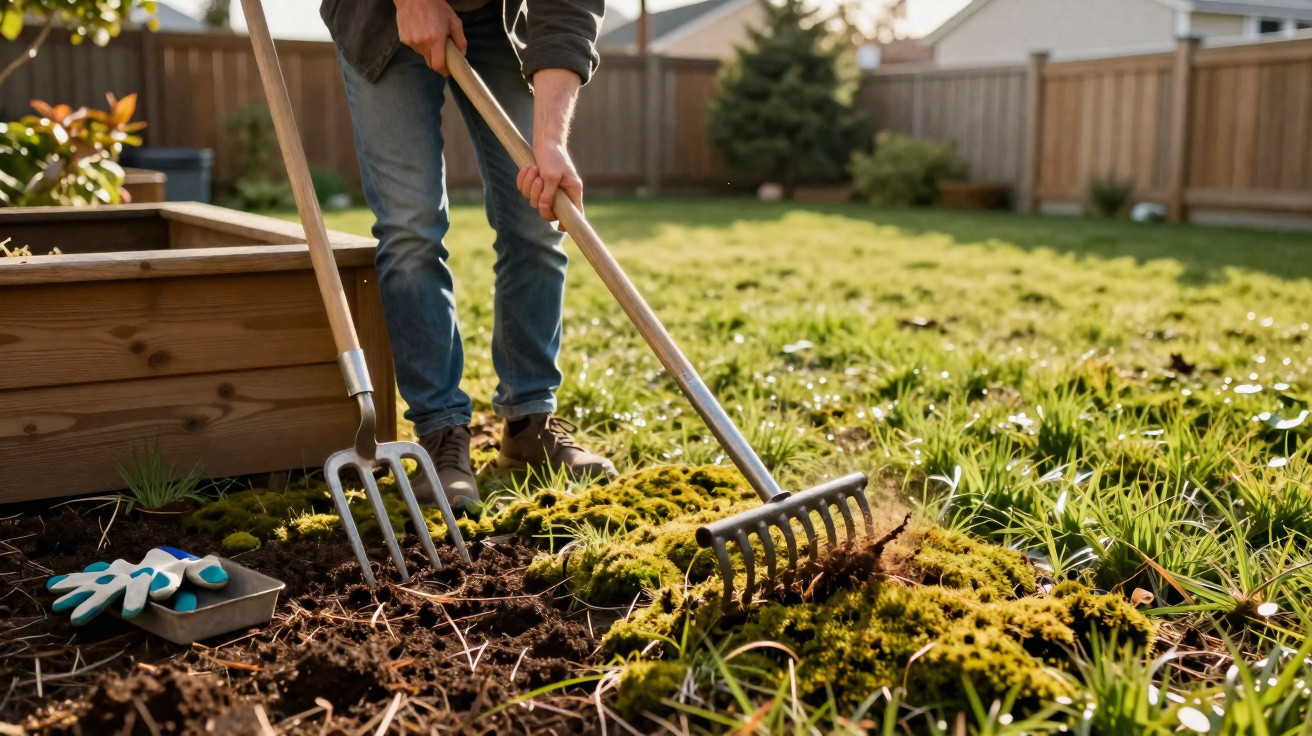
- Aerate or scarify: This loosens compaction and thatch, allowing air and water to reach the roots more easily.
- Check the soil pH: Strongly acidic soils favour moss. Testing the soil and applying some lime if necessary helps restore the balance in favour of lawn grass.
- Apply fertiliser moderately: A balanced lawn fertiliser supports growth without forcing the grass to grow too tall and soft.
Rather than relying on harsh chemicals, it is worth looking at the underlying cause: when the lawn is strong enough, moss gradually disappears by itself because it no longer has the space or conditions it needs.
How to set your lawn mower correctly in practice
Many mowers do not display actual centimetre measurements and instead use numbered settings. A simple practical method helps: set the mower approximately, cut a strip, then use a ruler or tape measure to check the true blade height after mowing. Adjust the setting until you reach the desired height.
If your garden contains different areas, remember this: set sunny sections one position lower and shady areas one position higher – always keeping the one-third rule in mind. A few clicks of the height adjustment can make a considerable difference, without constantly having to think about fertiliser, overseeding or specialist products.
Terms such as “lawn thatch” or “thatch layer” ultimately describe the same phenomenon: a layer of dead stems and roots that builds up between the soil and the green turf. It acts both as a sponge and as an air barrier. As soon as this cushion forms, moss patches feel at home. The right cutting height, sufficient mowing frequency and occasional aeration keep this layer thin – and that is when moss has far poorer chances in the lawn.




Comments
No comments yet. Be the first to comment!
Leave a Comment