
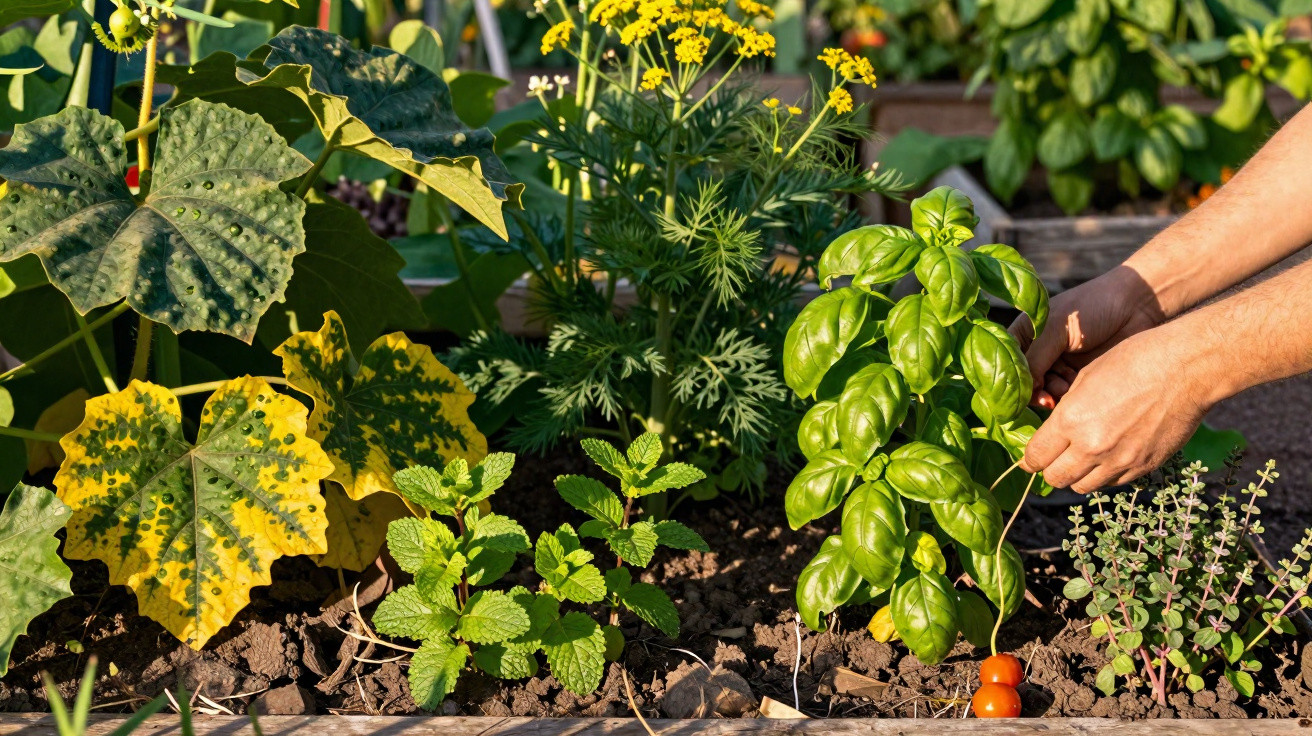
Often, the issue is not down to care, but to the wrong neighbours in the bed.
Many amateur gardeners rely on companion planting, placing basil alongside vegetables or other herbs without much thought – then later wonder why it develops stunted leaves, little flavour or even dies. Although basil is hardy, it is not compatible with every neighbouring plant. Knowing its biggest problem partners will save frustration and help you get far more from your herb bed.
Why basil does not get on with every plant
Basil is considered easy to grow provided that a few basic requirements are met: nutrient-rich, humus-filled soil, consistent moisture, warmth, and a sunny to partially shaded position. Problems arise when nearby plants compete for precisely these conditions – or actively cause harm.
Basil suffers most from plants that take up space, compete for water and nutrients, or negatively affect its flavour or growth.
This is not simply a matter of plants “liking” one another. Some species grow so rapidly and vigorously that they can literally overwhelm basil. Others draw moisture from the soil before the herb has a chance to access it. Some release substances into the soil or air that weaken basil.
The five biggest enemies of basil in the garden
1. Squash and pumpkins: when a neighbour covers everything
Pumpkins may look impressive in a bed, but they create a worst-case scenario for basil. Their shoots spread across the ground, their leaves become large, and smaller plants lose their light.
- vigorously sprawling growth
- dense foliage that shades basil
- high nutrient demands at the same soil level
As a result, basil grows more slowly, remains small and produces less flavour. Young plants in particular have virtually no chance beside a pumpkin that is growing at full speed.
Other vigorously growing members of the cucurbit family are similarly troublesome, including large ornamental or edible squashes. If you are determined to grow them in the same garden bed, plant them well apart or use a clear division, such as paths or bed edging.
2. Cucumbers: thirsty plants with an effect on flavour
Cucumbers clash with basil in two ways. First, they are heavy users of water; second, they react sensitively to aromatic neighbouring plants.
Cucumbers draw water from the soil like a sponge – leaving basil dry very quickly.
As basil also prefers consistently moist conditions, the two plants are in direct competition. When cucumbers are watered regularly, it often unintentionally benefits their deep-reaching roots above all. The herb beside them can dry out in patches, responding first with drooping and later yellowing leaves.
There is also an effect on flavour: cucumbers absorb surrounding aromas relatively strongly. If a particularly intense herb is planted directly alongside them, the taste of the cucumbers may change. At the same time, basil may lose some of its freshness and delicacy when it must constantly “play along” rather than develop freely.
3. Fennel: the invisible chemist in the bed
Fennel is a special case. It releases substances into the soil that can slow down or entirely suppress the growth of other species. This is known as an allelopathic effect.
Basil is sensitive to these substances. Near fennel, it germinates less successfully, forms fewer roots and often stays noticeably smaller. Even if both plants appear healthy at first glance, basil is usually permanently held back in its growth.
A practical rule of thumb is to give fennel a bed of its own, or at least position it several metres away. For extra certainty, grow basil in containers and place them flexibly wherever there is no fennel.
4. Mint: the dominant plant with aggressive roots
Mint appears harmless: it smells pleasant, grows quickly and is useful for tea and decoration. In the ground, however, it is an uncompromising competitor. Its roots create a dense network and can take over entire sections of a bed in a short time.
Mint often literally “smothers” basil – first it takes the soil, then the nutrients, and finally the air it needs to breathe.
Even when basil establishes itself well at first, mint gradually pushes it aside. The herb receives fewer nutrients, its roots have hardly any room, and growth collapses.
If you want mint in the garden, it is better grown in pots or contained with a root barrier. Mint and basil do not belong directly next to each other in an herb bed.
5. Lemon balm and rue: when growth and flavour suffer
Two further herbs can cause basil difficulties: lemon balm and rue.
Lemon balm: the quietly invasive plant
Lemon balm spreads strongly both above and below ground. It forms dense clumps whose shoots quickly grow over smaller neighbours.
- spreads in a similar way to mint
- deprives basil of light and space
- makes it harder for roots to spread loosely through the soil
In practice, you may see only “lots of green”, only to notice on closer inspection that the basil is disappearing within it or barely producing any new shoots.
Rue: bitter compounds meet an aromatic herb
Rue is less familiar, but it is still found in some gardens as a medicinal or ornamental plant. It has a strongly bitter, intense flavour of its own – and basil is not unaffected by it.
The plant can attract pests that may then spread to basil as well. At the same time, its bitter profile appears to have a negative influence on basil’s flavour. Instead of a fresh, rounded seasoning, the result is a sharper, sometimes bitter taste.
Anyone growing basil for its characteristic mild flavour should keep rue well away – otherwise the harvest can quickly taste “distorted”.
Why Mediterranean herbs are still not ideal companions
Rosemary, sage and thyme may look well matched with basil in the garden. They all come from similar regions and are staples of Mediterranean cooking. In a bed, however, their needs are very different.
| Plant | Preferred soil | Water requirements |
|---|---|---|
| Basil | nutrient-rich, humus-filled, somewhat moist | medium to high, no drought |
| Rosemary / sage / thyme | sandy, rather poor, well-drained | low, tolerate dry spells |
If you water in a way that keeps basil happy, rosemary and the others will be too wet and become prone to root rot. If you water sparingly, basil suffers first. Planting them together therefore often becomes a compromise in which neither side truly thrives.
These plants work much better with basil
The good news is that plenty of vegetables and herbs work extremely well with basil. They cope with similar soil and watering needs, or may even benefit one another.
Typical good neighbours include:
- asparagus
- beetroot
- garlic
- nasturtiums
- radishes
- tomatoes
- parsley
- peppers
- marigolds
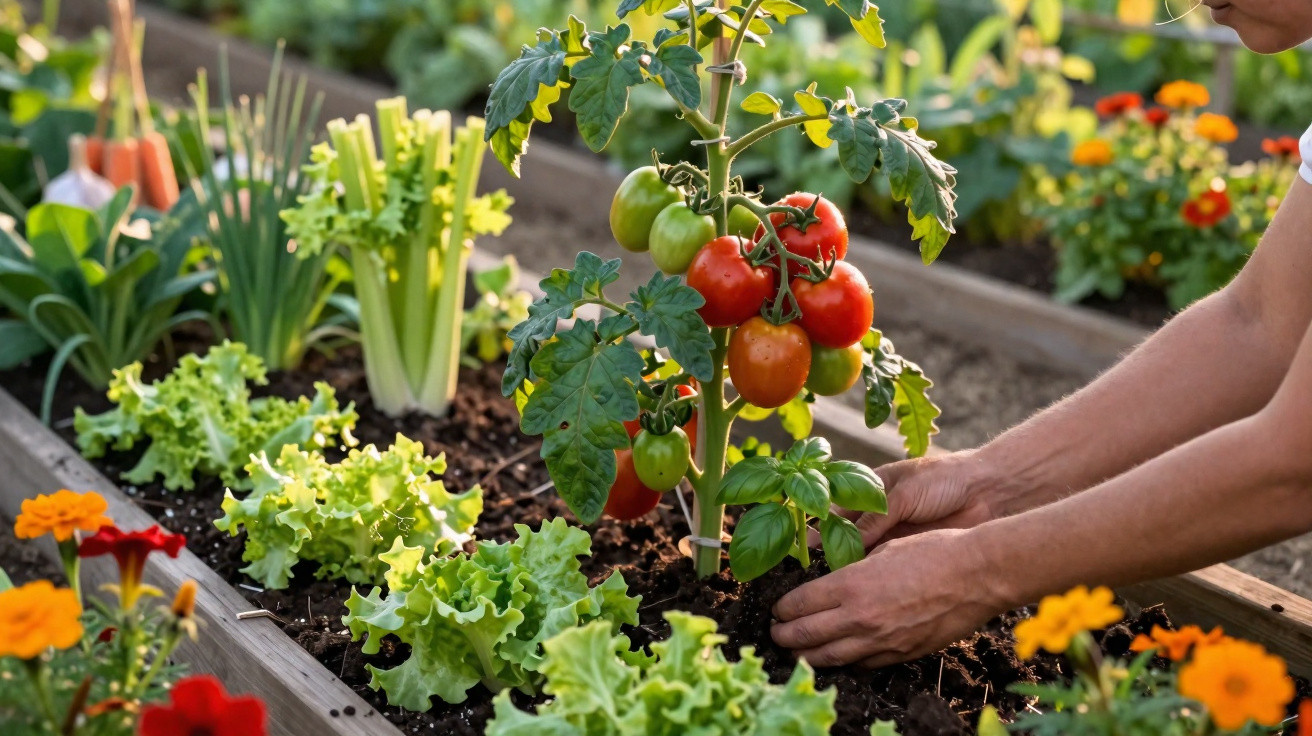
Tomatoes and peppers in particular are classic companions for basil. They enjoy warmth, tolerate regular watering and benefit from the herb’s dense foliage, which provides some shade for the soil and therefore helps it retain moisture.
Practical tips for a stress-free basil bed
A few straightforward principles will help basil remain strong over the long term, whether in a vegetable garden or on a balcony:
- Plant annual and perennial herbs separately, so their roots are not permanently disturbed when digging over the bed.
- Keep vigorous or invasive plants, such as mint, lemon balm and pumpkins, at a distance or grow them in pots.
- Do not plant thirsty crops such as cucumbers directly beside basil, especially in light soil.
- Combine basil with plants that have similar watering requirements, such as tomatoes and peppers.
- When in doubt, use containers: they allow the position to be adjusted easily.
How to recognise stress in basil
Gardeners who observe their basil regularly will spot early on when its neighbours are unsuitable. Common warning signs include:
- small, pale leaves despite fertiliser
- drooping shoots despite sufficient water
- stunted young plants directly beside vigorous species
- loss of flavour or unusual bitter notes
If this happens, moving the plant to another bed or a pot can often be enough. Basil responds well when it has more light, space and nutrients – and has finally been freed from a few difficult neighbours.
Comments
No comments yet. Be the first to comment!
Leave a Comment