
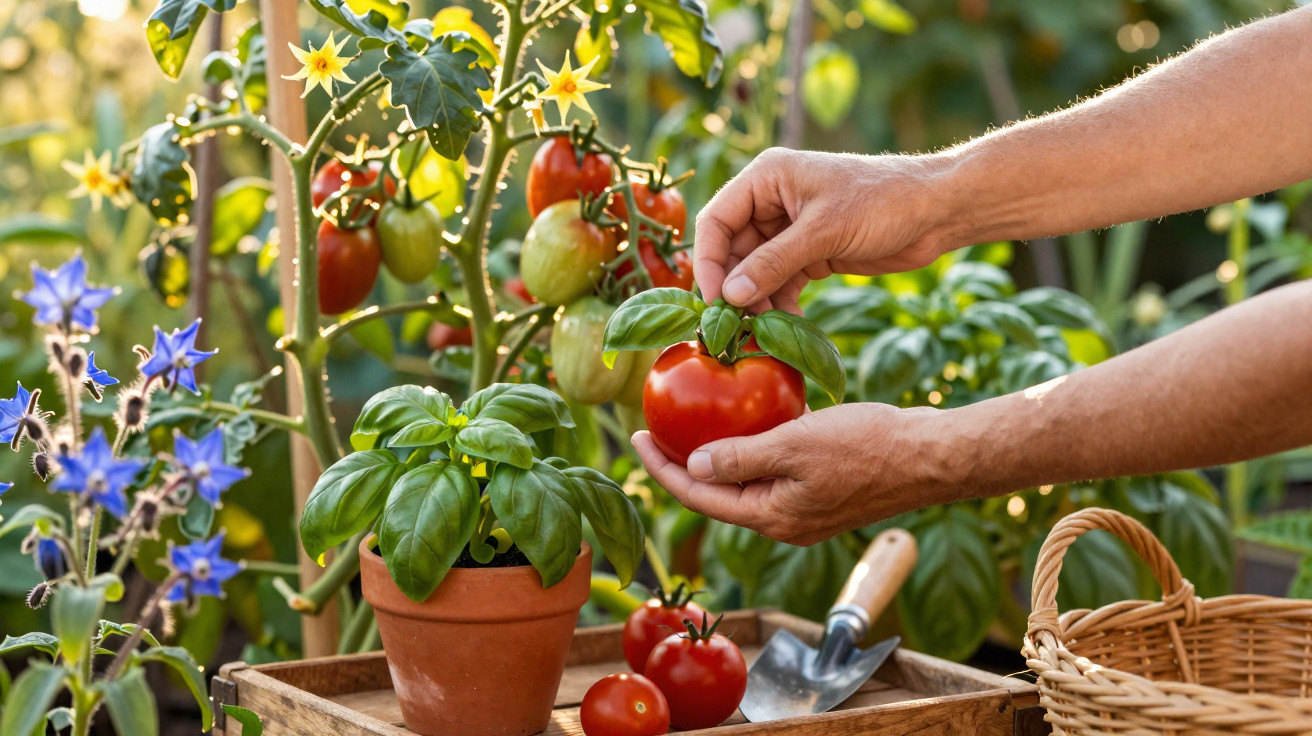
A simple planting trick can make all the difference.
Watered, fed, supported and sheltered from rain, tomatoes often receive the greatest attention in the garden. Yet in some years, their flavour still falls short of expectations. What many people overlook is that variety, sunshine and water are not the only things that determine taste: their neighbours in the bed matter too. One widely used culinary herb can make tomatoes noticeably more flavoursome, without chemicals or specialist fertiliser.
Why a simple kitchen herb noticeably improves tomato flavour
Tomatoes and basil are considered a perfect pairing in the kitchen – and this combination can be remarkably effective in the garden too. Gardeners have reported for years that fruits smell more intense and taste sweeter when basil grows directly among tomato plants.
“Anyone who plants basil between tomatoes creates a small ecosystem in which the fruits can ripen undisturbed and develop more flavour.”
A key reason is that basil’s strong scent can confuse common pests such as whiteflies and aphids. These insects pierce leaves, weaken the plants and place them under stress. Stressed tomatoes often stop ripening too early, remain smaller and produce less sugar.
When plants are calmer and not facing constant attacks, their fruits can continue ripening for longer. During this period, they store more natural sugars and flavour compounds. This is what creates the familiar “sun-ripened tomato feeling” that many people otherwise only associate with holidays.
Higher yields and less stress: what else basil does in the vegetable bed
Gardening guides also report a measurable effect on harvest volumes. In some trials, tomato plants grown alongside basil increased their yield by around 20 percent on average, while some home gardens recorded gains of up to 30 percent.
- more reliable fruit set due to increased pollinator activity
- a more even microclimate around the plants
- reduced disease pressure because the plants remain stronger
Basil casts a light shade over the soil, preventing it from drying out as quickly and helping moisture levels remain more balanced. This means tomatoes are not constantly switching between “bone-dry soil” and “a full watering can poured on top” – a source of stress that can negatively affect flavour and lead to split fruits.
As the plants stay more vigorous, many gardeners leave the fruits on the vine for longer, until they are fully ripe. Tomatoes harvested when ripe almost always taste sweeter and less acidic than those picked early and left to ripen afterwards.
How basil protects tomatoes and brings the bed to life
Basil has another major benefit: its flowers attract bees, bumblebees and other pollinators in large numbers. As they move through the garden, they repeatedly brush against the yellow tomato flowers too, improving pollination rates.
“A border of flowering basil along a tomato row acts like a magnet for pollinators and strengthens every individual plant.”
At the same time, the herb’s intensely scented oils can disrupt certain sap-sucking and piercing insects. This does not replace a complete plant-protection strategy, but it can significantly reduce pest pressure. Many home gardeners report fewer aphids and, in some cases, fewer issues with fungal diseases because the tomato plants remain more resilient overall.
The “trio”: tomatoes, basil and borage
Some experienced gardening enthusiasts take the combination one step further by adding borage. This blue-flowered plant is also one of the classic companions in a vegetable garden.
- borage flowers attract many beneficial insects
- deep roots loosen the soil and draw nutrients from lower layers
- cut borage shoots can be used as mulch around tomatoes
Together, they create a lively strip of planting: insects buzz overhead, tomatoes grow in the middle, and herbs spread between and beneath them. This diversity helps stabilise the small ecosystem within the bed. Rather than repeatedly relying on sprays, insects, roots and plant compounds work together here, quietly offering protection.
How to plant basil correctly between your tomatoes
For the full benefit, tomatoes and basil should be given similar starting conditions: warmth, plenty of light and protection from late frosts. In the UK, planting from May is generally suitable, although in some areas it is better to wait until early June, when frost-free nights are dependable.
Spacing in an outdoor bed
The following distances have proved effective in a traditional vegetable bed:
- between two tomato plants: around 50 to 60 centimetres
- one basil plant between them, with approximately 30 to 40 centimetres of space
In practice, this means planting one tomato, then one basil plant, followed by another tomato, and repeating the pattern along the entire row. The herbs do not simply protect individual plants at isolated points; instead, they create a loose scented barrier along the whole planting line.
A pot and balcony option for urban gardens
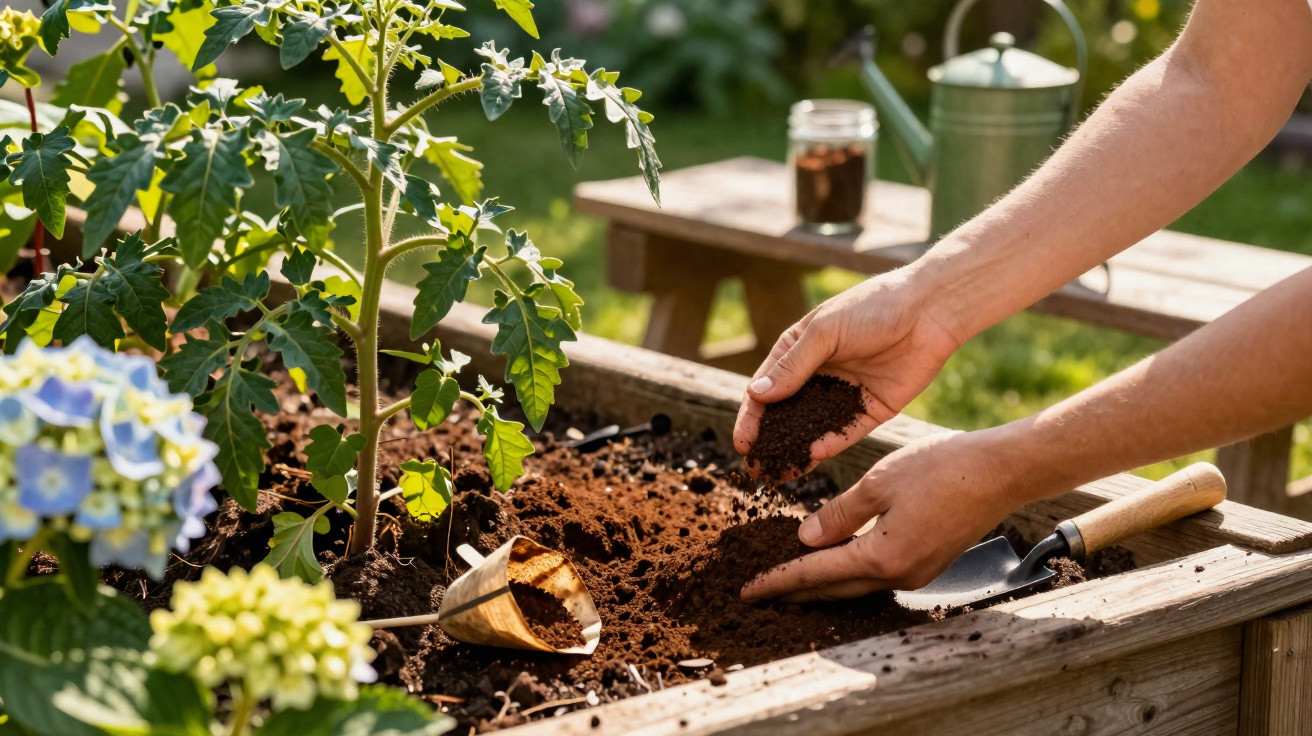
This method works without a garden bed as well. Anyone with only a balcony or patio can grow tomatoes and basil together in a sufficiently large container. A pot holding 40 to 60 litres is usually enough for one tomato plant and one strong basil plant.
Important requirements include:
- good-quality, loose compost
- drainage holes in the bottom of the container
- consistently moist conditions rather than permanently wet roots
Regular watering without waterlogging allows both plants to develop their full flavour. A thin mulch layer – made from grass clippings, chopped straw or dried leaves, for example – retains moisture in the pot, especially on hot summer days.
Care tips to keep basil and tomatoes flavoursome for longer
Basil grows into a bushier plant when it is cut regularly. Harvesting the shoot tips frequently encourages fresh growth, while also keeping the leaves tender and intensely flavoured.
“A quick use of the scissors every few days strengthens basil – and puts it straight into a salad, pasta dish or on a slice of fresh tomato.”
Tomatoes also benefit from attentive care, provided it is not excessive. Useful measures include:
- removing side shoots from cordon tomatoes in good time
- lightly removing lower leaves to improve air circulation
- watering directly around the roots rather than over the leaves
These steps reduce the risk of fungal diseases such as blight. Lower disease pressure in turn means that fruits can ripen for longer and more evenly, often reaching the kitchen at exactly the right moment.
Why tomatoes often taste bland – and how basil changes that
Many flavour problems can be traced back to three factors: too little sunshine, too much water at once and harvesting too early. People who pick tomatoes very early out of caution deprive them of the final ripening stage, when a large proportion of their flavour compounds develop.
With basil in the bed, it becomes easier to leave fruits on the plant until they are genuinely ripe. The tomato plants cope better, display fewer signs of stress and withstand minor pest attacks more effectively. Their leaves and shoots stay healthy for longer, allowing tomatoes to remain on the vine until their colour and flavour have fully developed.
There is also an interesting psychological effect: anyone regularly walking through the bed to pick fresh basil automatically checks how ripe the tomatoes are. As a result, hardly any fruit is forgotten, and the harvest timing can be judged far more precisely.
Everyday examples of the combination
A typical family-garden arrangement might include a row of four to five tomato plants, with three basil plants between them and one or two borage plants at the edge. Borage flowers first in June, followed later by the basil blooms. Throughout the summer, the bed buzzes with activity while the tomato plants ripen undisturbed.
On a city balcony, a large container holding one tomato plant, one basil plant and a low-growing flowering herb can offer the same effect on a smaller scale. Anyone picking a few basil leaves while watering in the evening will notice the difference in quality straight away: a still-warm tomato from the pot, sliced and scattered with fresh basil, tastes noticeably more intense than many supermarket fruits.
Those who wish can experiment with varieties: fleshy Oxheart tomatoes are particularly flavoursome with robust Genovese basil, while sweet cherry tomatoes pair well with small-leaved basil varieties. In every case, the herbal companion improves not only flavour but also the garden’s overall appearance: less bare soil, more greenery, more flowers – and a vegetable garden that looks better as well as tasting better.
Comments
No comments yet. Be the first to comment!
Leave a Comment