
Between lettuce, tomatoes and young flowers, inconspicuous cardboard tubes are suddenly sticking out of the soil. Anyone seeing this for the first time might assume it is a joke. Yet more and more gardening professionals swear by empty toilet paper rolls in spring as a secret weapon against frost, slugs and struggling young plants. But what is really behind this trend, and how should the rolls be used so that seedlings do not disappear overnight?
Toilet paper rolls: a lifeline for delicate young plants
Spring is a sensitive time in the vegetable garden. Tomatoes, lettuces, peas and zinnias may have only just emerged, with soft stems and thin leaves. One clear night at 0°C can be enough to damage young plants. At the same time, slugs are waiting to devour an entire row of fresh seedlings within a few hours.
This is where the cardboard tubes come in. Rather than buying expensive mini greenhouses or thick plastic cloches, many gardeners place a toilet paper roll around each seedling like a protective collar. The approach is straightforward, costs nothing extra and makes use of a material that would otherwise be thrown away.
“The cardboard from the rolls creates a small protective wall: less wind, slightly more warmth and fewer slugs – exactly where the young plant needs it.”
The cardboard blocks draughts at ground level, softens temperature fluctuations and still allows water to pass through easily. It creates a small, more stable microclimate around the plant, helping it establish itself more readily.
How gardeners use toilet paper rolls correctly in the bed
The method takes only a few simple steps and requires no specialist tools. The key is to use the rolls while plants are still young and delicate, so the tube can fit around them properly.
Step-by-step guide for the vegetable bed
- Plant as usual and water lightly.
- Carefully open out an empty toilet paper roll lengthways if its diameter is too narrow.
- Slide the roll down over the plant without bending its leaves or stem.
- Press the lower edge of the roll 2–3 centimetres into the soil so that it stands securely.
- Firm the surrounding soil gently to ensure that no gaps are left for slugs.
This creates a small “protective column” around every seedling. It will not stop slugs completely, but many will halt at the cardboard barrier or move towards plants that are easier to reach.
If late frosts are forecast, the protection can be reinforced quickly. Place a ring of straw or leaves around the roll and, if needed, add horticultural fleece over the top in the evening, removing it again in the morning. The roll keeps the fleece away from the delicate foliage, creating a miniature tunnel.
More than protection: toilet paper rolls as biodegradable plant pots
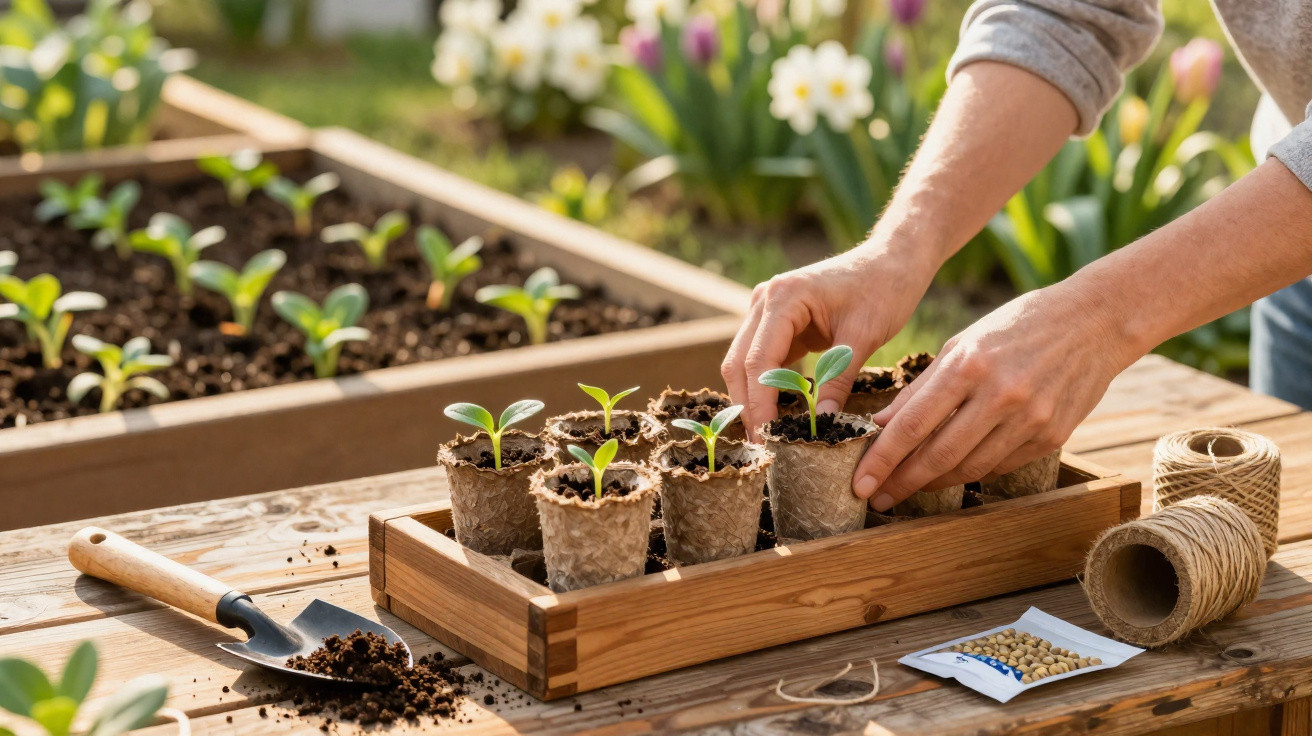
Toilet paper rolls can serve a second purpose weeks before planting time: they make free containers for raising seedlings. The thin cardboard is particularly suitable for seeds that are started indoors or in a greenhouse.
Turning rolls into small plant pots
- Cut the roll in half if smaller pots are sufficient, or leave it whole for tomatoes and sunflowers.
- Make four small cuts at one end, then fold the tabs slightly inwards to form a base.
- Stand the improvised pots closely together in a shallow tray or seed tray.
- Fill them with seed compost, sow the seeds, press them down lightly and water.
Plants can grow in them for three to four weeks. Once the roots have filled the pot well, plant the whole cylinder in the bed together with the seedling. There is no need to pot on, the root balls remain undisturbed and the cardboard gradually breaks down in the soil.
“The major advantage is that the roots are not damaged during planting out, allowing plants to begin life in the bed without stress.”
These “single-use cells” are especially worthwhile for sensitive crops such as root vegetables or flowers with fine roots.
Using toilet paper rolls several times in the garden – from protective collars to weed barriers
Anyone who starts using them soon finds that toilet paper rolls can do far more than one job. Many gardeners use them in several ways before they eventually reach the compost heap.
Typical uses at a glance
- Protective collars against cold and slugs around individual young plants.
- Mini pots for raising seedlings of tomatoes, peppers, flowers and herbs.
- A barrier against grass and weeds by cutting them in half and placing them tightly around sensitive perennials.
- A support for straight-growing stems, for example on young dahlias or hollyhocks.
- A cardboard addition to compost once they have become soft and fragile.
As weed protection, the method works particularly well when the rolls are positioned closely around the plant. Very little light reaches the soil, making it difficult for young weeds to emerge between them.
Toilet paper rolls in compost: food for worms and soil life
Once a roll is no longer stable in the bed, or has become wet and soft after raising seedlings, it need not go into household waste: it can go into the compost bin. Cardboard belongs to the “brown” compost category, meaning carbon-rich material that gives the heap structure.
Torn into small pieces, the cardboard is best mixed with “green” material such as grass cuttings, vegetable scraps or faded flowers. Earthworms and micro-organisms break down the fibres and turn them into humus.
“The waste product from the bathroom therefore becomes, indirectly, food for next year’s harvest.”
Regularly adding rolls, egg boxes and other unprinted cardboard to compost helps maintain an open structure and prevents rotten, compacted layers with very little oxygen.
What gardeners should consider when using them
As useful as this trick sounds, there are a few important points to bear in mind. Not every roll is equally suitable for garden use.
- Avoid printed or heavily coloured rolls, particularly around edible crops.
- Do not use rolls with plastic film or glue residue.
- Secure rolls well outdoors, otherwise wind or heavy rain can knock them over.
- Do not underestimate slugs: where infestations are severe, add further measures such as beer traps or slug fences.
For particularly light, sandy soils, it is best not to push the rolls too deeply into the ground, as they can soften quickly. In heavy clay soils, adding a little sand or compost to the planting hole helps water drain away and prevents the roll from remaining constantly wet.
Why this simple toilet paper roll idea suits the moment
The trend for using toilet paper rolls in the garden has spread mainly through TikTok and Instagram. Millions of views demonstrate the growing desire for simple, affordable and sustainable everyday solutions. Many amateur gardeners want to use less plastic, reduce waste and make practical use of materials they already have.
There is another factor: late frosts are becoming more frequent in some regions, while weather extremes are increasing. Sowing early risks losses, but waiting too long means sacrificing yield. An extra cardboard protective ring pushes that boundary back slightly, making earlier sowing possible with less risk.
Alongside the practical benefit, there is also a learning element. Raising your own young plants, fitting them with homemade protective collars and composting the remains afterwards makes the entire garden cycle very tangible. Bathroom waste becomes a bed helper; the bed helper becomes humus; and tomatoes, lettuce and flowers eventually grow from that humus.
For families with children, the idea is particularly well suited: collect rolls, make small pots, sow seeds and watch them grow. It is hands-on, enjoyable and lowers the barrier to getting started with gardening in the first place.
So, when you look proudly at your first delicate seedlings in spring, do not automatically throw away the cardboard tubes from the bathroom. Keeping a small supply in the shed is enough to allow a quick response to the next cold snap or slug attack – and sometimes that unassuming cardboard ring determines whether a bed thrives or appears to have been eaten bare overnight.
Comments
No comments yet. Be the first to comment!
Leave a Comment