
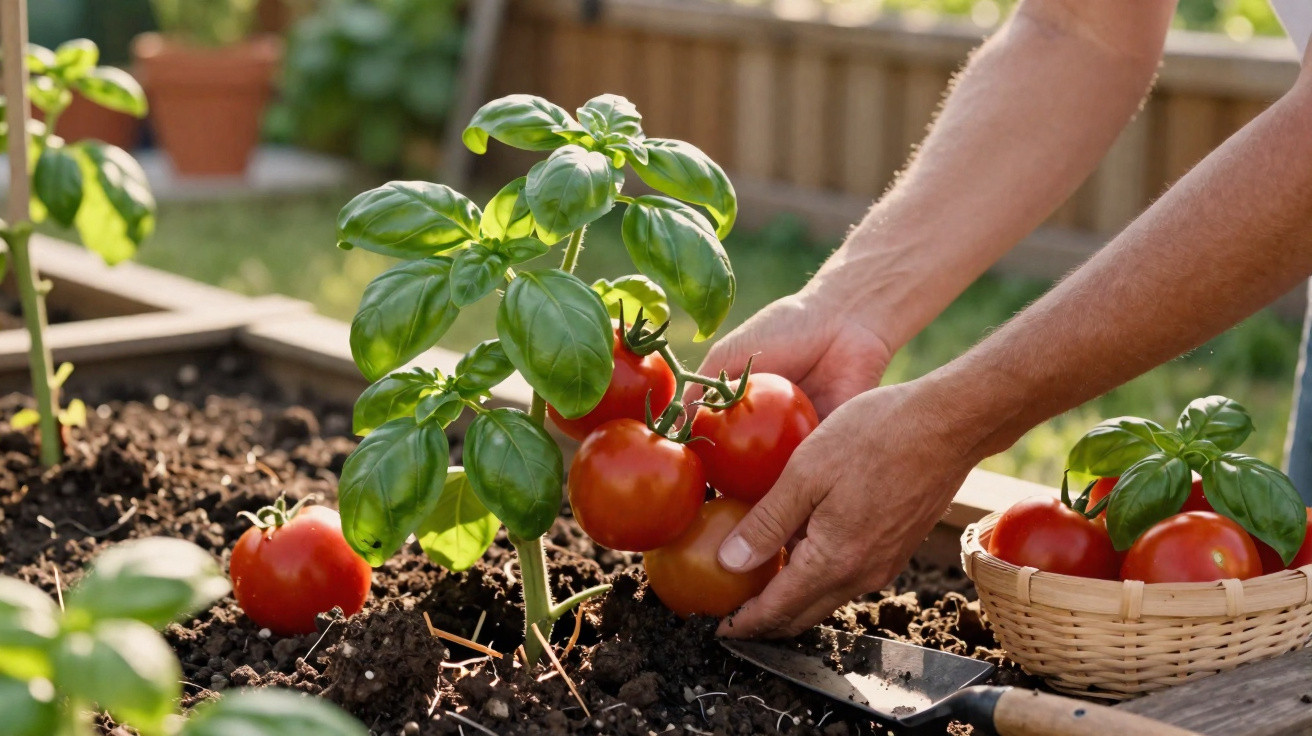
A simple, everyday culinary herb can make all the difference.
Anyone who has tasted fresh tomatoes picked straight from their own garden will know the problem: the fruit looks flawless, is practically bursting with juice, yet tastes surprisingly bland. The variety or fertiliser is not always to blame. A familiar kitchen companion can help bring more flavour to the vegetable patch, without chemicals or extra effort.
Why garden tomatoes can often disappoint
Tomatoes are regarded as the divas of the vegetable garden. They need sunshine, nutrients and water, while being highly sensitive to stress. Excessive heat, insufficient moisture, pests and fungal diseases can all hold the plant back.
Stressed tomato plants produce fewer leaves and flowers, then devote less energy to sugars and flavour compounds in their fruit. The result is tomatoes that may look attractive but barely taste of summer.
Many gardeners respond by watering more, feeding more or choosing pricier varieties. Yet the flavour often changes very little. This is where a classic herb-garden plant comes in, one that has long been almost inseparable from tomatoes in the kitchen.
The perfect pairing: tomatoes and basil in the vegetable patch
What works so well on the plate can also work in a garden bed: tomatoes and basil make a remarkably effective partnership. Professionals call this “companion planting”. It means deliberately growing different species alongside one another so that they support each other.
Basil can protect tomato plants, increase yields and help produce more intensely flavoured fruit – all without additional chemicals.
Garden centres and home gardeners report tomatoes with a stronger scent and fuller sweetness after planting basil directly beside them. Firm scientific evidence for improved flavour is limited, but several factors suggest why this may happen:
- the powerful cloud of basil fragrance that confuses pest insects
- a healthier tomato crop under less stress
- slight shading of the soil and more consistent moisture
- better-ripened fruit with a higher sugar content
How basil keeps pests away from tomatoes
Basil leaves get their intense scent from essential oils. Many people enjoy these substances, whereas a number of insects do not. Trials and practical reports indicate that whiteflies and aphids in particular are much more likely to leave tomato rows containing basil alone.
When tomatoes suffer less from these sap-sucking pests, their leaf growth and overall condition remain more stable. Rather than constantly having to “repair” themselves, the plants can direct energy into flowers and fruit. Tomatoes that ripen under lower stress develop more sugar and more complex flavours – precisely what can be tasted.
Higher yields thanks to hard-working pollinators
Basil has another advantage: its flowers. Many gardeners remove them for appearance’s sake, but they are highly valuable for tomatoes. The white or faintly purple blooms attract bees, bumblebees and other pollinators.
The more of these helpers are active, the more reliably tomato flowers are pollinated. This results in more fruit per plant. Some anecdotal reports mention yields 20 to 30 per cent higher when basil is consistently planted among the tomatoes.
Basil acts like a magnet for pollinators – guiding them directly to tomato flowers.
How to plant basil correctly among tomatoes
The major benefit is that tomatoes and basil enjoy almost identical conditions. Both prefer warmth, plenty of light, loose soil and regular watering. That makes them easy to grow together in a bed or container.
Spacing and planting layout in the garden bed
In open ground, the following rule of thumb has proved useful:
- leave around 50 to 60 cm between two tomato plants
- allow around 30 to 40 cm between two basil plants
- plant basil in staggered positions between the tomatoes in the row
A simple layout looks like this:
| Position | Plant |
|---|---|
| 1 | Tomato |
| 2 | Basil |
| 3 | Tomato |
| 4 | Basil |
This creates a type of mixed hedge, with tall tomato stems and more compact herbs between them. The soil is shaded in places, dries out less quickly and does not become as hot. Moisture levels remain more even, which tomatoes greatly appreciate.
Tomatoes and basil in pots or on a balcony
Those without a garden can easily grow the pair in a container. A large balcony planter or pot holding 40 to 60 litres is generally sufficient for one tomato plant and one vigorous basil plant.
The following is worthwhile:
- use good-quality vegetable compost rather than the cheapest multipurpose compost
- place the pot in a sunny, sheltered spot
- water regularly, but avoid waterlogging
- mulch around the roots, for instance with straw or grass cuttings
One small but important tip is to pinch out the growing tips of the basil regularly. This encourages branching, keeps the plant bushy and continually produces new leaves. It also makes it easier to manage the amount of fresh herb available for the kitchen.
More than flavour: benefits for the whole vegetable garden
Combining tomatoes and basil does not only benefit the fruit. The small ecosystem in the bed becomes more resilient overall. More beneficial insects gather there, helping to maintain balance. Chemical sprays are needed less often because pest populations do not increase so dramatically.
Many gardeners also use a third companion plant: borage, with its blue flowers. It attracts even more pollinators and its deep roots loosen the soil. This creates a lively trio in which tomatoes grow in loose, well-aerated ground.
What lies behind the more intense tomato flavour
Strictly speaking, the improved taste of tomatoes is difficult to prove in numerical terms. However, the factors behind it are easy to explain:
- a steady water supply prevents splitting and watery fruit
- a healthy plant can store more sugars and flavour compounds
- tomatoes harvested later, once fully coloured, have a fuller flavour
- using fewer sprays leaves the natural flavour less altered
Basil contributes to all of this indirectly. It acts a little like a natural bodyguard, shielding the tomatoes without being the centre of attention. The result is tomatoes in the kitchen that taste more strongly of garden, sunshine and summer.
Practical tips for even more flavoursome tomatoes
Alongside growing tomatoes with basil, a few further steps can help bring out their flavour:
- allow tomatoes to ripen on the plant for as long as possible
- water only in the early morning or late evening
- lightly thin out leaves hanging directly above ripening fruit
- store fruit at room temperature, not in the fridge
Anyone who combines these measures with companion planting tomatoes and basil will often have no need for specialist fertilisers or complicated techniques. A simple kitchen herb becomes a quiet garden helper whose effect can ultimately be noticed on the plate.
Comments
No comments yet. Be the first to comment!
Leave a Comment