
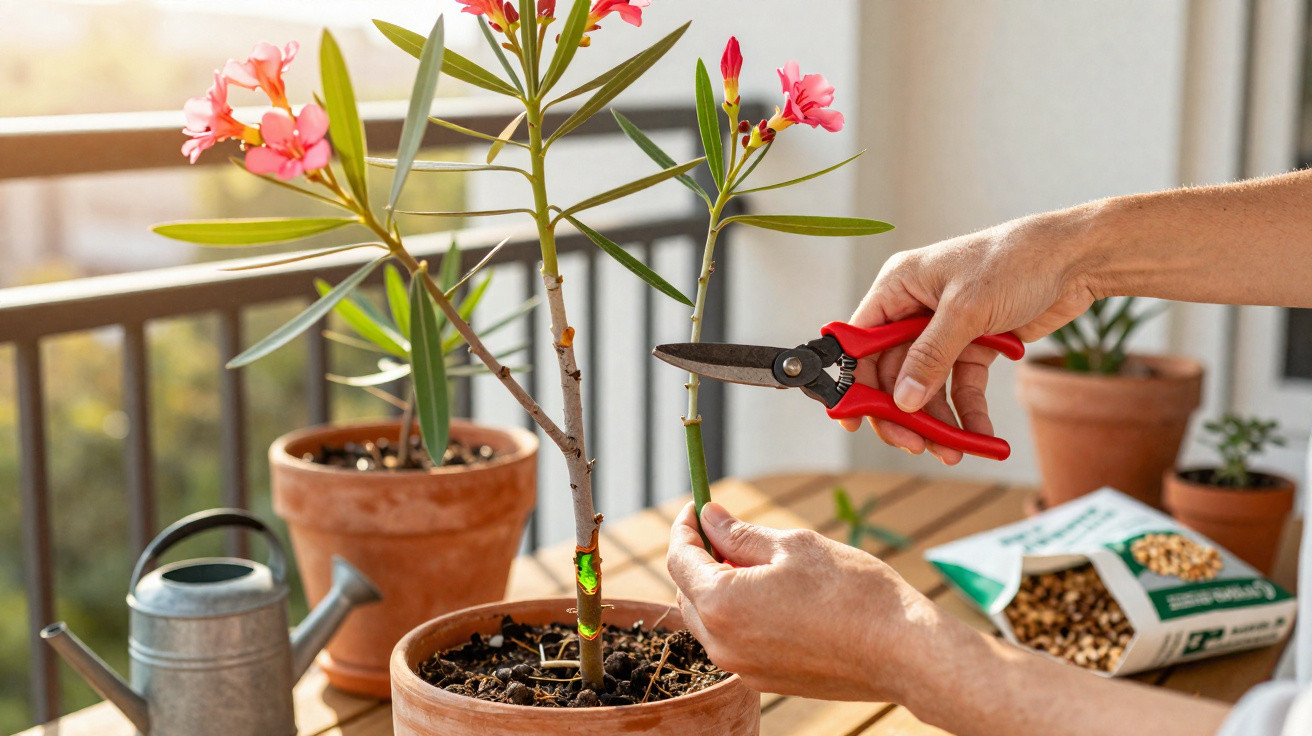
With just a few targeted measures, a struggling oleander can become a flowering star again.
When you bring an oleander container out of its winter shelter in spring, the sight can often be alarming: brown shoots, scorched leaves and sometimes an almost bare plant. This Mediterranean shrub is particularly vulnerable to frost and fluctuating temperatures in cooler areas. The good news is that it can usually be saved - provided you take a systematic approach and make the most of the coming weeks.
First, check whether the oleander is still alive
Before reaching for the secateurs, establish whether the shrub still has any vitality. It may look beyond hope on the outside, but there is often life remaining within.
The simple scratch test for branches and trunk
Use a fingernail or sharp knife to remove a small section of bark from a shoot. Here is what to look for:
- If the tissue underneath is green and moist, the shoot is alive.
- If it is brown, woody and dry, that section has died.
Check several areas, including those closer to the base. This is often where dormant buds remain, ready to produce new growth in spring.
Also inspect the root collar, the area just above the soil. Thick, slightly swollen buds show that the shrub is preparing to restart.
A brown, miserable-looking oleander is not automatically beyond saving - what matters is whether there is still green tissue beneath the bark.
The right time to begin the season
Starting too early can expose the plant to frost damage, while leaving it too late can reduce its flowering potential. Timing matters.
As a rule, wait until severe frosts are no longer forecast and night-time temperatures are generally above 10 °C. Depending on the region, this is usually between late March and mid-April.
Gradual acclimatisation to light and temperature
An oleander must not be moved abruptly from a dark winter shelter into intense spring sunshine. Proceed as follows:
- For the first few days: place the container in partial shade for a few hours each day.
- After that: gradually increase the time it spends outdoors.
- After around a week: move it to a permanently sunny, warm position.
For plants growing in the ground, remove winter protection such as fleece or a layer of leaves gradually as well. Otherwise, a brief cold snap with light frost can kill young shoots straight away.
Pruning oleander: as much as necessary, as little as possible
The post-winter cut determines how strongly the oleander recovers - and how abundantly it flowers in summer.
Remove dead shoots decisively
Cut all entirely brown, dry branches back to healthy wood. If you cut into a shoot and find green tissue, you have reached a still-living section.
- Remove completely dried-out or blackened shoots in full.
- Thin out shoots that cross over each other or grow inwards.
- Shorten excessively long shoots by one third to two thirds.
If the shrub is severely damaged, a hard prune may be necessary: cut it back to around 40 centimetres above ground level. It will often produce vigorous new shoots from the base. Flowering may be less impressive that year, but the shrub will gain stability in the longer term.
Repotting, refreshing the soil and feeding
Container-grown oleanders in particular often suffer from restricted roots and exhausted compost after winter. A spring refresh can work almost like a rejuvenating treatment.
Signs that the pot has become too small
A look underneath is often enough:
- Roots are growing out through the drainage holes.
- When you lift out the root ball, you can see a dense mass of roots circling around it.
The plant then needs a slightly larger pot. Do not choose an oversized container, as the oleander may sit in constantly wet compost for too long and its roots can rot easily.
Suitable growing medium and feeding strategy
This shrub prefers a free-draining, nutrient-rich mix. A reliable blend consists of:
- good-quality flowering-plant compost,
- some coarse sand or fine gravel,
- and a portion of well-rotted compost.
If the container is already large and heavy, it is often enough to remove the top five centimetres of compost and replace it with fresh, high-quality material.
Begin feeding from March. A fertiliser with a higher potassium content is ideal, as potassium strengthens shoots and flower buds. From March to September, feed every one to two weeks - either with a liquid feed added to the watering water or a slow-release fertiliser mixed into the compost.
Never apply fertiliser to bone-dry compost: water lightly first, then feed. This prevents root scorch.
Watering, position and common mistakes that cost flowers
Water, light and warmth ultimately determine whether an oleander becomes a ball of summer flowers or produces only green shoots.
Water properly - do not drown it or let it dry out
A weakened oleander needs regular but controlled watering:
- Allow the surface of the growing medium to dry noticeably between watering sessions.
- Water slowly and directly around the root area, keeping the leaves as dry as possible.
- Tip away excess water from the saucer after a short time.
For plants growing in the ground, two thorough waterings per week are generally sufficient in summer. During hot spells, give slightly more water, but always soak deeply rather than offering small daily amounts.
Plenty of sun - introduced carefully
Oleander flowers spectacularly only when it receives several hours of direct sunshine. An ideal location is:
- against a warm south- or south-west-facing house wall,
- sheltered from cold winds,
- with free-draining soil that does not become waterlogged.
Immediately after winter, however, the shrub is not yet able to tolerate full sun well. Gradual acclimatisation prevents leaf scorch.
Five mistakes that can prevent abundant flowers
- The container is put outside too early and is hit by another frost.
- The plant is moved directly from a dark winter shelter into midday sun.
- It is overwatered continually through fear of it drying out.
- Heavy applications of fertiliser are made to dry compost.
- Water is left standing permanently in the saucer.
Anyone who corrects these issues in good time has an excellent chance of turning a weakened shrub back into a richly flowering focal point - often from May through to autumn.
What weakens oleander - and what gives it extra strength
Frost is not the only factor that holds this shrub back. Sharp temperature swings, persistently wet compost, cramped roots and nutrient shortages can also weaken it. Several of these stresses often occur at the same time.
Small measures that make use of a favourable microclimate can help, including:
- a place in front of a wind-sheltered wall that stores warmth during the day,
- a thin layer of mineral mulch to buffer the roots against heat and cold,
- a sturdy pot stand that keeps cold from the ground away from the container.
Toxic beauty: what households with children and pets should know
Oleander is one of the poisonous ornamental shrubs. Every part of the plant contains potent substances. Wear gloves when pruning or repotting, and wash your hands afterwards.
In gardens with young children or pets, it makes sense to position the plant where leaves and fallen plant material cannot be reached constantly. Prunings should not go on the compost heap; dispose of them with general household waste instead.
Keeping these points in mind and giving the shrub the right help in spring will usually bring its reward: strong new shoots and a wealth of blooms reminiscent of a last summer in the south - without going on holiday.





Comments
No comments yet. Be the first to comment!
Leave a Comment