
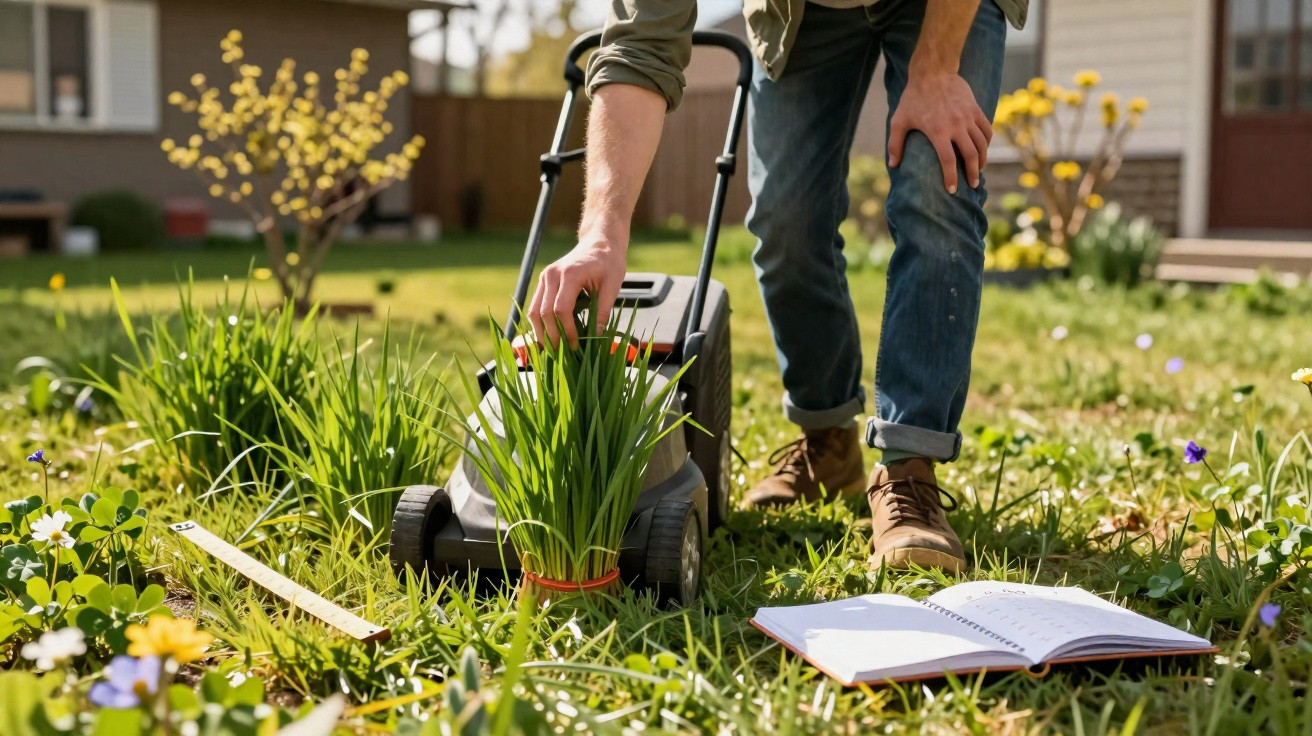
Many amateur gardeners are eager to get going in March: they pull the electric or petrol mower from the shed and finally give the lawn a really close cut. Yet this is precisely what causes lawns to thin out, turn yellow and become covered in moss year after year. Follow one straightforward principle this month, however, and you will lay the foundations for a thick, resilient green carpet that lasts into autumn.
Why March determines the future of your lawn
After winter, a lawn is effectively in recovery mode. Although the grass blades may look long and untidy, that extra length is vital to their survival. Each blade acts like a tiny solar panel: more leaf area captures more sunlight, creates more energy and supports stronger roots.
Winter days are short and light levels are low, so the lawn has little opportunity to build up reserves. At the same time, soil is commonly cold and wet, meaning the roots are operating at minimal capacity. Cutting the grass back severely during the first mild spell in March removes the very surface area the plants need to recharge.
The first spring mow determines whether the lawn recovers – or whether you encourage moss, gaps and yellow patches.
For this reason, specialists advise carrying out the first cut noticeably later than many people normally would. Across much of Central Europe, the best window is generally from late March to early April, and sometimes later still if winter lingers.
Signs that the right time has arrived
Rather than relying rigidly on the calendar, look for several clear indicators:
- The soil no longer feels clammy and icy, but simply cool and moist.
- Night frosts are becoming less frequent and less severe.
- Unmown grass has reached approximately 8 to 10 centimetres in height.
- When you walk across the area, the ground has a little spring without being muddy.
A useful guideline followed by many lawn professionals is this: once the soil has warmed to around 7 degrees and the grass is visibly growing again, it is time for the first mow. If you are unsure, it is better to wait a few extra days. That will not harm the lawn and may even benefit its energy reserves.
The essential March lawn strategy: never remove more than one third
The key to a dense lawn is an easy rule to remember: never cut off more than one third of the blade height in a single mow. This “one-third rule” prevents the grass from being put under unnecessary stress.
For instance, if the lawn is 9 centimetres high, set the mower so that roughly 6 centimetres remain afterwards. It may sound fairly long, but it still looks remarkably neat in a garden – simply not shaved bare.
Taking only the tips off in March encourages the lawn to grow outwards rather than merely upwards.
Following this first, deliberately cautious cut, the grass produces more side shoots. The lawn becomes thicker, closes bare areas and shades the soil. Light-loving weeds and moss then find it far more difficult to establish themselves.
The cutting height that is worthwhile at the start
Many experts recommend leaving a cutting height of 5 to 6 centimetres for the first spring mow. This height offers several benefits:
- The blades retain enough leaf area to produce energy.
- More shade reaches the soil, helping to hold back moss and weeds.
- The lawn appears more continuous, even where winter damage is still visible.
- Roots remain well supplied and recover more quickly.
By contrast, cutting immediately down to 3 centimetres or less removes the lawn’s “solar panels” and forces it to put all its energy into emergency regrowth. It may look tidy in the short term, but it weakens the lawn over time.
Preparing properly for the first mow in March
Before the blades start turning, inspect the ground carefully. Waterlogged or frozen soil is highly vulnerable: every footstep and every mower wheel compresses it. Compacted areas subsequently allow less water and air through, roots suffer and moss takes advantage.
Slightly dried ground that is no longer muddy is ideal. If you have time, use a garden fork on a frost-free day in late winter or early spring to make light holes in selected areas. These vertical holes improve the movement of water and oxygen through the soil.
A few simple but highly effective rules apply to the year’s first mow:
- Sharpen the blades, or have them sharpened, because blunt blades tear the grass.
- Select the highest or second-highest cutting setting rather than setting the mower extremely low.
- Do not mow wet, shiny grass; wait for a dry day instead.
- Work at a moderate pace so that the blades are cut cleanly.
The first mow should feel more like “stroking” the blade tips than giving the lawn a drastic treatment.
What to do after the first cut
If you begin gently in March or early April, you can gradually reduce the cutting height slightly as spring progresses. The one-third rule remains essential. Mowing regularly and moderately encourages the lawn to form fresh side shoots repeatedly, making it denser from within.
During the main growing period, many gardeners choose a manageable interval of around one week. The difference in height between cuts remains small, the lawn avoids stress and the surface continues to look evenly maintained.
Lawn care and nature conservation: why a little “wildness” in March makes sense
Alongside conventional lawn care, a trend has emerged towards deliberately mowing certain areas less frequently, particularly in spring. Grass and wildflowers can be allowed to grow taller in individual strips or corners, such as along property boundaries.
These areas provide food and shelter for insects without requiring you to give up a usable play area in front of the patio. If you wish, mark the areas to be kept short and those allowed to grow tall with wooden stakes or small stones. The garden will remain orderly while looking lively rather than sterile.
Common March mistakes – and how to avoid them
| Mistake | Result | Better approach |
|---|---|---|
| Mowing too early on cold ground | Roots weaken and moss spreads | Wait until the soil has noticeably warmed up |
| Cutting the lawn extremely short | Yellow patches and slow recovery | Remove no more than one third of the blade height |
| Using blunt mower blades | Frayed blades and a greater risk of disease | Check and sharpen the blades before the season begins |
| Driving over wet ground | Wheel tracks and compacted soil | Choose a dry, frost-free day |
How to make your lawn thicker over the long term
The gentle first mow strategy in March is only the beginning. To make the most of its effect, combine it with a few straightforward routines throughout the year:
- Overseed sparse patches in spring while the soil is still moist.
- Avoid excessive fertiliser quantities; smaller applications are preferable.
- Use a medium cutting height as the standard instead of mowing extremely short all the time.
- Loosen suspiciously hard areas from time to time with a garden fork.
Over time, this creates a durable green carpet that copes better with playing children, garden furniture and summer heat than a problem lawn that is constantly cut very short.
Why the “one-third rule” remains useful later in the year
The restraint practised in March continues to pay off well into high summer. In hot spells especially, a slightly greater cutting height protects the soil from drying out. Continuing to cut mercilessly short during intense summer heat risks scorched areas and brown patches.
Using the same approach throughout the year – mowing more often but removing less each time – supports a fine, branched root system. This underground “mat” is ultimately why a lawn looks lush and offers little opportunity for moss or weeds to take hold.
The essence of the March strategy can be put in one sentence: patience, a high mower setting and respect for the one-third limit deliver far more in the long run than any quick fix involving a severe cut.






Comments
No comments yet. Be the first to comment!
Leave a Comment