
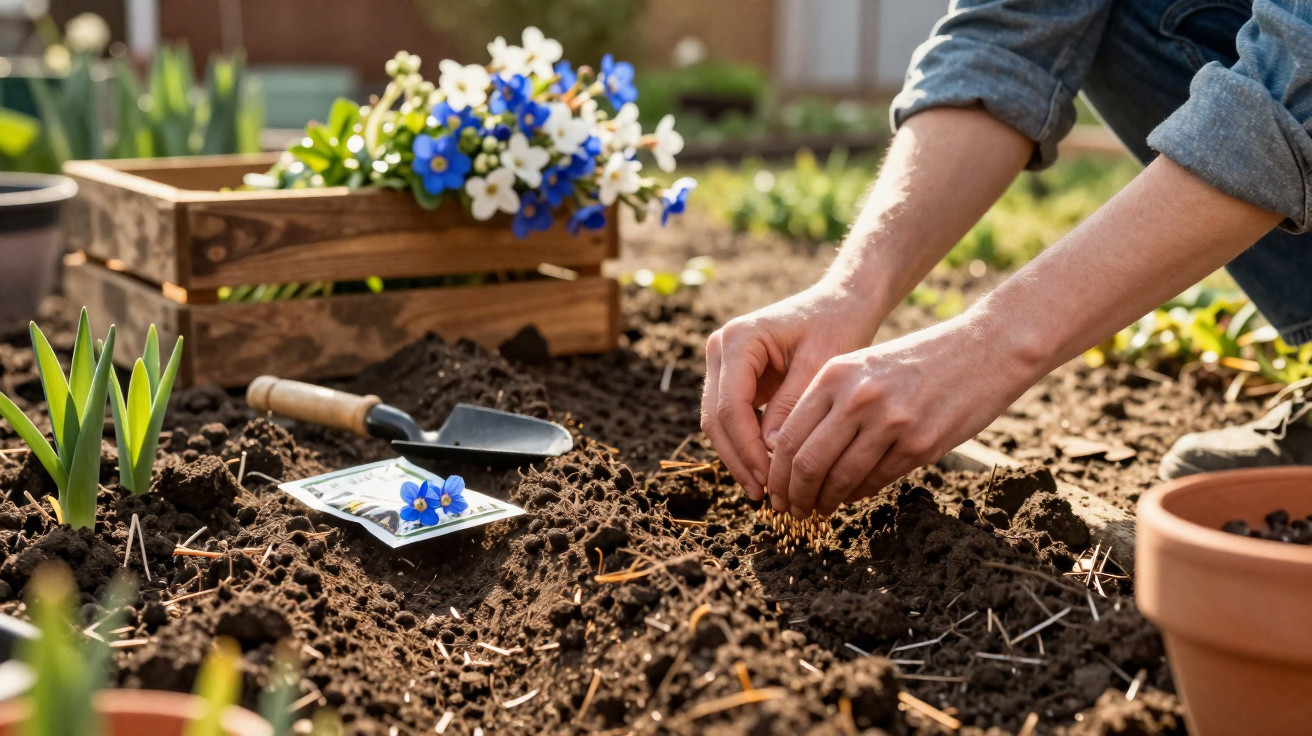
The beds may still be bare and winter may still be lingering in the plants, yet many amateur gardeners are already eager to get started. This is exactly the right time to sow one particular summer flower, which will later create a delicate sea of blooms almost by itself – without constant watering or complicated care.
Why this flower is so rewarding to sow in March
This flower is Love-in-a-Mist, botanically known as Nigella damascena. At first glance, this annual summer flower can seem rather modest, but it makes a striking impression in a border. Its fine, almost fern-like foliage frames star-shaped flowers in blue, white or the palest pink.
Growing to around 40 to 60 centimetres tall, it is ideal for mixed perennial borders, cottage gardens and slightly more ‘wild’ naturalistic gardens. It looks as though it has always belonged there – and that gently untamed, romantic appearance is precisely what many garden enthusiasts enjoy.
“Those who sow it in March are often rewarded with an almost continuous ribbon of flowers from mid-June to late August – and sometimes even into September.”
Love-in-a-Mist is an especially good choice for beginner gardeners. It copes well with ordinary garden soil, establishes quickly and forgives minor mistakes. Even gardeners with only a few spare gaps in a border can turn bare patches into airy islands of colour within a few weeks.
The right time: when to sow the seeds
March marks the starting point in many areas. The key requirement is that severe frosts have passed and the soil has begun to warm slightly. A light overnight frost will not usually harm the plants, but a prolonged hard frost immediately after sowing is unfavourable.
In cooler locations, it is worth waiting until late March or early April. In milder parts of the country, you can begin sooner. Love-in-a-Mist is one of the hardy annuals that copes well with typical April weather.
Sowing Love-in-a-Mist step by step: how to get started
Sowing is quick and requires no specialist knowledge. All that is needed is a suitable spot and a little preparation.
Choose the right position
- Position: full sun to partial shade at most
- Soil: light, well-drained and not prone to waterlogging
- Where to grow it: perfect for beds, borders, among perennials or in a cottage garden
Very heavy soil that remains wet can easily cause rot. If you have clay soil, it is best improved by loosening it with sand and a little compost.
Prepare the soil
Before sowing, spend a few minutes getting the area ready:
- Remove weeds thoroughly.
- Loosen the soil with a rake and break up any surface crust.
- Pick out larger stones and roots.
- Work in a little well-rotted compost if the soil is very poor.
The aim is to produce a fine, crumbly seedbed, allowing the small seeds to make light contact with the soil.
Sow correctly and allow enough space
The seeds can be scattered across the surface or sown in rows. As they need light to germinate, they require only the thinnest covering of soil.
- Scatter the seeds loosely over the prepared area.
- Cover them only very lightly with soil or fine growing medium; a few millimetres is enough.
- Firm them gently with your hand or a board.
- Water carefully using a fine rose, so that the seeds are not washed away.
Many people sow too densely at first. Once the young plants have produced a few true leaves, they should be thinned out. A spacing of roughly 20 to 25 centimetres between plants usually works well. For especially strong flowering plants and fuller clumps, 30 centimetres is also sensible.
“Giving each plant enough room produces sturdy stems, larger flowers and the distinctive airy appearance that makes Love-in-a-Mist so special.”
How Love-in-a-Mist flowers throughout the summer
Once the seeds have germinated and the plants have rooted in, much of the work takes care of itself. Compared with many other summer flowers, Nigella is remarkably undemanding.
Care with minimal effort
- In an average summer, rainfall is generally sufficient.
- Water deeply in the evening only during extended dry spells.
- Heavy feeding is unnecessary and can even be harmful, as too many nutrients make the stems soft.
If you use mulch, do not place it directly against the delicate stems, as this can lead to rot.
Remove faded flowers for more blooms
One small task has a big effect: if you regularly cut off fading flowers, the plant responds by producing new buds. This noticeably extends the flowering period.
You can deal with the flowers in two ways at once: put some flower heads in a vase and add the rest to the compost. This keeps the border looking fresh and stops the plant from putting all its energy straight into producing seed.
For the vase: airy bouquets with a wildflower feel
The slender stems of Love-in-a-Mist are excellent for cutting. They look particularly attractive in loose, natural bouquets, perhaps combined with oxeye daisies, cosmos or delicate grasses.
- Cut stems early in the morning where possible.
- Put them straight into fresh water.
- Remove lower leaves that would otherwise rot in the water.
Indoors, the flowers often last for up to ten days. The seed pods that form later are decorative too; when dried, they work well in autumn bouquets and wreaths.
Self-seeding: when the garden plants itself
If you allow a few flowers to mature, balloon-shaped seed pods will form. They dry out in late summer and eventually split open. The seeds fall to the ground and remain there over winter.
“The following year, Love-in-a-Mist reappears in the same places – and often in entirely new corners too – without any help at all.”
If you like this ‘self-sown’ look, disturb the soil in these areas as little as possible. Gardeners who prefer a more orderly approach can collect the seeds deliberately and sow them again the following spring.
Where Love-in-a-Mist looks its best
The loveliest effect in a border comes from planting in groups. Individual plants can soon look isolated, whereas densely sown patches resemble a delicate, shimmering veil.
Especially harmonious combinations include:
- soft-coloured roses in pastel shades
- tall perennials such as delphiniums or foxgloves behind them
- cottage gardens alongside calendulas, cornflowers or cosmos
- gravel gardens, where the fine foliage provides an interesting contrast
Nigella damascena can also be grown in pots or large containers, provided that the container is deep enough and drains freely.
Common questions and potential pitfalls
Amateur gardeners should keep a few points in mind if they want the plants to reach their full potential:
- No success with germination? The soil was often too wet or too cold. A second sowing in April may solve the issue.
- Plants falling over? They are often growing in too much shade or are planted too closely together. More light and wider spacing will strengthen the stems.
- Hardly any flowers? Very nutrient-rich soil encourages leafy growth rather than flowering. In this case, stop feeding and choose a leaner site next time.
Why sowing in March is genuinely worthwhile
Anyone with limited time but a desire for a lively summer garden will make a good choice with Love-in-a-Mist. A packet of seeds costs only a few pounds, usually covers several square metres and brings colour to the border for months.
As an added benefit, the flower supplies insects with nectar and pollen, visually softens formal planting schemes and creates little surprises every year when it emerges in new places. In this way, a rather dreary March becomes the beginning of a garden display that brings pleasure well into late summer – with minimal effort but a striking result.

Comments
No comments yet. Be the first to comment!
Leave a Comment