
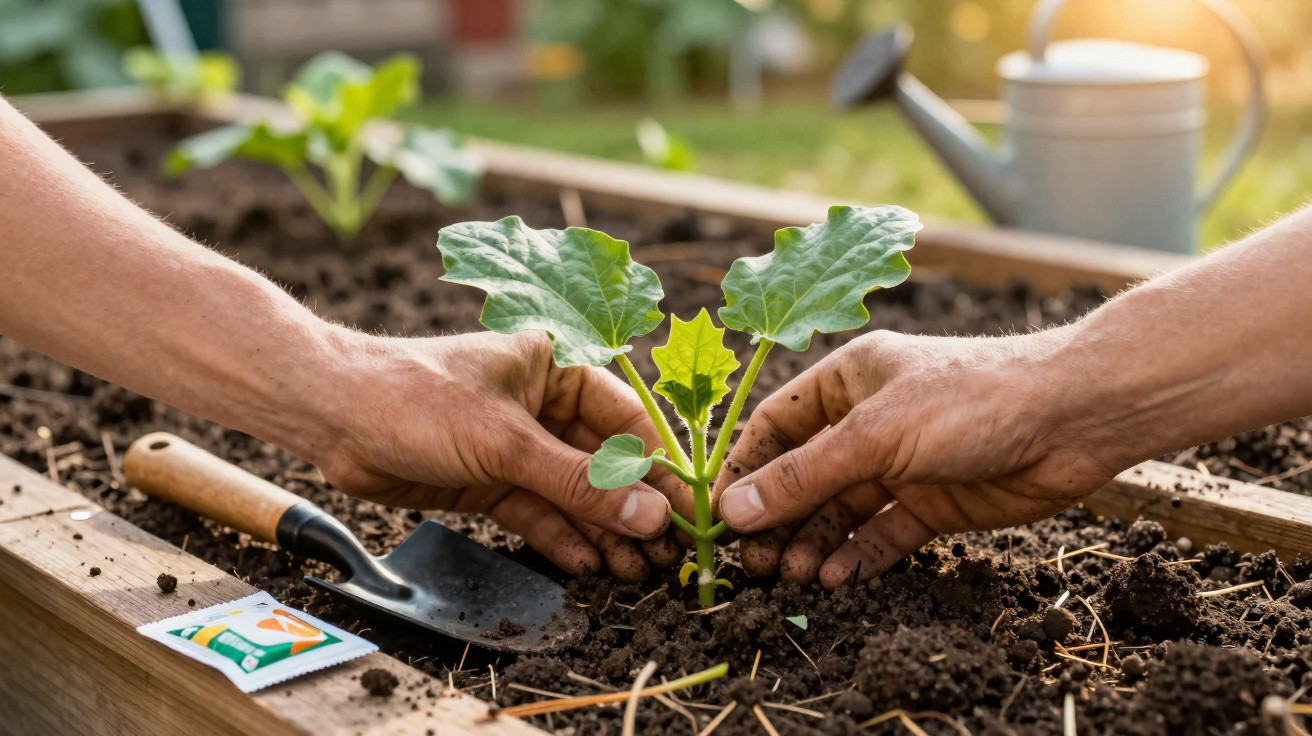
Many amateur gardeners wonder why their courgettes become unhealthy or produce only a small crop – yet the causes are often found in minor routines.
Anyone growing courgettes in a bed will know the pattern: everything grows rapidly at first, then fungal spots appear, leaves collapse and the harvest dwindles. A few well-chosen measures can slow this cycle considerably. Four basic rules determine whether your plants struggle or produce crisp fruits for weeks.
Why courgettes so often become diseased
Courgettes are considered “easy” to grow, but they are highly sensitive to overcrowding, wet conditions and stagnant air. This is where most mistakes are made: too many plants in too little space, leaves that remain wet constantly and old plant debris left in the bed all create ideal conditions for fungal diseases such as powdery mildew and downy mildew.
With a little thinning, adequate spacing, selective pruning and clean watering habits, many common courgette problems can be prevented from the outset.
The good news is that you neither need to be a professional gardener nor equipped like a commercial farm. Garden secateurs, a watering can fitted with a rose and a little discipline are enough.
Rule 1: Thin early – keep only the strongest courgette plant
Many people sow courgettes directly in the bed and leave every seedling that germinates in place. That is where the problem starts. Young plants immediately compete for light, water and nutrients, and ultimately all of them become weak.
As soon as the first “true” leaves emerge after the seed leaves, follow these rules:
- Leave just one plant at each sowing position.
- Choose the strongest and most vigorous young plant.
- Cut the others off at ground level rather than pulling them out.
Cutting them at soil level leaves the roots of the strongest plant undisturbed. It can establish deeper roots, take up water more effectively and cope more calmly with heatwaves. At the same time, more light reaches the plants, allowing leaves to dry more quickly and giving fungi less chance to spread.
How to spot a vigorous young courgette plant
The best courgette candidate has:
- thicker, sturdy stems,
Comments
No comments yet. Be the first to comment!
Leave a Comment